

 Admin_Adham
In 2025, measles came roaring back in the US, with major outbreaks resulting in more than 2000 confirmed cases reported across the country. Data suggest that 2026 may already be on a trajectory to pass that number; as of January 23, measles has been reported in nine states, with the South Carolina Department of Public Health already declaring an outbreak of more than 700 cases centering on Spartanburg County alone.
Are emergency room (ER) physicians prepared?
Measles holds the title for one of the most virulent infectious diseases. It can remain airborne or on surfaces for up to 2 hours after an infected person leaves a room. If 10 susceptible people who’ve never been vaccinated or have never had measles previously are exposed, nine will become ill. Left undiagnosed and untreated, it can cause serious complications. The challenge is that many ER doctors have never laid eyes on measles outside of medical textbooks.
“This is something that many emergency clinicians have been trained on in textbooks with pictures that are black and white but really lack the fundamental understanding of how to actually take care of this because they’ve never done it in person,” said Nicholas Cozzi, MD, MBA, emergency medical service medical director and assistant professor of emergency medicine at Rush University Medical Center in Chicago.
“When we’re talking about things that were eliminated, it becomes much more difficult and much more urgent for us to train the next generation of emergency clinicians to take care of patients irrespective of how they present with measles,” he said. “One of the things we try to do is educate people that measles looks different depending on your skin tone.”
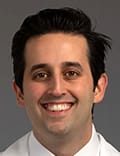
Cozzi noted the number of measles cases has been the highest in decades, which, in combination with ongoing discussions about vaccine schedules and related outcomes, creates “much more of an urgent emphasis for us to be training medical and nursing students how to spot this once eradicated but very rare, serious viral infection.”
Preventing Community Spread
South Carolina’s experience underscores the need for coordinated efforts. Though measles case numbers are currently rising, widespread community exposures started in July, when people started to develop measles symptoms without a clear source, Johnathon Elkes, MD, ER physician and medical director of preparedness for Prisma Health in Greenville, South Carolina, told Medscape Medical News.
“That progressed for a couple of months, and over time, those cases built up until we had this rolling snowball downhill, where you have increasing numbers of measles exposures,” he said.
The challenge is to catch these cases early enough to avoid inadvertently exposing other patients or staff.
“If a patient with measles presents to a crowded space or hospital system and is not appropriately quarantined, they could expose many other people in a pretty quick fashion,” Elkes said.
He explained that pediatric practices at Prisma have been especially aggressive in terms of ensuring that they can see patients safely.
“We have a telephone triage line set up so when patients call in with a concern or possible exposure, they can be safely routed to an outpatient facility capable of testing them, which helps avoid exposures in larger public areas,” he said.
Changing Attitudes
In the ER specifically, Prisma policy requires that waiting room patients be masked until they are triaged, undergo screening questions to identify risk, and then immediately isolate them. One important consideration is to ensure enough rooms are available to allow for infection control procedures needed to prevent airborne exposure from a previous patient. With current strains on healthcare systems across the US, this might not always be possible.
Vigilance is key.

Garry Kennebrew, Jr, MD, ER physician at The Hospitals of Providence and University Medical Center hospitals in El Paso, Texas, said his haunches have been elevated since last year’s significant measles outbreak in the state. Not only was it the largest measles outbreak in decades, resulting in significant hospitalizations and two deaths, but it also spread to bordering states including New Mexico and Oklahoma.
“I’ve changed my thought process,” he said. “At one point in time, I wouldn’t necessarily have brought measles to the top of my list. Now, I’m on high alert and make certain, especially with pediatric rashes, that it’s not measles.”
Aside from including measles in differentials, Kennebrew said that “since the pandemic, I always wear a mask and gloves. That habit has carried over to and fits in well with measles,” he said.
Delayed Presentations
Measles presents as a blanching, erythematous, maculopapular rash starting on the face or behind the ears, along with cough and fever. Though it has not necessarily become more severe in recent years, Cozzi said patients are presenting further in the course of the infection because it’s not being spotted consistently.
“More often than not, when a child comes in, it’s not the first time they’ve come to the ER with fever and rash, and that’s part of the problem,” said Cozzi. “We have to teach people what this looks like and re-educate ourselves on these infections — not just measles but the infections we once thought were eradicated.”
An important reason for prompt diagnosis is the risk for complications, which can be as great as 40%, especially in children younger than 5 years, adults, and malnourished, pregnant, or immunocompromised patients. Late manifestations include measles inclusion body encephalitis and subacute sclerosing panencephalitis (which remains latent for almost 10 years).
Elkes also raised concerns around testing.
“It’s not uncommon for hospital systems to outsource testing and to run samples. That delays turnaround time, which increases the time before you can let someone know of an exposure,” he said. “You also can’t let schools know that there has been an exposure, and you may preclude people from being able to receive post-exposure prophylaxis,” Elkes said.
Elkes added that he had never considered the type of social impacts that would occur.
“Multiple times through our current outbreak, we had several middle schools with over 100 children quarantined at home for 21 days,” he said. “We’re actually at the point now where some of these schools have had a second exposure. Children who did not get the vaccine and were re-exposed had to do a second period of 21 days of quarantine.”
Across the board, measles recognition, prompt diagnosis, and isolation are critical, especially in the midst of a known community spread. So is slowing down, a trait that can be challenging in the ER setting.
“When there’s 50 people in your waiting room and 35 patients boarding in your ER admitted upstairs but there’s no room for them, it’s easy to see people quickly and try to evaluate and treat them appropriately. But sometimes, when you try to go faster, you can make mistakes,” said Cozzi.
“It’s important to identify someone with the right pattern in terms of the infection and someone who’s at risk because they’re not fully vaccinated. Those are the patients we need to take it a bit slower and more conscientious with,” he said.
Cozzi and Kennebrew reported having no financial disclosures of interest.
Liz Scherer is an independent health and medical journalist with a deep background in infectious diseases.
