

 Admin_Adham
Srihari “Hari” Naidu, MD, was 15 when he met Phani Dantuluri, MD, at a summer research program for high school students at the University of Iowa, Iowa City, Iowa.
“He was like three rooms down from me in the hall,” Dantuluri said. “And so, I saw him, and we just struck up a conversation and started talking.”
After the summer, the pair went back to their respective high schools — Dantuluri outside of Philadelphia and Naidu to Long Island (New York). They stayed in touch, but it wasn’t until a few years later that a chance encounter brought the budding physicians back together in person.
Both had been accepted to Brown University’s combined undergraduate/medical school Program in Liberal Medical Education in Providence, Rhode Island, and had come to a visiting day to decide whether to enroll.
“So, we literally ran into each other on Brown’s campus, and we started talking, and he’s like, ‘You’re here?’ and I’m like, ‘Yeah, I’m here,’” Dantuluri said. “And it was a very fun conversation because we hadn’t seen each other in a couple of years.”
He jokingly told Naidu, “I’ll come here if you come here.”
“We had such a good connection from Iowa that it was like fun to think about, ‘Hey, well, the two of us can continue our friendship here in college, in med school, and beyond,’” Dantuluri told Medscape Medical News.
They may not have known it then, but it would be the start of a sustaining friendship that would take them through college, medical school, and other major life events and tragedies over a span of 38 years.
“It’s a little bit of a unique story in terms of the trials and tribulations of knowing each other since we were geeky, geeky nerds in high school, doing research together as sophomores, and knowing that we wanted to go to medical school at such a young age,” Dantuluri said. “You know, that’s sort of unusual, too, I think.”
As the pair entered college, they started a tradition of meeting every Sunday night for dinner at the restaurant Kabob and Curry on Brown’s campus. “It would just be a time for us to sort of catch up on the week and sort of feel that sort of nostalgic feeling for home cooking that we missed being in college,” Dantuluri said.
During their junior year, they became close friends with another student, Raju Ramakrishnan, who is also Indian. They were each over 6 ft tall, and they developed the nickname, “The Brown Men at Brown.”

Orange Sweat, Long Hours, and Death Become Real
Towards the end of their senior year at Brown University, there was a meningitis outbreak, which led to the deaths of several students there, Dantuluri recalled. He then contracted meningococcemia and had to be hospitalized and given intravenous antibiotics.
“Hari was really there for me through that,” Dantuluri said. Meanwhile, Naidu and other friends who were exposed to Dantuluri had to take the antibiotic rifampin as a precaution, which turned their sweat orange. “So, all their clothes and everything turned orange from this antibiotic,” Dantuluri said.
Upon graduating college, Dantuluri and Naidu went on to medical school, while Ramakrishnan, a computer science major, took a job in Boston. Dantuluri and Naidu were roommates, and on weekends, they drove to Framingham, Massachusetts, to visit Ramakrishnan and eat Indian food together.
Two other friends joined the group: Erik Sirulnick, MD, now a cardiologist specializing in cardiac electrophysiology in Las Vegas, and Andy Fujimoto, MD, now a family physician in Orange County, California.
They came together over shared interests, “not just on the wards in the hospital” but also going to the gym and playing pool in their free time, Fujimoto said.
Having good friendships in medical school is “incredibly paramount,” Fujimoto said, especially because “the stress level that’s part of any kind of medical program is really astronomical.”
Fujimoto recalled a time when he and Naidu went out for coffee in Providence. It was snowing, and a “huge SUV [sport utility vehicle]” came barreling down the street and “literally almost took both of us out,” Fujimoto said. The driver stopped and made threats, appearing to be drunk.
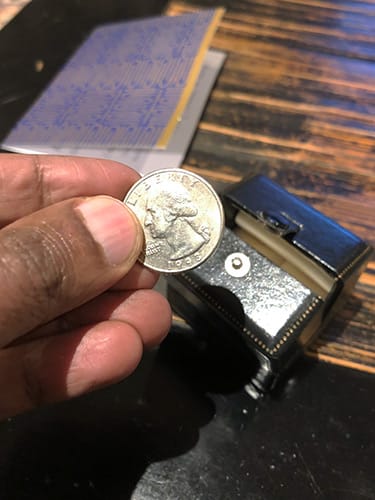
The friends stood up for themselves, and in response, the driver told them to call the police and threw a quarter at them (presumably to make a call, as this was before cell phones, Fujimoto said).
They called the police, and the driver was ultimately detained. Years later, Fujimoto learned that Naidu had saved the quarter the man threw at them.
“And the fact that he felt like I had his back and he had mine was something that was important to him and kind of really represents the friendship, actually,” Fujimoto said.
Naidu also has a lighthearted side and enjoys having fun, his friend Sirulnick said in a text message.
“He was always the happy guy, always in a good mood, and always up for fun times,” Sirulnick said.
But the pressure of medical school was always there. It’s competitive by nature, and that can “actually work against you at some schools,” Naidu said.
“But I was fortunate enough to have an environment where that was not the case, and it allowed us to be more competitive with ourselves and try to shine and get the best possible residency that we can,” he said.
In their second year of medical school, things took a turn.
Dantuluri and Naidu’s dear friend Ramakrishnan had a heart attack in the middle of the night and died.
“That really changed the course of our lives in many ways,” Dantuluri said. “Because you know when you’re 23 years old, you don’t really think about your mortality at that young of an age — you think that you’re like going to live forever.”
Naidu and Dantuluri leaned on each other.
Ramakrishnan’s death reverberated in other ways, too. As medical students, you’re seeing death on the hospital wards and the floors, but when your best friend dies, it “sort of really was like a crystallization of a moment like, ‘Wow, what we’re learning in medical school is really real,’” Dantuluri said.
As they grappled with their friend’s death, medical school obviously didn’t stop.
“I don’t think anybody really understands what devoting your life to medicine means until you actually do it,” Dantuluri said. The pair learned about working for 40 hours straight and realized medicine would require them to work very long hours, he said.
And experiencing the pain of their friend’s death made them more empathic medical students, Dantuluri added. “…We understood the empathy that you could have for your patients, and not just your patients, but their families.”
Ramakrishnan’s death also put things into perspective personally for the two friends. “You realize that the little things that we worry about in daily life don’t really mean very much — it’s your friends, your family, your loved ones,” Dantuluri said. “It’s those relationships that are the most important.”
Today, Naidu runs a program for hypertrophic cardiomyopathy, the most common cause of sudden cardiac arrest in young people, he said. “So, I don’t know if that triggered me to be involved in that field,” Naidu said, referring to his friend’s death.
Residencies, Divorce, and COVID-19
Naidu and Dantuluri interviewed at many of the same residency programs, and ultimately, Naidu did his residency in internal medicine, while Dantuluri did his in orthopedics.
“So, our connection has always remained strong even through our residencies and then beyond, now that we have families of our own,” Dantuluri said.
About 12 years ago, Naidu got divorced and got joint custody of his son, Kiran, from around the time he was 2 years old. In the ensuing years, as Kiran started school, Naidu’s medical school friends would call to check in on him as he would race home from work to pick his son up from school.
“During that time, you rely on your friends for emotional support,” Naidu said.
The friends also helped each other through COVID-19, Dantuluri said. “…The health care system was just pushed to its limit and beyond,” he said. “And so, that’s another example of where our friendships meant so much to us, about giving each other support during that whole pandemic-like time for 3 years.”
When Naidu’s parents died, Dantuluri wanted to attend the funeral but couldn’t because he got COVID-19, he said.
When Naidu — now a professor of medicine at New York Medical College in Valhalla, New York — was inaugurated as president of the Society for Cardiovascular Angiography and Interventions (SCAI) in May, his friends came out to support him. Naidu was thrilled and, again, felt lucky.
“Who goes and celebrates someone else’s professional achievement?” Naidu said. People celebrate personal achievements, like a wedding, but less often professional ones, he said. Yet, his friends came from all over the country to support him.
Fujimoto flew in from California for the event. “We got lanyards with his name on them, so I can’t wait to wear them for something else,” he joked.
“It’s a friendship that basically will never quit,” he added later.
Singing has always been a passion of Naidu’s but deepened after his parents died, Dantuluri said. Naidu sang “My Way” when he was inducted as president of SCAI. He regularly records songs, such as this one, and sometimes sends them to his friends, Dantuluri said.
“…it takes a lot of courage, and I think confidence to do that, too,” Fujimoto said about Naidu sharing his songs.
Another way the group stays in touch is through group trips.
The friends have traveled together over the years to Las Vegas, Washington, DC, and Los Angeles. Naidu also hopes to schedule a Mediterranean cruise with his friend group.
“We can either hang out or not hang, but you got the options; it’s kind of like being back to college, where everybody’s…at the same venue, but you can choose to just do things as a family or choose to mix it up,” Naidu said.
As the years have gone by, Dantuluri, who is married and has two teenage daughters now, hosted Naidu’s 16-year-old son Kiran, who is interested in pursuing medicine, for a week in Atlanta. Dantuluri had Kiran shadow him during his surgeries. Outside of work, they also played basketball together and watched movies.
“It was really a fun connection,” Dantuluri said.


