Admin_Adham
A member of Christopher Columbus’ second expedition, which sailed in September 1493, Diego Álvarez Chanca, became the first physician to set foot in and practice in the Americas. One of his first patients was a Taíno cacique (chief) named Guacanagarí, who claimed to have a leg wound as proof that he had defended the ill-fated first Spanish settlement (La Navidad fort) from an attack by Indigenous people. “It is a fact that there was no more wound on that leg than on the other, although he cunningly pretended, when we touched it, that it pained him very much,” Chanca wrote in a letter dated February 1494. He also treated a “pestilential fever” that Columbus himself had. Later he faced an epidemic with very few resources at hand, before returning to Seville, Spain, never to return.
Chanca’s brief sojourn through remote lands was only the beginning of a broader, natural process of migration and settlement of medical professionals from Europe to the New World — especially in recent decades, increasingly in the opposite direction or toward Anglo-America or Oceania. As a global survey conducted by the Medscape Professional Network shows, most do so motivated by the desire for higher pay, better work-life balance, and greater opportunities for professional advancement, although relationships or the wish to experience another culture also plays a role.
The following accounts illustrate the aspirations, challenges, barriers, satisfactions, and longings of five physicians from different specialties and career paths who took their dreams and skills far from their countries of origin — all more than 9000 km away. If you add up the distances, they are a total of 54,000 km from where they were born, studied, or lived — more than one trip around the world at the equator. Author and coach Debra Smouse noted that once you have trained as a doctor, “you can be sure that you are able to take that with you wherever you go.” But doing so requires a mix of determination, patience, flexibility, and resilience, which is not taught in a medical school and may not be for everyone.
Wendolyn Teepe Reynoso (Mexican physician in Germany): ‘Culture shock is real, but as Latinos, we are well received’
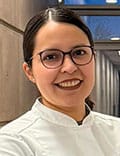
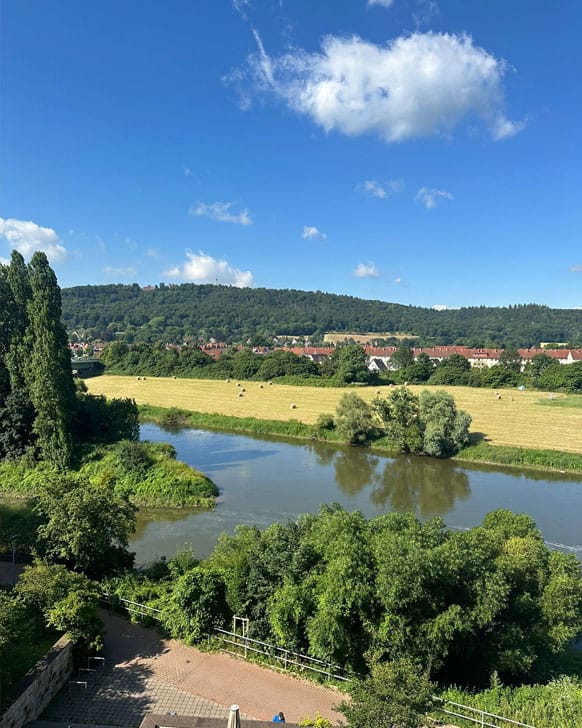
Hamelin is a German city in Lower Saxony famous for the Pied Piper legend immortalized by the Brothers Grimm. But for Teepe, born and trained as a physician in Mexico, it is also home to the hospital where she works every day as a trainee physician after 4 years of revalidation and visa procedures that she describes as “the longest and most stressful process of my life.”
Teepe moved to Germany for love: She met her future German husband, an engineer, while on vacation in Switzerland. Before that, after graduating in 2016, she had worked in Mexico City’s public health system and had begun a master’s in clinical pharmacology.
She began the transition to her new professional destination in late 2019 in Freiburg, where she started taking German and medical German classes [“I’m not very good with languages; I learned English at 20, but with patience and tenacity, you can learn”] and prepared for the knowledge exam. She also shuttled between agencies and even returned to Mexico once to obtain, translate, and certify all the documentation needed to practice in Germany. “The bureaucracy takes years. Fast-track recognition usually takes about 2 years,” she said. For her, it took 4 years and several thousand euros.
When she finally was licensed to work as a physician in Germany, she decided to apply locally in the Hamelin area, where she was already living. “There is a need for healthcare personnel in Germany, but competition varies by region. Local graduates are prioritized, and the smaller the city, the better the chances [for foreign doctors],” she explained.
Within a few months, she was offered a position at a hospital, where she is employed as an assistant physician (trainee) in cardiology and internal medicine. “It’s a very flexible work arrangement. I could remain a trainee indefinitely until I decide to sit for my exam. And I could switch to another specialty at any time, although here we’re largely self-taught; we have to keep ourselves up to date,” she said.
How have relationships with colleagues and patients been? “It’s a culture shock. Honestly, it’s rare to have a problem with Germans, maybe only with the older generations or with certain groups that are more chauvinistic, but overall, I’ve received a lot of respect.... Germans want to be flexible and open to all cultures of the world, and as Latinos, we are well received. And physicians try to make us feel comfortable and accepted — also because they need us! — although here they are more closed off: They stick strictly to their specialty,” she said.
A major difference from her country of origin is that the German health system has very solid foundations, with robust social supports and possibilities for physical and mental rehabilitation. Prevention and control of chronic diseases are stronger. “We can prescribe what we want if there is evidence; insurance will pay for the drug treatment — that’s guaranteed. In Mexico, for example, diabetic ketoacidosis is an everyday occurrence, and here I’ve seen one or two patients in these years,” she noted. Emergency care is also more efficient: “Citizens are well educated; when they have a heart attack, they call an ambulance, which arrives in 5 minutes, and everyone goes straight to catheterization. In my 2 years of experience, we’ve only had to give a thrombolytic to one patient.”
However, Teepe cautions against the idea that life in Europe is idyllic. “We are overwhelmed with work, very tired, many experiencing burnout,” she acknowledged, though she admitted she earns more than a resident colleague in Mexico and that medical and social benefits are better. She also expects she will be able to access a decent pension when it is time to retire.
What does she miss most about Mexico? “First of all the temperament, the ease, and the joy of the people. And to stick with the cliché: the food! Chilaquiles, tamales, mole, garnachas.... Fischbrötchen [fish sandwich] is delicious, but it’s not the same,” she said.
Luciano A. Sposato, MD (Argentine physician in Canada): ‘Migrating was a bit wild, but here physicians are highly valued’
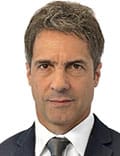
At 43, and 20 years out from graduation, Argentine stroke neurologist and clinician-researcher Sposato had built a distinguished career in Argentina, where he was director of the Stroke Center at the Institute of Neurosciences, Favaloro Foundation University Hospital, and chair of the Department of Neurology at Institute of Cognitive Neurology — two prestigious institutions in Buenos Aires. It wasn’t even during a particularly acute crisis in a country accustomed to periodic upheavals.
But in June 2012, Sposato was invited to give a lecture in New York on the heart-brain relationship, and afterward, a well-known Colombian colleague told him that everything he was doing in Argentina, he could amplify by living in Canada. A few days later, thanks to that colleague’s efforts, he received a call from the head of neurology at McMaster University in Hamilton, Ontario, Canada, inviting him to join the team. Nine months later, he moved with his neurologist wife and their 1-year-old son to settle at the other end of the continent.
“We didn’t think about it much; it was a somewhat wild, unconscious act. But I didn’t want to have a plan B. I wasn’t going to see what happened. I resigned from all my posts and positions and told them to find a replacement because I wasn’t coming back,” Sposato said.
Why take that risk with an established career? He said he had always dreamed of migrating to the US, but at other times, his partner was less enthusiastic. This time, with a 1-year-old, both considered it a good moment to leave. “In Argentina, things were going very well for me, but I felt I had reached a ceiling in terms of research,” he recalled in an interview with Infobae, an Argentine news platform. “In Canada, I saw the possibility of finding an environment where I could develop more as a scientist and reduce the excessive clinical and administrative demands I was experiencing in Argentina at that time,” he added.
The original destination (McMaster University) changed because they could not guarantee a job for his neurologist wife, and he ended up in London — another quiet city in Ontario, named after the British capital and with its own River Thames, Hyde Park, and Oxford Street. There he joined Western University but had to start from scratch: To practice and receive a contract, he first had to complete a fellowship — the post‑residency training physicians do to subspecialize. “I enjoyed it. I was thinking more long term. And even though I had experience, there are always things to learn — for example, the systematic documentation of every procedure.” During that time, his second daughter was born.
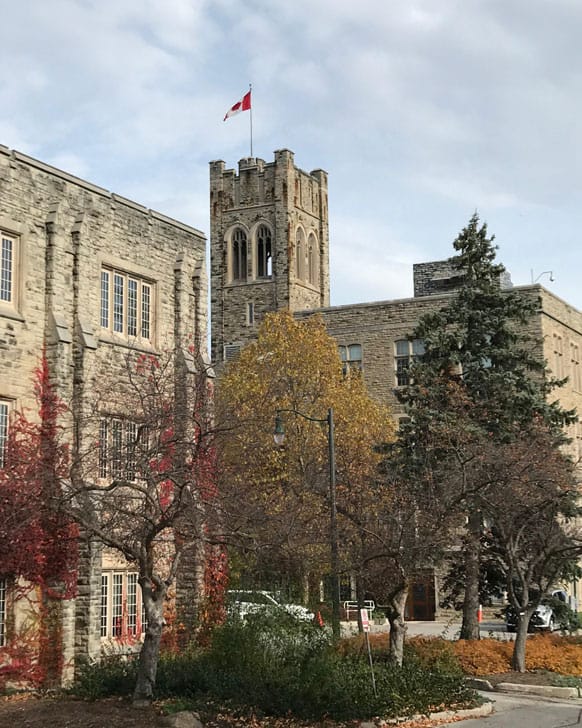
Sposato felt that leaving Argentina when he already had a track record and established relationships with colleagues in the country and the region made it easier to lead international collaborative projects. He noted that had he migrated to Canada at a younger age; “Today, I would be in a much higher position” (even though he is head of the Stroke Program at London Health Sciences Centre, professor of neurology at the Schulich School of Medicine & Dentistry at Western University, chair of the World Stroke Organisation Brain & Heart Task Force, and a prolific researcher with more than 200 PubMed-indexed publications).
Despite harsh winters where temperatures can reach -30 °C, Sposato does not regret his decision. “Canada is full of immigrants, and they open the door very warmly; they never made me feel like a foreigner. Canadian society is very open.”
A universal, government‑funded health model tasked with optimizing processes to make care efficient marks a very different scenario from the fragmentation he knew in Argentina. “Organization is top-down; they give you resources and technology, and everything is very well planned,” he summarized, even though there are bottlenecks and medical personnel are “overwhelmed” by demand for care for certain chronic conditions.
Moreover, “here physicians are highly valued in society and are compensated accordingly. It’s a law of supply and demand. If there were an excess of doctors like in Argentina, you would be paid less.”
And is there anything he misses from Argentina? “I’m a bit unusual; I liked social life, but it took up a lot of time. So I adapted very easily and forgot the life I had in Argentina. Of course, here I’d like to have a little more social life, but what you gain in some areas, you lose in others,” he said.
María Jiménez, MD (Spanish physician in Mexico): ‘I had to learn to practice medicine adapted to the circumstances’
A gynecologist specializing in endoscopic surgery, reproductive biology, and clinical genetics, Jiménez, who earned her medical degree at the University of Murcia, had been practicing and training in Spain for 5 years when she decided to cross the Atlantic to settle in Mexico. She thought credential recognition and the permission to practice would be relatively straightforward, especially considering she had no language barrier. But she encountered a reality that was “catastrophic” for her, forcing her to wait 4 years before seeing patients and to discover that in some respects, practicing medicine in Mexico’s public system “was as if I had gone back 40 years in time compared with Spain.”
The story began a few years earlier, when she met her future husband, a Mexican cardiologist, in Madrid during her training in reproductive biology. When the relationship solidified and they debated where to live, they assumed it would be easier for her to revalidate her studies in Mexico, while he would have to complete an extra year of training to revalidate and practice in Spain. So in 2012 — although “it had never crossed my mind to migrate, not even to train abroad,” Jiménez said — they chose the first option and moved to Mexico.
With marriage and a newborn in Mexico, obtaining permanent residency was not a problem. And the recognition of her degree and specialty was also relatively quick. The difficulty arose when Jiménez had to complete mandatory social service — the final year required to obtain the general medical degree — usually done in health centers or hospitals in urban or rural areas.
“That was the roadblock.... I found people from all over Europe waiting months and years to receive their social service letter [the assignment of where to complete it],” Jiménez recalled.
She eventually had a hospital in Jalisco advocate for her placement, and was able to complete the requirement, though she then had to have her specialty recognized a second time because she was told there had been an error in the previous process. “In total, it was 4 years from when I arrived until I could start working as a gynecologist. Those were very bad years in my life.”
It was also a shock to work in a public hospital in Guadalajara compared with the one in Spain. “The difference seemed abysmal,” she said. “Access to healthcare is very difficult for a large part of the population; I saw people die whom you would not see die in Spain.” Because of a lack of prenatal care in obstetrics, she witnessed extreme complications far more often, from fetal malformations to very severe preeclampsia and HELLP syndrome.
Jiménez emphasized that when you arrive to work or settle in a different place, there is a natural tendency to compare everything with your own country. In the first 2 years, “everything was miserable, distressing, gloomy. Until one day I stopped comparing, and at that moment, I began to learn. I understood that the culture is different, the population is different, and the resources are different. And I had to learn to practice medicine adapted to the circumstances,” she said.
The “teachers” were many. “I have learned from everyone: physicians, nurses, patients. When you come from Europe, you think you’re a good doctor because medicine there is more advanced. And here you discover that there are super specialists who do a great deal with fewer resources. You have to remove the European blinders to see it. Having gone on to practice in Mexico has made me a better person and a better professional.”
Although colleagues welcomed and treated her very well, she experienced a culture shock in that Mexico is more machista than Spain. “When I was sad or crying over the inability to work in my new destination, I encountered women who would say, ‘What are you complaining about? You have a child and a husband.’” That was more frustrating because they did not consider her aspiration for personal and professional development.
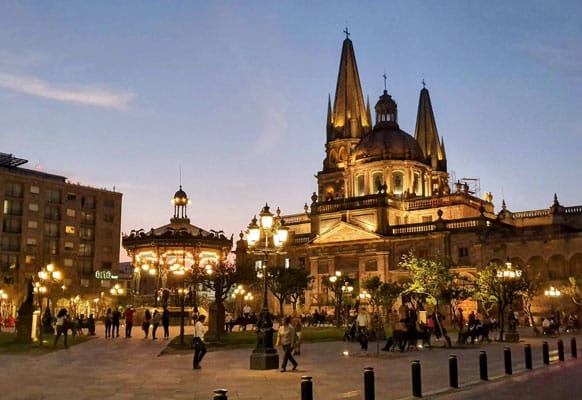
Now she loves Mexico and enjoys Guadalajara, the birthplace of mariachi and tequila. Her accent has softened considerably, and her son speaks “Mexican.” “I love going to the historic center to see mariachi groups at the Degollado Theater [one of Guadalajara’s most iconic cultural venues], and strolling through the Plaza de Armas [the main historic square of Guadalajara’s Centro Histórico], and the cathedral eating an elote [Mexican street corn] with cream and cheese,” she said. And she added that if all her family were in Mexico, she wouldn’t miss Spain as much.
“Even if you live in another country for a long time, you don’t feel 100% from that country. But I don’t feel 100% Spanish when I go back to my country either; they’ve even made me feel like a foreigner because of my Mexican accent. After 13 years I’m not Mexican, but am I Spanish? To survive abroad, I learned to see the good and not compare. You have to detach yourself from where you came from to see the good in where you are.”
Sebastián Peña Fajuri, MD, PhD (Chilean physician in Finland): ‘In an advanced country, it’s harder to understand what your contribution to society would be’
“Finnish is one of the most difficult languages in the world; there are very few words with Romance roots, so you learn it from scratch. I know very few foreigners who take the leap and speak Finnish at an advanced level.... With five semesters [of classes], I have a basic intermediate level that still isn’t enough to be fully connected with society. I still feel like I’m living in a separate world.”
The person who still feels he is “living in a separate world” is Peña, a Chilean epidemiologist with a master’s degree in international health who has lived and worked in Finland since 2017 at the Finnish Institute for Health and Welfare.
How did he get there? “By chance. I was happy in Chile and never thought about migrating, except to study abroad [temporarily]. It just happened,” he said. What happened is that while in his final year of medical school at the University of Chile, he came across a call for a 5-week global health training in Finland, with travel and per diem covered. “I had already done a couple of exchanges in the US and Sweden. It seemed interesting, it was summer, and I applied. Also, although at one point I was drawn to cognitive sciences, I had already decided I wanted to be an epidemiologist or work in public health to impact a larger group of people.”
During that stay in Helsinki, he met a young Finnish woman, with whom he later had a long-distance relationship while he finished his degree in Chile. Both applied for and received a scholarship to pursue a master’s in international health in Scotland, Netherlands, and Denmark. They completed it, and in 2017, the young couple returned to Finland to start a new life.
“I didn’t have any contacts. I started sending emails and one person replied; they called me for an interview [in English], a couple of months passed, and they told me they could hire me at the Finnish Institute for Health and Welfare. At the time, it was a very Finnish institution: Of 1000 employees, only 10 of us were foreigners, and I was the only one from Latin America,” he recalled.
Language wasn’t a problem: “My meetings and documents were in English,” he said. Since 2021, he has held a senior researcher position at the institute, where he leads a small group currently participating in an international project studying how social differences influence the incidence and mortality of cancer and other noncommunicable diseases. Along the way, he separated from his first wife in 2020 and now has another Finnish partner who speaks Swedish.
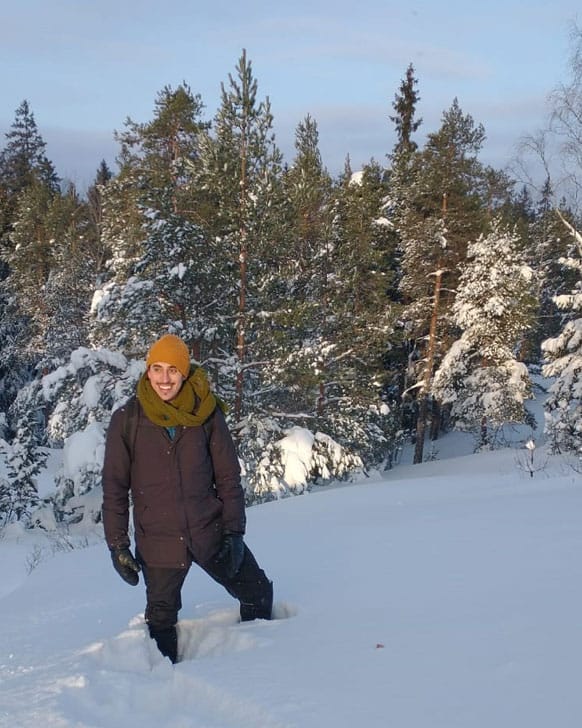
What is life in Finland like? “The life of a middle-class family in Santiago that earns enough to live near work isn’t very different from a family in Helsinki. Here the city is compact; I can bike to work — maybe comparable to a Chilean city like Coyhaique [60,000 inhabitants, in the south of the country]. But the big difference, the recipe for Finnish happiness, is that there is a minimum floor of social rights that lets you live in peace. I don’t have to worry about my children’s education (I already have four), I don’t have to worry about healthcare, and I don’t worry much if I lose my job because unemployment insurance is good,” he said.
He also said the Finnish society is very curious about Latin American immigrants and that he has never had a racist or humiliating experience because of his origin. “At first, people looked at me on the street like a strange creature,” he said. You can apply for a work visa or a family-reunification visa, which is renewed after 1 year the first time and then after 4 years. After 5 years, residency becomes permanent.
It is true that winter is difficult, with highs and lows ranging between 3 °C and -7 °C. “November and a bit of March are the hardest months, with few sunny days. Before remote work, you arrived at the office in the dark and left in the dark. Many people become withdrawn at that time. But the festive Christmas atmosphere partly makes up for it.”
From Santiago and Chile in general, what he misses most are family and friends. But there is also an intangible component: a sense of purpose. “Here in Finland, because it is an advanced country, it’s a bit harder for me to understand what my contribution to this society would be,” he said.
Although he does not treat patients, there are foreign colleagues who do. “There is a physician shortage here; they tend to accept doctors even if their language level isn’t very fluent. You have to go through an accreditation or validation process. You need to take some courses on social security, and there are Finnish courses 8 hours a day until you reach a minimum level to do a mandatory 2-year internship, which is relatively well paid. Many start in specialties that require less language mastery (like surgery or anesthesia) and later move to their preferred specialty. It’s long but not impossible.”
Thriving in a distant, different destination requires patience, curiosity, and openness, he said. Adapting to Nordic communities takes time and isn’t always easy, but if you keep an open mind to learn, organize your time, and find people you fit with, there are many things that are done better here than in Latin America. The balance between work and free time, for example, is much more favorable: “Here everyone is home by 4 PM.” His final advice is to “try to focus on the positive: Having a positive spirit helps a lot.”
Thomas Weitzel, MD (German physician in Chile): ‘Here there’s less distance with patients, but they’re more disappointed if you don’t prescribe a drug’
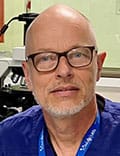
It was planned as a sort of sabbatical year. Weitzel, a specialist in infectious diseases and tropical medicine, arrived in Chile in February 2007 accompanying his wife (Chilean, but who had left the country at age 7) and with more than two decades of experience at major centers in his native Germany, such as Charité Berlin, Europe’s largest university hospital. He was just over 40.
“The first obvious obstacle is that it took me time to decide to stay and revalidate my degree and go through the demanding, complicated process that entails. It is easier for a Chilean physician to practice in Germany than the other way around,” he said. There was also the language barrier. He knew very little Spanish; he spoke English with his wife because she had lived in the US since childhood and he met her in Cairo, Egypt.
In Chile, he could not revalidate only his specialty but had to revalidate his entire medical degree, so he had to study topics he hadn’t read since medical school and pass theoretical and practical exams in areas such as internal medicine, surgery, gynecology, and pediatrics. Finally, he had to take the national medical exam, the Examen Único Nacional de Conocimientos de Medicina, which for foreign graduates entails automatic revalidation of the degree. “I passed with a fairly good score. You need motivation and months of preparation — it’s possible — but I saw German doctors and others who failed this exam two or three times and then went back to Europe,” he said.
In the interim, to make ends meet, Weitzel applied for and won a grant from the German Academic Exchange Service, which sends German faculty abroad, and he was able to establish a tropical medicine course [a specialty that does not formally exist in Chile], which he has taught regularly since 2008 at the University of Chile. “The community of infectious disease specialists here welcomed me very generously,” he said.
In 2009, he started his first clinical job: 4 days at the Military Hospital of Santiago and 1 day at a center in Valparaíso. “At the beginning, I had the language level of a 12-year-old,” he joked. “But we practiced team-based medicine — I did rounds and the residents and colleagues helped me.” Today he heads the Travel Medicine Program at Clínica Alemana and is a full professor at the Institute of Sciences and Innovation in Medicine of the Faculty of Medicine, Clínica Alemana, Universidad del Desarrollo, Santiago, in addition to maintaining ties with institutions in Germany. An active researcher, in the past 5 years alone, he has been first author or co-author of more than 30 papers on neglected tropical diseases in indexed journals.
Adapting to the new country was gradual and painstaking: It requires a lot of tolerance, flexibility, and warmth, he said.
Unlike Germany, he notes there is much greater closeness among physician, patient, and family, as well as among colleagues, with far fewer hierarchy-imposed barriers and more willingness to share information and take an interest in a coworker’s personal life. The negatives? Inequality between the public and private systems and a certain individualism in practice — economic competition among professionals. “What I miss most from there is teamwork,” he said.
Curiously, senior physician income in Chile can be higher. “In Germany, at a university hospital, a neurosurgeon can earn the same or a little more than administrative staff. Incomes are modest; you live a good life but without luxuries. Almost no doctor [who worked with me in Hamburg or Berlin] bought a new car.”
His connection with Chilean patients works well, he said, although expectations differ from those in Germany. “In Chile — and I suppose in the rest of South America — people think the doctor has something magical and hopefully will prescribe one or two drugs to solve a problem, and if they’re expensive, even better. And if you explain that you don’t want to prescribe drugs and want to wait and see the course, people are a bit disappointed. In Germany, by contrast, patients are more critical, ask more questions and are more accepting of not being medicated.”
It’s an example of those “deep” intercultural differences that aren’t obvious at first glance and that any immigrant experiences when settling so far from home. After nearly two decades in Chile, Weitzel is still trying to decode or understand the “core” of certain cultural patterns, such as a greater reluctance to engage in frank discussions about conflicts in private or work settings. Adaptation is an ongoing process.
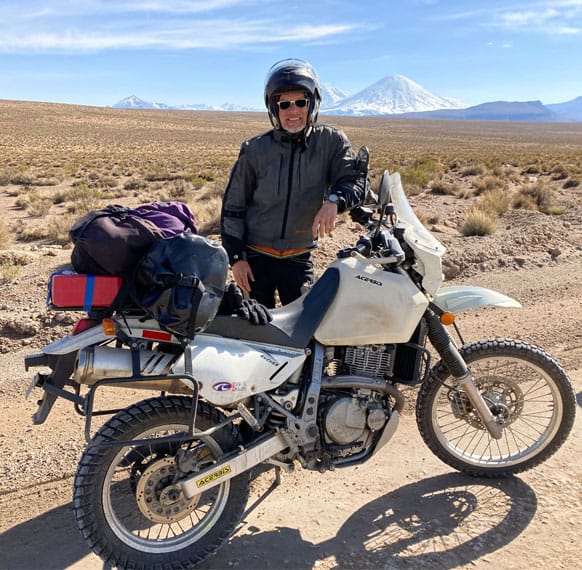
But he has learned to enjoy his chosen destination and no longer imagines working in Germany. Every day, from his neighborhood or the clinic in Santiago, Weitzel has a view of the imposing contours of the Andes. And when he has vacation or free days, he often takes his motorcycle to tour the mountains. In 2023, for example, he rode from Santiago down to Puerto Natales and Punta Arenas (at the southern tip of the country) via Argentina’s legendary Route 40 and returned via the Carretera Austral — a 6000-km trip. “I have many route ideas for South America for the coming years,” he said.
Teepe, Sposato, Jiménez, Peña, and Weitzel reported having no relevant financial conflicts of interest.
This article was translated from Medscape’s Spanish edition.