Admin_Adham
No-wipers. That's not a medical term, but it's the one I use because it makes the most sense. Those are the healthy poops. They're not loose or messy. You're not constipated. There's no discomfort or belly pain. You wipe, and there's nothing there. For me, that's a big success, because there are currently three separate mechanisms causing issues throughout my gastrointestinal (GI) tract.
It started on a service trip to Tanzania and Zanzibar Island. I had some traveler's diarrhea, which is to be expected. Luckily, I had planned in advance and had a short course of antibiotics with me, which I took. I wasn't concerned.
Then one day toward the end of the trip, I ate a bite of food and immediately felt horrible heartburn symptoms. I had intense pain and pressure in my chest and had to induce vomiting to relieve it. After I got home, this continued to happen once or twice a month with countless more times when the symptoms weren't as bad. When it got severe, I kept self-purging.
It took me over a year to seek medical care.
You probably think I'm crazy for that, but as a medical student, you just wonder, Do I really need to be seen? Is there something really wrong? Is this something that I can just manage on my own?

At the time, I was going through my first 2 years of training. It was constant coursework, classes, studying, quizzes every week, board exams every month. I couldn't take time off. I would sit in gastroenterology class with all these crazy diagnoses running through my mind. But I assumed the class was the problem — it was just because I was learning about GI. Or because I'm a bit of a hypochondriac. I thought it was all in my head.
But managing my symptoms was getting harder. It was constantly on my mind. I remember being out at dinner on a double date. I had a bite of food and immediately felt the pressure in my chest. Internally, I started to freak out. I'm going to need to throw up. Do I go to the bathroom? Do I wait? Where is the bathroom? What's happening right now in the conversation? Can I just leave and take care of things without raising concern? Or will people ask questions, and then I have to explain?
I stopped going out for food or eating in public places. I cut out certain foods and added them back in. But after 2 years, it got to the point where the self-purging wasn't fixing the pain and pressure anymore. It had become unbearable, and that started to scare me.
I saw a doctor, and first they gave me a prescription for acid reducing medication, which definitely worked. I had blood work done and a stool sample to check for any pathogens. Everything was negative.
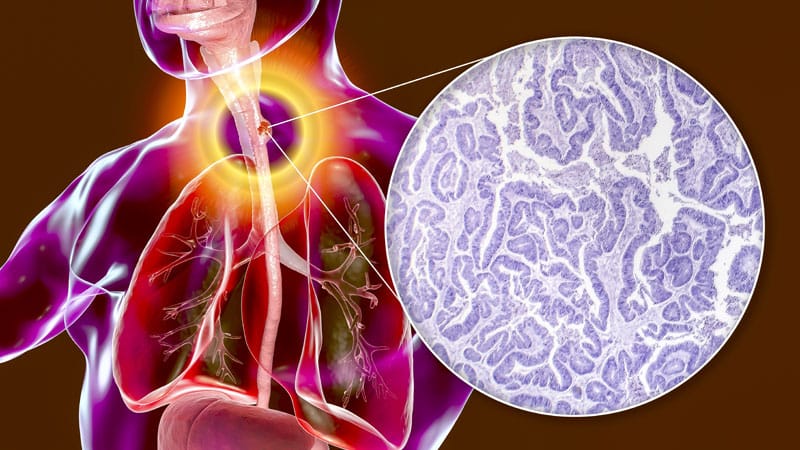
Then I had an endoscopy and finally, I got an answer. I was diagnosed with eosinophilic esophagitis (EoE), a chronic, allergic inflammatory disease of the esophagus. At the same time, they found ectopic gastric mucosa in my upper esophagus, a congenital condition where stomach tissue doesn't fully migrate into the abdomen as a fetus develops. I've probably had it since birth.
I had also been having lower GI symptoms, which my doctor and I now think might be a form of post-infectious irritable bowel syndrome caused by the combo of traveler's diarrhea and antibiotics during my trip to Africa.
I had told myself I was probably making my GI issue more complicated than it needed to be. I had reminded myself about Occam's razor — the simplest answer to a problem is most likely to be correct. In fact, it was more complicated, it was three problems.
Going through this experience, I've realized how uncomfortable most people are with talking about GI symptoms. Our society has put those topics on a not-for-public-conversation list, because they're considered gross or disgusting and should be kept private. Don't talk about that at the dinner table. But also, don't talk about it after dinner either — or anywhere else.
As an MD-PhD student, I'm surrounded by doctors and scientists focused on health. But I've noticed that if I mention colonoscopies or poop, I get a mix of reactions. Some people totally ignore it. Others laugh or make jokes. I've been told to stop, because the conversation isn't "workplace appropriate." And then there are people who are genuinely curious and want to know: What's a no-wiper?
The result of not talking about something is that we don't know what's normal. So, we accept or ignore symptoms that maybe we shouldn't be having. Stuff goes in and stuff comes out; that's how our bodies work. But how do we know what that should look and feel like?
Maybe we should talk about it?
I recently found out that EoE runs in my family. I wasn't the first to experience symptoms. But of course, it wasn't something that came up in conversation.
Often, there's an easy fix for GI issues, which you might find by tracking your food. What are you eating? When are you eating it? What are your bowel movements like? How many times a day? What time of day? Is there a connection?
Tracking was the way I started to get a handle on my condition and my diet. It was hard at first, but it eventually became a habit of just writing down: I had oatmeal for breakfast. I had a bowel movement at 10:00 AM. Eventually, the patterns will show up.
Unless a patient is presenting with GI symptoms, bowel movements are not something a doctor will necessarily ask about at an annual checkup. And unless the problem is severe, most people won't bring it up. It's awkward and embarrassing. So, they push it off, which can end up making things worse.
With EoE, if you let it go long enough, inflammation will start building up and lead to strictures —- basically scar tissue — that cause your esophagus to narrow. That makes it hard to swallow food, and you need surgery to widen it back up. I don't want to have to do that. The medications I'm taking help a lot, but unfortunately, they're a short-term fix to a long-term problem.
The initial treatment for EoE is usually an acid reducer, like a proton pump inhibitor, or a steroid to reduce the inflammation. Neither one is good for your body long-term. There is a biologic medication, a monoclonal antibody that targets the immune cells responsible for causing the inflammation. But it's a newer drug, and most insurances don't cover it. Plus, there are side effects.
The other option is an elimination diet. EoE is often caused by a food trigger, likely one of the top six most common food allergens: dairy, gluten, egg, soy, nuts, and shellfish. I'm currently in the process of cutting them out for several months, then having an endoscopy to take a biopsy and run it through pathology to see if the inflammation has gone down.
It's invasive and expensive, but it's the only way to determine if the elimination diet has worked. So far, I've done five out of six, and the inflammation has shot up. The last one is nuts, so I'm hoping that's the answer.
It might be controversial, but I've been heavily relying on AI for support in between doctor's appointments. I see my doctor every 4-6 months, but I'm still dealing with problems every single day. So, chatting with AI has been really helpful with managing a diet plan and learning everything I can about these conditions. Of course, you need to know the limitations of AI and when to double check what it's telling you. It's not a doctor, but I think it can help people feel more comfortable with these "unmentionable" problems.
Having healthy poops every day is something that everybody should be striving for. That might not seem like a fun goal. But if you feel good, and things are running smoothly, that's one less thing to worry about. Just like we tell our patients, we should all be trying to take care of our bodies as much as we can. Nobody else is going to do it for us.
If the opportunity presents itself, I will always talk about GI stuff. I'm not trying to gross people out but just to show them that this is something we can share. I'm all for honesty and transparency — in a reasonable way — because I want people to know: If you have issues that you've never discussed, maybe you should. Unfortunately, not everybody is as comfortable as I am talking about their bowels in the workplace.
Jack Tiller is a fourth-year MD-PhD student at the University of Texas Medical Branch, studying how tau pathology impacts nuclear function in Alzheimer's disease.