Admin_Adham
HONOLULU — Virtual reality (VR) may help clinicians better assess gait disturbances, including freezing of gait (FOG), in patients with Parkinson’s disease (PD).
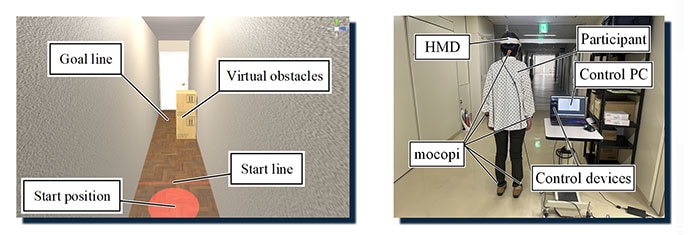
Using a “Virtual Gait Lab” system, researchers had participants navigate a virtual hallway with obstacles via a head-mounted display. They tracked gait patterns and calculated FOG scores based on observed hesitations.
Results from the feasibility study showed that compared with clinician assessments, the Virtual Gait Lab system detected FOG in patients with Parkinson’s with 89% sensitivity and 83% specificity vs healthy control patients. In addition, there was a 74% agreement rate with severity assessments.
The findings suggest that “VR technology can produce indoor environments that quantitatively capture [FOG] in Parkinson’s disease,” study investigator Kazuhide Seo, MD, PhD, assistant professor in the Department of Neurology, Saitama Medical University, Saitama, Japan, told Medscape Medical News.
Seo presented the results on October 5 at the International Congress of Parkinson’s Disease and Movement Disorders (MDS) 2025.
A Dramatic Effect on Quality of Life
Gait disturbances are a hallmark feature of PD and can have a dramatic effect on patients’ quality of life, independence, and safety. Identifying them is essential, as they often reflect disease severity and progression. Ongoing monitoring can also help clinicians individualize treatment and management strategies.
The investigators noted there is often a discrepancy between gait disorder symptoms observed in the clinic and those experienced in daily life — especially when it comes to navigating doorways and narrow passageways. These types of obstacles can lead to FOG and even falls.
“While environmental influences on PD motor symptoms are clinically significant, their underlying mechanisms remain largely unclear, and innovative methods to address this issue are still lacking,” the researchers noted.

“So we wanted to reproduce a real-world situation in virtual reality,” co-investigator Genko Oyama, MD, PhD, chair and professor, Department of Neurology at Saitama Medical University, told Medscape Medical News.
The study included 30 patients with PD (mean age, 75 years; 63% men) and 20 healthy control patients (mean age, 74 years; 40% men). There were no significant differences between the groups in height and handedness.
The Virtual Gait Lab system included a specially designed VR corridor that was 1 m wide and 3 m long.
The virtual environment included five experimental conditions: no obstacles (control); wide-tidy, with two neatly stacked boxes on one side of the hallway; wide-messy, with boxes stacked haphazardly on one side; narrow-tidy, with neatly stacked boxes in the center creating a narrower pathway; and narrow-messy, with haphazardly stacked boxes in the center.
All participants completed three assessment repetitions of each of the five conditions while wearing the head-mounted VR display device (Quest 2, Meta) paired with a mocopi (Sony) motion capture system. FOG scores were based on the frequency of gait hesitations.
For safety, a medical specialist walked beside each participant while they navigated the system.
Results showed that the PD group had gait trajectory fluctuations and gait hesitations near the VR obstacles, and their mean gait velocity was significantly slower compared to healthy control patients. The PD group also showed impaired gait recovery after navigating obstacles.
The total number of stagnations at “significant hesitation positions” — defined as locations where hesitation counts increased more than fivefold from baseline — showed a strong positive correlation with FOG scores (r = 0.74; P < .001).
In the 30 patients with PD, 16 exhibited FOG while using the VR system. In analysis using significant hesitation counts, there was high accuracy in identifying the presence or absence of FOG, with a sensitivity of 86.8% and specificity of 82.9%.
Interestingly, outcomes did not differ between the tidy and messy virtual environments. Oyama noted that while the researchers initially expected the messy setting to increase stress and trigger more FOG, this was not observed in the study.
Overall, “this study demonstrates the potential of the Virtual Gait Lab as a useful tool for evaluating gait disturbances in [PD], particularly for objective detection and severity assessment of FOG,” the investigators wrote.
Oyama said his team is considering making their VR program protocol available to other clinicians. “But we need to publish our findings first, of course,” he said.
Seo said he believes a version of the program could eventually be scaled and applied in other countries. He added that the team is now using a second version of the system that is significantly easier to use.
Potential Utility
Commenting for Medscape Medical News, Alice Nieuwboer, PhD, Department of Rehabilitation Sciences, Katholieke Universiteit Leuven, Leuven, Belgium, noted that measuring FOG on a 0-3 scale is challenging and raised concerns about how it was captured in the study.
She explained that identifying a freezing episode requires expert judgment, as it’s not always clear whether certain movements, like leg trembling, shuffling, or brief pauses at obstacles, constitute true freezing or simply hesitation.
Nieuwboer was co-author of a previous review about VR use in PD that was published in Nature Reviews Neurology and was not involved with the current research.
She noted that other studies are exploring different VR setups to provoke FOG “in a better way,” such as having patients navigate turns within virtual environments.
Nieuwboer said that using VR to provoke FOG “has potential,” but studies should compare patients with PD who experience FOG to those who do not, while also considering any medications they are taking.
She concluded that once standards are established and all factors are considered, VR could potentially be a helpful tool.
The study was funded by grants from JST Strategic Research Programs (CREST) and JSPS KAKENHI. Seo, Oyama, and Nieuwboer reported having no relevant financial relationships.