

 Admin_Adham
 Jump to Key Points
A study that surveyed dermatologists in more than 150 countries found significant disparities in access to dermatologic care. These disparities are present in both lower- and higher-income countries, and the needs in each country are unique, experts told Medscape Dermatology.

Access to dermatologic care globally is “profoundly unequal,” with 27 of 158 countries surveyed (17%) having the workforce necessary to provide adequate access to care, said Esther E. Freeman, MD, PhD, director of global health dermatology at Mass General Brigham in Boston and principal investigator of the study.
“Skin disease is everywhere, but access to healthcare for skin disease is not,” she told Medscape Dermatology. While disparities are more widespread in countries with fewer resources, “this is not only a low-income country [LIC] problem,” she added.
Based on the survey results, “nearly 80% of dermatologists globally are concentrated in urban areas, so even countries with a relatively large workforce can still have major geographic gaps in care,” Freeman said.
- Dermatology access profoundly unequal; only 17% countries met adequate workforce threshold.
- Mean density 2.66 dermatologists/100,000; 9 countries reported none.
- LICs: 0.37 dermatologists/100,000 vs HICs 5.05/100,000.
- ~80% dermatologists concentrated in urban areas; geographic maldistribution common.
- Solutions must be country-specific: training expansion, task shifting, teledermatology, primary care integration.
The study was published online on August 26 in JAMA Dermatology.
A Global Problem
The group of international researchers distributed a 47-question survey to dermatology leaders in 197 World Health Organization member states and geographic areas between August 2024 and October 2025. The researchers assessed the proportion of dermatologists in each country per 100,000 people as a primary outcome and the density of training programs, distribution of the workforce, perceived access to care, and non-dermatologist provider roles as secondary outcomes.
Overall, dermatology leaders in 158 countries responded, with 21 respondents from LICs, 45 respondents from lower-middle-income countries, 40 respondents from upper-middle-income countries, and 52 respondents from high-income countries (HICs). The authors noted the total number of responding countries made up 97% of the global population.
Across all countries that responded, the mean density of dermatologists was 2.66 per 100,000 people, with a range of 0-13.96 dermatologists per 100,000 people. In nine countries, there were no dermatologists, based on the country reports. In LICs, the mean density of dermatologists was 0.37 per 100,000 people, whereas HICs had a mean of 5.05 dermatologists per 100,000 people.
Few Countries With Adequate Care
Freeman and colleagues found that only 27 countries (17%) met a standard of 5.63 dermatologists per 100,000 people, which represented adequate access to care. Among respondents, 57 countries (42%) had inadequate or very poor access to dermatologic care, 31 countries (21%) reported a lack of dermatology training programs, and dermatologists were mainly located in urban centers (79%).
Using the threshold of 5.63 dermatologists per 100,000 people, the researchers found no countries in the African or Southeast Asian regions had enough dermatologists to meet their country’s needs, whereas 51% of countries in the European region met the threshold.
Who practiced dermatologic care also varied by country. The most common providers of care for diagnosing and treating skin diseases were dermatologists and primary care physicians overall, but LICs had a higher proportion of health officers, pharmacists, nurses, and traditional healers also diagnosing and treating skin diseases, which ranged between 36% and 44% of practitioners in those countries providing care.
Closing the Gap
Dermatologists will not be able to close this gap alone, Freeman told Medscape Dermatology.
“Ultimately, to address the high global burden of skin disease and the profound gaps in access, it will take all of us, including primary care clinicians, nurses, pharmacists, community health workers, traditional healers, and other frontline healthcare workers who are already providing the majority of care for skin disease around the world,” she said.
There is also no single solution to the problem of access to care. LICs primarily have a shortage of trained dermatology providers, which will require “expanding regional dermatology training pathways while also strengthening the skills of frontline clinicians who already provide much of the day-to-day skin care,” Freeman said.
For HICs, the problem often lies in uneven distribution and availability of care, she noted. About half of the dermatologists in HICs are in private practice, and respondents in the survey said dermatologists switching toward a mostly cosmetic practice was hindering access to care.
“The result can be ‘dermatology deserts’ in rural communities and the public sector, even in countries with a relatively high overall supply of dermatologists,” she said.
The solutions in each country need to match the problem, Freeman explained.
“Where the workforce is truly scarce, we need more training programs, and we need to reach frontline healthcare workers to prepare them to triage and treat the 10 most common skin conditions in their region,” she said. “In places where maldistribution is the major issue, we will need to focus on incentives to practice outside major cities, stronger public-sector capacity, teledermatology, and better integration between dermatologists and primary care.”
Task Shifting in Dermatology
Freeman said task shifting, or the practice of highly trained individuals training a workforce in necessary care in a low-resource setting, “is a model that can be especially valuable in settings where dermatologists are extremely scarce but large numbers of patients with skin disease are already being seen by other health workers.”
However, it does not replace the need for trained dermatologists in a region. “You still need local specialists to manage complex disease, train the broader workforce, and create referral pathways,” she added.

This model could also be relevant for rural and underserved communities in HICs. Most physicians receive fewer than 10 hours of dermatology training, but about one third of primary care visits involve a dermatology concern, said study co-author Joseph Michael Yardman-Frank, MD, MPH, a dermatologist at Beth Israel Deaconess Medical Center in Boston, where he is the director of global and community health dermatology.
“Frontline providers are already delivering much of this care, so giving them more training and support could have a substantial impact,” he told Medscape Dermatology. “Targeted lectures, greater clinical exposure during training, better educational resources, and telementoring programs like ECHO are all ripe opportunities.”
A Deeper Dive
Yardman-Frank said this is the first phase of their research, which provides a country-level snapshot of dermatologic care.
“The next step is to understand what access to care actually looks like for people with skin disease, frontline healthcare workers, and dermatologists in countries around the world,” he said. “Mapping those pathways will help us identify where changes could have the greatest impact on global skin health.”
Freeman said more patient-level data are needed to get a better picture of dermatologic needs.
“One limitation of this study is that it relied on national dermatology leaders and health-system informants, so it tells us a great deal about workforce and infrastructure, but does not directly capture the patient experience,” she said.
Firsthand Experience
Commenting on the study, Adam Friedman, MD, professor and chair of dermatology at The George Washington University School of Medicine & Health Sciences in Washington, DC, who was not involved with the research, said that what struck him most about the findings was it showed access to dermatologic care is a “global problem that exists on a spectrum.”
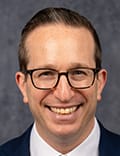
“The important lesson is that having dermatologists in a country is not the same thing as having access to dermatology,” he told Medscape Dermatology.
The study also highlights dermatologic deserts in HICs as well as the “persistent gaps affecting marginalized racial and ethnic minorities, people experiencing homelessness, and refugee and migrant populations,” Friedman said. “I see that firsthand in Washington, DC. You can be just a few miles from a major academic medical center and still effectively live in a dermatology desert.”
He noted that it’s important to focus on where care is being delivered and who is delivering the care. That starts with bringing “dermatology to communities rather than continually expecting communities to find their way to dermatology.” He said his institution offers a free teledermatology program in Wards 7 and 8, low-income neighborhoods in Southeast Washington, DC, which has expanded into a free clinic and health fair run by Learn2Derm, an organization involved with community outreach, skin health education, and delivery of dermatologic care.
“Simply producing more dermatologists without changing where and how they practice doesn’t necessarily solve the access problem,” he said. “Our experience in Southeast Washington has taught me that the venue matters enormously.”
Friedman also agreed there is “enormous opportunity” in providing standardized dermatologic training for non-dermatologist clinicians.
“The scalable answer cannot be that every rash needs a dermatologist. We need dermatologists managing complex disease while simultaneously helping primary care clinicians, advanced practice providers, nurses, and other frontline health professionals become better at recognizing common disease, initiating appropriate treatment, and knowing when and how to escalate care,” he said.
However, equity isn’t achieved by “periodically bringing care into a community,” he noted.
“Success is creating enough local knowledge, infrastructure, and connectivity that the community no longer depends on the outreach event to obtain appropriate care,” he said.
The study was funded by the International League of Dermatological Societies and L’Oréal Dermatological Beauty. Freeman reported being a consultant for L’Oréal Act for Dermatology, L’Oréal’s corporate social responsibility program. Yardman-Frank reported having no relevant financial disclosures. Friedman reported having no relevant financial disclosures; however, his institution’s community-based dermatology and teledermatology initiatives have received grant and philanthropic and/or in-kind support from Lilly, Pfizer, and Johnson & Johnson.
Jeff Craven is an independent journalist living in Wilmington, Delaware.



