Admin_Adham
TOPLINE:
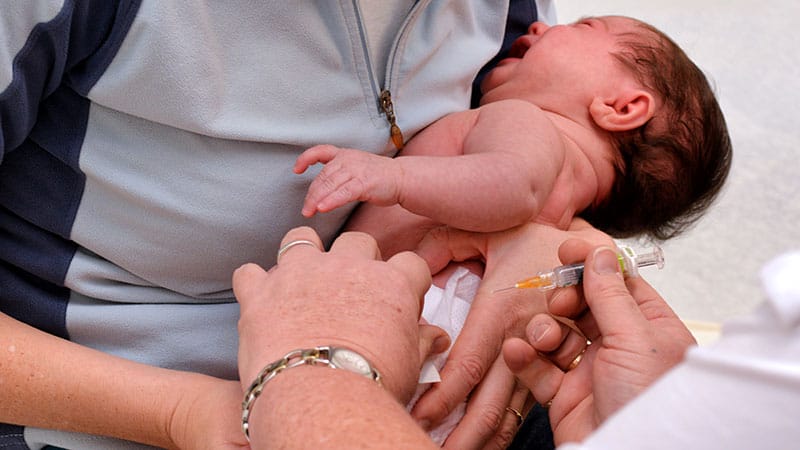
Intramuscular adrenaline injections failed to reverse histamine-induced hypotension in most healthy volunteers. Only 25% demonstrated recovery in mean arterial pressure (MAP) after a single adrenaline dose, but the effect was not sustained.
METHODOLOGY:
- Researchers assessed 22 healthy participants (median age, 27 years; 73% female) to determine the efficacy of standard intramuscular adrenaline in reversing histamine-induced hypotension.
- Overall, 10 participants received 300 μg intramuscular adrenaline in 0.3 mL saline, and 12 participants were randomly assigned to receive either 500 μg intramuscular adrenaline in 0.5 mL saline or 0.5 mL of saline as a placebo.
- Per‑protocol participants were those in the confirmatory crossover who completed both assigned treatments according to the randomization schedule and required no histamine dose adjustments.
- Response to intramuscular adrenaline was defined as achieving an MAP > 60 mm Hg, with or without administration of a second dose.
TAKEAWAY:
- Among 20 participants who did not require histamine dose adjustments, only 25% (95% CI, 8.7%-49.1%) responded to a single intramuscular adrenaline injection, but the effect was not sustained.
- The per‑protocol comparison (n = 9) showed a nonsignificant median difference of 7 mm Hg·min (95% CI, -2 to 24.5) between adrenaline and placebo in the area under the curve for change in MAP.
IN PRACTICE:
“[Our] finding highlights a critical limitation of the recommended first-line therapy and underscores the need for more potent and targeted interventions,” the authors of the study wrote. “Given that intramuscular adrenaline remains the guideline-endorsed first-line treatment worldwide, these results warrant careful reevaluation of its role in established, histamine-mediated shock,” they added.
SOURCE:
Bernd Jilma, MD, Medical University of Vienna, Vienna, Austria, was the corresponding author of the study, which was published online on March 2, 2026, in Allergy.
LIMITATIONS:
The study was monocentric, had a relatively small sample size, and predominantly included young, healthy adults, possibly limiting the generalizability of the findings to older adults. Even though the histamine infusion model was effective at inducing reproducible hypotension, it did not fully replicate the complex pathophysiology of clinical anaphylaxis. Additionally, the effects of adrenaline in extreme grade 5 reactions were not studied.
DISCLOSURES:
The study was supported by a grant from the Medical Scientific Fund of the Mayor of the City of Vienna. The authors declared having no conflicts of interest.
This article was created using several editorial tools, including AI, as part of the process. Human editors reviewed this content before publication.