Admin_Adham
Patients with rare skin disorders often go years without a diagnosis, in part because symptoms might be too diffuse to connect to a particular disease. But an artificial intelligence (AI)-powered platform being trained on an American Academy of Dermatology (AAD) database has been making strides at identifying patterns that could make it simpler to accurately diagnose patients.
The AI platform — OM1’s PhenOM — has had access to a de-identified data export from the AAD’s DataDerm registry since 2023, when OM1 and the AAD first began a collaboration. At that time, the AAD said in a press release, OM1’s Patient Finder tool (which uses PhenOM) would support the AAD’s Generalized Pustular Psoriasis (GPP) Education Initiative.
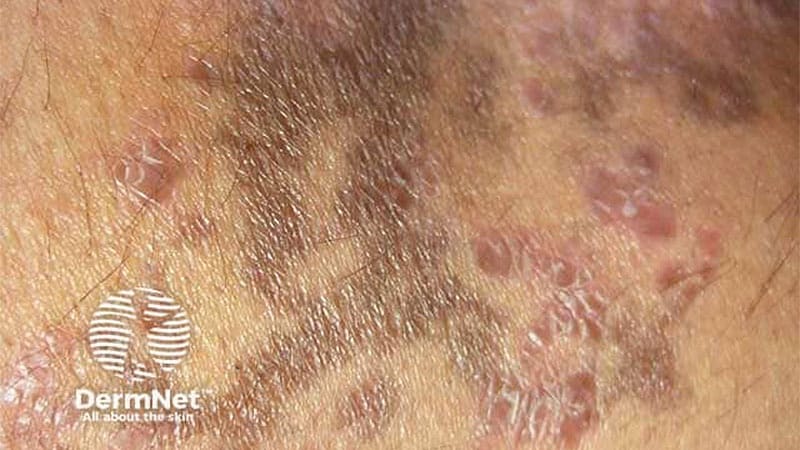
Making a GPP diagnosis is especially vexing. The rare form of psoriasis causes widespread, painful pus-filled blisters, which can lead to life-threatening complications such as kidney, heart, or respiratory failure. The condition can occur in patients who have the more common plaque psoriasis or a certain gene variant and is more common in middle age and in women. But it is frequently not diagnosed or is misdiagnosed.
AAD and OM1 have touted the AI rare disease project since it began, including in presentations at the AAD’s annual meetings in 2024 and 2025. Neither AAD nor OM1 has published data yet, but publications are under development, said Marta Van Beek, MD, MPH, the C. William Hanke Professor of Dermatology at the University of Iowa Carver School of Medicine, Iowa City, Iowa.
Van Beek, who helped establish DataDerm, told Medscape Medical News that PhenOM’s GPP findings have been used to educate AAD members and nondermatology clinicians on the condition and on making an appropriate diagnosis.
DataDerm — launched in 2016 — is voluntary but has amassed information on 60 million unique patient visits from 15.2 million patients in the US, according to the 2024 DataDerm annual report.
The AAD database has proven valuable in other ways, including developing baseline information on skin conditions, said Van Beek. “We’ve never had a tool like this to really look at the prevalence of disease,” she added. “Some things that we historically have thought maybe were rare diseases are actually pretty commonly treated in the community.”
‘Fingerprint’ for Conditions Being Identified
The aim of the OM1 collaboration was to use DataDerm “to see what kind of patterns or comorbidities or other diagnoses and/or healthcare utilization patterns patients have that could signal that they may have one of these undiagnosed rare diseases, so we could identify them sooner and get them the right treatment much earlier, and prevent prolonged suffering from lack of treatment or misdiagnosis,” said Van Beek.
OM1 — which has amassed claims and medical records data on some 370 million patients — was interested in DataDerm because “it’s a very high quality, very representative dataset in dermatology,” said Joseph Zabinski, PhD, vice president and head of Commercial Strategy and AI at OM1.
The Patient Finder tool is built on the idea that patients with GPP have patterns in common — such as similar symptoms and similar ineffective treatments — in their medical histories before they received an appropriate diagnosis, Zabinski told Medscape Medical News. Patient Finder can search patients’ medical histories before a dermatology visit. It then links that to the patients’ information in DataDerm and identifies patterns suggestive of disease — a “fingerprint” that includes diagnoses, medications, symptoms, procedures, and lab tests.
The fingerprint can be used to identify patients who likely have GPP. The message for clinicians: “What the algorithm is telling us are sort of the most important or most commonly missed factors out there in clinical practice,” Zabinski said.
In addition to educating dermatologists, AAD plans to use the knowledge gained about GPP to inform infectious disease physicians that when a patient has pustules on their body and a high white count, they may have GPP, not an infection, said Van Beek. The information may also eventually be shared with emergency medicine doctors, hospitalists, and primary care physicians as patients with GPP might enter the system through those doors first.
The Patient Finder tool is now being expanded to help identify patients who might have hidradenitis suppurativa, a chronic, noncontagious, inflammatory condition characterized by painful bumps or boils and tunnels in and under the skin that is more common in women and in Black individuals.
So far, the tool has determined that “one of the most powerful analytic signals is that patients have a history of really severe pain and pain management,” said Zabinski.
A key takeaway for dermatologists: Looking into a patient’s history of pain medication use — including over-the-counter medications — might be “an indicator that there could be undiagnosed hidradenitis suppurativa,” he added.
Methods Can’t Be Explained
While Zabinski’s explanation seems simple, the “explainability” of how AI works is difficult.
That can be a challenge in medicine, said Van Beek. “It’s not using the scientific method,” she said. “It’s in a framework we’re not used to digesting.”
Another potential downside to AI-generated knowledge is that it can only draw upon the data available, which could be biased or incomplete. Both Van Beek and Zabinski acknowledged that DataDerm is a biased dataset.
DataDerm’s biggest bias is that it is made up of “people with access to dermatologists and people with access to care,” said Van Beek. That is a different patient population than patients who don’t have access to care. And she said, the database has fewer reports from academic medical centers than desired. That would give the data more breadth, said Van Beek.
“There is no perfect representative dataset,” said Zabinski. But he said that OM1 applies the AI-generated knowledge in ways that acknowledges the dataset’s limitations. “I’m not going to assume that a model can generalize beyond what the population that it’s trained on can support,” he said. That means that the GPP fingerprint might “not necessarily work for patients who have not seen a dermatologist before,” he said.
Adjunctive, Not Prescriptive
Van Beek said that she and others affiliated with the collaboration have made it clear that the AI-generated knowledge is not meant to be prescriptive.
She calls it “augmented intelligence,” as does the AAD, because it is meant to assist clinicians in diagnosing patients and choosing a treatment. Without physician oversight, there could be patient harm, she said. AI tools “really can’t necessarily replace us,” she said, adding that the models can change and that each patient is unique.
Zabinski agreed. “We’re never going to say to the physician, here’s a checklist of 57 things,” he said. “That will never be useful in real practice, but we try to isolate those little pearls that are of highest impact.”
The AAD-OM1 collaboration reported being financially supported by Boehringer Ingelheim, which has an FDA-approved treatment for GPP, spesolimab (Spevigo). Van Beek reported no conflicts.
Alicia Ault is a Saint Petersburg, Florida-based freelance journalist whose work has appeared in many health and science publications, including Smithsonian.com. You can find her on X @aliciaault and on Bluesky @aliciaault.bsky.social.