

 Admin_Adham
 Jump to Key Points
Electrophysiologist Jonathan Chrispin, MD, wanted to do more.
He was standing in the electrophysiology lab at Johns Hopkins University in Baltimore, catheter in hand, about to ablate a patient’s ventricular tachycardia (VT) — a potentially fatal arrhythmia caused by electrical circuits looping through scar tissue left behind by a heart attack. In a standard procedure, Chrispin would spend 5-8 hours mapping the scar point by point and burning through it with a 3.5 mm catheter tip. The success rate hovers around 50%-60%. Many patients come back for a second ablation. Some come back for a third or fourth.
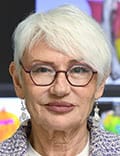
But this time, the targets had already been chosen. Before Chrispin entered the room, a team led by biomedical engineer Natalia Trayanova, PhD, had built a computational replica of the patient’s heart from a contrast-enhanced MRI scan — scar, border zones, healthy muscle, all mapped in three dimensions. They had triggered arrhythmias inside the model, identified the electrical circuits sustaining them, and virtually destroyed them. When new circuits emerged, they destroyed those too, repeating the process until nothing could be provoked. The result was a set of precise ablation targets, imported directly into the mapping system in the procedure room.
“We first treat the digital twin,” Trayanova said. “We don’t treat the patient right away.”
- TWIN-VT: 10 post-MI VT pts; digital twin-guided ablation achieved 100% noninducibility.
- Mean follow-up 405 days: 8/10 arrhythmia-free off antiarrhythmics; no ICD shocks.
- First prospective human test of patient-specific computational model guiding VT ablation.
- Oncology twins use MRI-calibrated biology models, not neural nets; individualized tumor dynamics simulated.
- Triple-negative breast cancer twins predicted pCR AUC 0.82; alternative paclitaxel timing raised predicted pCR 61%→86%.
Chrispin’s job was to burn exactly where the model told him — and nowhere else. “Part of me was like, should we just do a little bit more?” he said. But the point was to “stick with the protocol and the science.”
Indeed, he stuck with the protocol. The TWIN-VT study, conducted under an FDA investigational device exemption that limited enrollment to 10 patients at a single center, was the first prospective test of whether a computational heart model could guide an ablation in real patients. All 10 were post-heart-attack patients with recurrent VT — the kind of cases where standard ablation most often falls short.
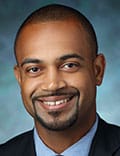
Every patient was rendered noninducible for VT by the end of their procedures. Over a mean follow-up of 405 days, eight of 10 remained arrhythmia-free without anti-arrhythmic drugs. None received a shock from an implantable cardioverter-defibrillator. At the time of this writing, Chrispin said, none have had recurrent VT.
The study is small, single-center, and not randomized. But it is the first prospective demonstration that a patient-specific computational simulation — a medical digital twin — could directly guide a procedure and produce outcomes that appear to exceed the current standard of care.
The question now is whether the same idea can work for cancer.
A Different Beast
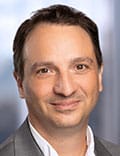
“Cardiology is roughly a decade ahead of us,” said Thomas Yankeelov, PhD, a biomedical engineer at the University of Texas at Austin and MD Anderson Cancer Center in Houston who has spent twelve years trying to build the equivalent technology for tumors. Much of cardiac function is governed by physics that scientists have studied for centuries — electrical propagation, fluid dynamics, and muscle mechanics. An arrhythmia circuit follows rules that can be written as equations and solved. The readout is immediate.
A tumor is a different problem. “A cell that replicates itself, ignores stop signals, evades treatment, and actively pumps drugs out of its cytoplasm,” Yankeelov said — “that’s a different beast entirely.”
Yankeelov came to this work from an unexpected direction. Twelve years ago, sitting on a beach, he read a review article about the history of meteorology. A 100 years ago, weather forecasting was guesswork. Forecasters relied on observation and pattern recognition, with no mathematical framework built on atmospheric physics. Then, physicists wrote down the equations governing atmospheric behavior, and prediction transformed. Inspired by the article, Yankeelov went back to his lab and started asking whether the same transformation that happened in weather prediction models could happen in oncology.
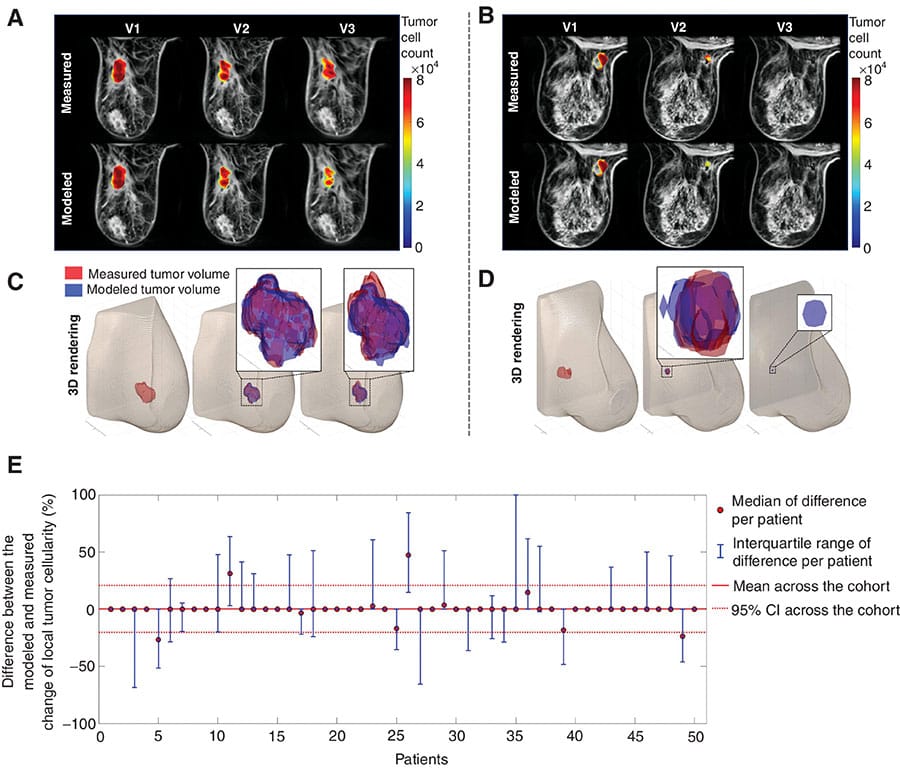
The model his group built works on the same principle as Trayanova’s cardiac twin: take a patient’s imaging data, calibrate a mathematical simulation of their specific biology, and run it forward to see what happens under different treatments. But instead of electrical circuits, the equations track tumor cells — how they move through tissue, how they proliferate at rates calibrated from each voxel of the patient’s MRI, and how they die from treatment, with drug distribution estimated from contrast-enhanced imaging.
But this is not artificial intelligence in the way the term is commonly used. It is not a neural network trained on thousands of patients. It is a biology-based mathematical model calibrated to one patient’s own data. The training set you would need for a machine learning approach — thousands of patients with the same cancer subtype, every possible drug regimen represented — “doesn’t exist, and it will never exist,” Yankeelov said, “because the patients are so different.”
Same Drugs, Different Timing
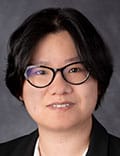
In a study published in 2025, Chengyue Wu, PhD, a member of the collaboration with Yankeelov and now on faculty at MD Anderson, applied this framework to 105 patients with triple-negative breast cancer enrolled in the ARTEMIS trial. She and the team built a digital twin for each patient from longitudinal multiparametric MRI and calibrated the model to predict whether the patient would achieve a pathological complete response — meaning no residual invasive cancer found at surgery — after neoadjuvant chemotherapy.
The twins predicted that outcome with an AUC of 0.82, a good result, though not exceptional.
Then they did something the cardiac twin has not attempted. The standard chemotherapy for this cancer has two phases: first, a combination of adriamycin and cyclophosphamide, known as AC; then paclitaxel, a widely used chemotherapy often referred to by its brand name Taxol. For each patient, the team simulated 128 alternative schedules — same three drugs, same total doses, just different timing — and asked whether a different arrangement would have worked better.
For about a quarter of the patients, the answer was yes. Twenty six of 41 patients who did not achieve a complete response under their actual treatment were predicted to achieve one under a different schedule. The predicted rate of complete response rose from 61% to as high as 86%.
Nearly all the gains came from adjusting the paclitaxel schedule. “AC is already given at near-maximum tolerated dose,” Wu explained. The space to move was in the paclitaxel scheduling, where clinical practice already varies widely.
“We had shivers go up our spine,” Yankeelov said, describing the moment the optimization results first appeared, lighting up as a three-dimensional surface on the screen showing tumor burden plotted against every possible drug combination for a single patient. One vertex, or point on the surface, showed the patient’s actual regimen, with substantial residual tumor. Another showed a different schedule that was predicted to leave no disease at all. It had taken 6 years, many equations, cell experiments, mouse models, patient data collection, and dozens of simulated schedules to produce that single plot.
Other members of the collaboration have applied the same mathematical backbone to high-grade gliomas, head and neck cancer, prostate cancer, and cervical cancer. In a 2021 study of nine patients with brain tumor, the model predicted tumor volume at 3 months post-treatment with a median error of negative 2.5%. A separate group at Moffitt Cancer Center has used evolutionary game-theory models to guide intermittent abiraterone dosing in metastatic castration-resistant prostate cancer, one of the few oncology digital twin efforts with prospective patient-outcome data.
But no patient with cancer has yet been treated based on what a digital twin recommended.
What’s in the Way
The obstacles are not mainly technical. The model captures drug efficacy but not toxicity — if the optimization recommends a denser schedule, there is no way to know from the model whether that schedule is tolerable. There is no way to quantify how confident a specific prediction is. And unlike the cardiac twin, which is used once, a cancer twin would need to update continuously as the tumor evolves. “The conditions change all the time,” Trayanova said, “and you no longer know whether you are representing the clinical reality.”
Yankeelov said the biggest barrier is now “logistical and sociological.” How do you present a twin’s output alongside a clinician’s own assessment? Wu is building a prototype interface at MD Anderson where oncologists can interact with twin predictions, and the next step is a prospective trial in which the twin runs in the background without changing treatment — testing whether its recommendations would have been useful.
Two years ago, Yankeelov would not have been ready to recommend changing a patient’s therapy based on the model. Now he believes the data support it. “I don’t say that lightly,” he said, “because it’s affecting how Grandma is going to get her therapy.”
On the cardiac side, Trayanova’s group has published work using digital twins to stratify atrial fibrillation patients for different ablation strategies, and she has a larger randomized trial consisting of 65 patients, currently in 2-year follow-up. She expects to publish soon. But deployment requires infrastructure she cannot build from an academic lab. “I would have never said funding 2 years ago,” she said. “But I’ll just fold up if I cannot.”
“If you look at the history of science,” Yankeelov said, “once we mathematize something, we get much better at it much more quickly. And since it has happened in cardiology, it gives me hope that it can happen in oncology.”
The TWIN-VT study was supported by the National Institutes of Health (R01HL174440) and the Leducq Foundation. Amanda Barcelon, a co-author on the TWIN-VT correspondence, is affiliated with Johnson & Johnson MedTech. Yankeelov, Wu, and David Hormuth II reported holding a pending patent related to this work. Yankeelov and Guillermo Lorenzo reported holding a second pending patent. Yankeelov is a CPRIT Scholar in Cancer Research. The cancer digital twin work was funded by the National Cancer Institute and the Cancer Prevention and Research Institute of Texas. Disclosure information for study authors is available in the original study publications.



