Admin_Adham
Exposure to everyday air pollution (in the form of fine particulate matter and nitrogen dioxide from traffic, industry, and wildfire smoke) is associated with reduced cognitive function in middle age, according to research from McMaster University in Hamilton, Ontario, Canada. The findings are noteworthy, since Canada's "levels of air pollution are among the lowest in the world," according to the authors.
The researchers examined 6878 adults (mean age 57.6 years, 55.6% women) who were recruited between 2014 and 2018 as part of the Canadian Alliance for Healthy Hearts and Minds Cohort Study (CAHHM).
The findings may suggest a need for closer and more frequent cardiovascular screening and monitoring in areas with higher levels of PM2.5 and air pollution. "This can be valuable towards health equity for populations at risk," study author Sandi M. Azab, PhD, an assistant professor in metabolomic epidemiology and global health at McMaster University, told Medscape News Canada.
The study was published May 13 in Stroke.
Two Cognitive Measures
The CAHHM is a prospective study with participants from across Canada. Overall, 3372 (49.0%) participants in the current analysis were from Ontario, 1594 (23.2%) were from Quebec, 774 (11.3%) were from British Columbia, 720 (10.5%) were from Nova Scotia, and 418 (6.1%) were from Alberta.
Fine particulate matter (PM2.5) was the primary air pollutant of interest, and nitrogen dioxide (NO2) was a secondary pollutant. Participants' average annual exposure to these pollutants for the 5 years before recruitment was linked to CAHHM using their residential postal codes at the time of recruitment.
Average PM2.5 pollution levels were estimated using satellite data and atmospheric drift models, with adjustments based on ground-level environmental data. These estimates compared favorably with in situ monitor measurements. Average NO2 levels for each location were estimated using a land-use regression model incorporating satellite data, traffic, industrial land use, and weather information. They were adjusted using long-term air quality monitoring data. These estimates showed good agreement with national air pollution monitoring data.
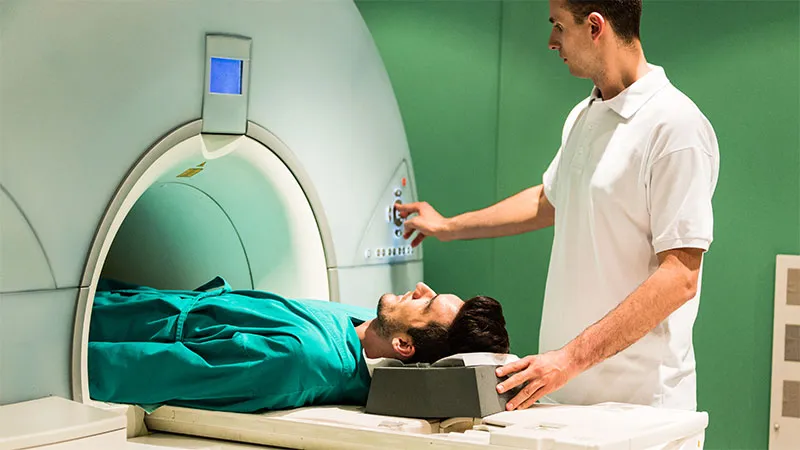
Outcomes included two measures of cognitive function (the Montréal Cognitive Assessment [MoCA] and Digit Symbol Substitution Test [DSST]) and MRI to assess covert vascular brain injury.
Over 97% of the cohort's postal codes were in urban areas, and the mean 5-year pollutant concentrations of PM2.5 and NO2 preceding enrollment were 6.9 μg/m3 and 12.9 ppb, respectively.
On baseline MRI scans, 8.6% of study participants had covert vascular brain injury, of whom 3.6% had silent brain infarcts and 5.6% had high white matter hyperintensities.
Causality in Question
After adjusting for potential confounders, including dementia and cardiovascular risk factors for each participant, as well as greenspace exposure estimates, the researchers found that higher pollution exposure was associated with poorer cognitive function scores and more evidence of vascular brain injury.
A 5 μg/m3increment in PM2.5 was associated with a reduction of 0.44 points on the MoCA (P < .0001), and a 5 ppb increment in NO2 concentrations was associated with a reduction of 0.12 points (P < .0001). For the DSST, a 5 μg/m3 increase in PM2.5 was associated with a reduction of 1.31 points (P = .02), and a 5 ppb increase in NO2 concentration was associated with a reduction of 0.38 points (P = .02).
While PM2.5 was not significantly associated with covert vascular brain injury, each 5-ppb increment in NO2 was associated with 8% higher odds of covert vascular brain injury (P = .04).
"We examined various covariates and confounders and found that diabetes, hypertension, central obesity, and covert vascular brain injury, as measured by MRI, did not change the association of air pollution with cognitive function despite their known impact on cognition," noted the authors.
"Despite our extensive attempt to control for confounders, some covariates were unmeasured, such as traffic noise, hearing impairment, excessive alcohol consumption, and head injury, and the risk of residual confounding cannot be excluded," they added.
"Due to the observational nature of the study, causality cannot be established, and reverse causation, though very unlikely, cannot be ruled out," Azab told Medscape News Canada. But because participants were not aware of the air pollution measures captured several years before baseline and are largely unaware of reduced cognitive scores, "it is highly unlikely that reduced cognitive scores would drive a choice of living in an area with higher PM2.5."
Targeting Upstream Factors
Commenting on the study for Medscape, Jiu-Chiuan Chen, MD, ScD, a professor of population and public health sciences at the University of Southern California in Los Angeles, said that over the past few years, the clinical community has recognized the supporting evidence for an association between exposure to ambient air pollution and increased dementia risk in late life, but the study by Azab and co-authors "addresses an important knowledge gap" about the role of this exposure in midlife. Chen was not involved in the research.
An important feature of the study is that participants resided "in areas where the estimated ambient exposure levels were very low," he said. "However, the putatively adverse effects were still measurable at the population level … and the magnitude of reported associations with modestly elevated exposures may translate to several years of cognitive aging," he said.
"In this study, the observed cross-sectional association between air pollution and worse performance on cognitive testing were not influenced by the cardiovascular risk factors and MRI-measured vascular brain injury," Chen added. "This interesting finding implies that intervening hypothesized clinical pathways in patients with cardiometabolic diseases or measurable cerebrovascular abnormalities may not work well to reduce the risk for cognitive deficit resulting from air pollution neurotoxicity."
If similar results are reproduced in other studies with longitudinal data, it may warrant "targeting upstream factors, such as strengthening air quality regulation, promoting clean transportation options (like walking, cycling, and electric vehicles), or taking personal-level protective actions (like portable air cleaners or air-purifying respirators) to more directly mitigate ongoing exposures to ambient air pollution," he concluded.
CAHHM was funded by the Canadian Partnership Against Cancer (CPAC), Heart and Stroke Foundation of Canada, and the Canadian Institutes of Health Research (CIHR). Financial contributions were also received from the Population Health Research Institute and CIHR Foundation Grants. In-kind contributions were received from Alan R. Moody and Sandra E. Black from Sunnybrook Hospital in Toronto for MRI reading costs, and from Bayer AG for provision of intravenous contrast. The Canadian Partnership for Tomorrow's Health is funded by the CPAC and Health Canada, BC Cancer, Genome Quebec, Centre Hospitalier Universitaire Sainte-Justine, Dalhousie University, Ontario Institute for Cancer Research, Alberta Health, Alberta Cancer Foundation, and Alberta Health Services. The Prospective Urban Rural Epidemiological study was funded by multiple sources. The Montreal Heart Institute Biobank is funded by André Desmarais and France Chrétien-Desmarais and the Montreal Heart Institute Foundation. Azab received the Vascular Training postdoctoral fellowship from 2022 to 2023. Azab and Chen reported no relevant financial relationships.
Kate Johnson is a Montreal-based freelance medical journalist who has been writing about all areas of medicine for more than 30 years.