

 Admin_Adham
The evidence evaluating the effect of cataract surgery on the chances people with dry age-related macular degeneration (AMD) will convert to the more severe wet form of the condition has been uneven over the past two decades. But what researchers are calling the largest study to date in this population shows the procedure carries a small but not insignificant risk for conversion.

“We found that for patients with dry age-related macular degeneration, undergoing cataract surgery was associated with a small but statistically significant increase — about 22% — in the hazard of converting from dry to neovascular AMD during their follow-up care,” said Helia Ashourizadeh, MD, a research fellow at the Harvard Ophthalmology Metabolomics in Retina Program at Mass Eye and Ear in Boston.
“The effect was seen in both early and intermediate dry AMD but was less pronounced in intermediate AMD,” she added.
Ashourizadeh presented the results at the American Academy of Ophthalmology (AAO) 2025 Annual Meeting. The retrospective cohort study included 80,086 eyes with early and intermediate AMD entered into the Intelligent Research in Sight (IRIS) Registry, a national voluntary database maintained by the academy, from 2016 to 2022. Half the eyes had cataract surgery; the other half served as the control group.
Problems With Previous Studies
In her presentation, Ashourizadeh reviewed 13 previous studies of various sizes since 2007 that reported varying outcomes. The sample size of those studies ranged from 45 to 6000 patients.
“Some of the early large population-based studies, like the Beaver Dam Eye Study and the Blue Mountains study, reported an increased risk of late AMD after cataract surgery,” she reported. On the other hand, she said, smaller, cross-sectional analyses and even some larger, more recent, cohort studies, such as the AREDS trial, failed to find a significant link.
But none of the earlier studies used a database on the scale of the IRIS Registry, Ashourizadeh said.
“Prior studies all had different research designs, small samples, and variable follow-up — months to decades — which likely led to the conflicting results between all the studies,” she said. “Our estimate suggests a modest increase in risk, which helps reconcile those disparate findings by showing that any effect, if present, is likely small.”
Nonetheless, cataract surgery is still an effective treatment for people with nonexudative AMD, she said. “Counsel patients about this modest risk, ensure close postoperative monitoring, and maintain a low threshold for imaging and referral if symptoms or signs of neovascular AMD arise,” she said.
Strengths of the latest research, besides the population size, included the statistical modeling that accounted for adjustments for demographic and disease factors, she said.
However, the limitations that come with any observational, registry-based study must also be acknowledged, Ashourizadeh added. They include bias that eyes undergoing cataract surgery may be followed more closely than other eyes and reliance on the people inputting data into the registry, which can be prone to errors. “These limitations temper causal interpretation, but the consistency and magnitude of the findings still provide important clinical insights,” she said.
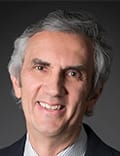
The study results give ophthalmologists more confidence about the risks cataract surgery poses for their patients with nonexudative AMD, according to Nick Mamalis, MD, director of ocular pathology at the John A. Moran Eye Center at the University of Utah in Salt Lake City.
“It’s a big question for us and our patients,” he said. “At least we can talk about this and say, yes, there is a risk but it’s very small, and I think that would be reassuring to our patients.”
Despite the limitations inherent with using a large registry, Mamalis said, “It was a well-done study, given the caveats. It does give us valuable information on a topic that surgeons and patients are very interested in.”
Ashourizadeh reported having no relevant financial relationships. Mamalis reported having financial relationships with Adaptilens, AkkoLens, Alcon, Alta Vision, Carl Zeiss Meditec, Cristalens Industrie, Hoya Corporation, Iota, Long Bridge Medical, OcuMetrics, Perfect Lens, Rayner, Spyglass Pharma, and Stabilens.
Richard Mark Kirkner is a medical journalist based in Philadelphia.


