

 Admin_Adham
Microdosing has taken hold of the internet, moving from psychedelics to GLP obesity drugs. On any given day, it’s easy to encounter multiple telehealth company ads across numerous social media platforms aimed at luring people with obesity who’ve been unable to afford or acquire GLP-1 medications or tempting individuals interested in cosmetic weight loss.
These companies promise smaller doses that deliver clinically proven outcomes and regular and direct access to board-certified clinicians for guidance and counseling. But the products for sale are often unapproved, compounded versions of the popular drugs semaglutide (Wegovy), tirzepatide (Zepbound), and liraglutide (Saxenda).
For consumers who don’t care for needles, a few companies have also started offering oral formulations, some of which contain other approved or off-label medications for weight loss (eg, bupropion or metformin). Note that approved oral versions of GLP-1s for obesity are not yet available (Eli Lilly is preparing for global regulatory submissions of an investigational oral small molecule pill called orforglipron, while phase 3 clinical data was published last month on Novo Nordisk’s oral Wegovy [semaglutide 25 mg]).
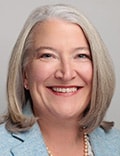
“With regard to this idea of microdosing, there are no clinical studies that have ever been performed, there’s no data on microdosing these medications and what the clinical outcomes are for individuals,” Fatima Cody Stanford, MD, MPH, MPA, obesity medicine physician scientist at Massachusetts General Hospital, and associate professor of medicine and pediatrics at Harvard Medical School, both in Boston told Medscape Medical News.
“This type of treatment is off-label,” said Angela Fitch, MD, obesity medicine specialist, co-founder, and chief medical officer of Knownwell Health in Needham, Massachusetts, and past president of the Obesity Medicine Society. “Frankly, I am surprised that companies would take this risk from a malpractice perspective,” she said.
Does Nomenclature Matter?
What is a microdose? Consumers dabbling in psychedelics have long believed that taking a tenth to a fifth of a recreational dose yields cognitive, emotional, and social benefits without subjecting them to a full-blown psychedelic trip. Importantly, psychedelics researchers have said that there’s been no consensus on what constitutes a microdose.
The same is true in obesity medicine.

“When my patients come and tell me that they’ve been microdosing, I ask how much are you taking? And they say 0.5 mg. I say, that’s not a microdose; that’s just a dose,” said Lauren Oshman, MD, MPH, board-certified obesity medicine physician, family physician, and associate professor in the Department of Family Medicine, University of Michigan, Ann Arbor, Michigan.
“I think that we should get rid of the term, meaning, we should start talking about these medications in general, studying and researching the right appropriate doses,” said Fitch. “You know, the right dose for the right patient at the right time. We’ve known for years that from an obesity treatment or weight management treatment strategy, that the response is heterogenous.”
Oshman said that she recently treated a patient with type 2 diabetes and obesity who could only tolerate 0.25 mg of Ozempic.
So far, “she’s lost 48% of her body weight — 136 pounds — and is now maintaining her weight at 162,” said Oshman. “It’s the balance between the dose that works for the patient without side effects. There is a small cohort of patients who might benefit from a small amount of incretin mimetic hormone to attenuate their side effects.”
Titrating a medication up or down is not a new concept.
“We’ve done it for years with blood pressure medications, eg, lisinopril, where a patient is on a 10 mg dose and that controls their blood pressure. We’re not going to go up on the dose but it’s possible that a lower dose won’t do anything,” said Fitch.
“The moral of this story is that we don’t have the data. But we need to start thinking about getting it,” she said.
Another important consideration is insurance coverage, which Oshman said might limit how low a dose a clinician can go.
“We’ve had patients who cannot get authorization for a drug if we are not prescribing the approved doses for effectiveness or maintenance,” she said. But “I will commonly use lower doses in a person in whom a higher dose might cause harm, that is, when the patient can continue to get coverage.”
FDA Crackdown, Clinician Guidance
On September 16, the FDA posted more than 100 letters it had sent to various drugmakers and online prescribing companies, including Hims & Hers.
This is the first time that FDA has taken aim at companies promoting unauthorized, compounded formulations of the popular obesity drugs. The agency warned companies to remove “false and misleading” promotional statements, eg, that customized products contain the “same active ingredient” as FDA-approved Wegovy and Ozempic.
On the clinical front, it’s important to be proactive in conversations about the GLP-1s, the potential dangers of compounded versions, and the uncharted territory of microdosing.
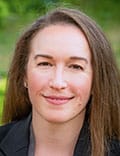
“The key thing is making sure that patients know that these medications are one tool in the toolkit and may be a potential solution,” said Stanford. “Not only will they need to use them for the rest of their lives, but they require support — proper nutrition and proper physical activity, particularly strength training every other day. And if they are nonresponders or relatively mild responders, there may be other mechanisms in their central regulation of fat storage that need to be treated for with different agents,” she said.
“From the beginning of time, people have been trying to find quick fixes for weight, whether that’s the cabbage soup diet or taking phentermine for 3 months and then stopping,” said Oshman. “I approach patients with extreme empathy, try to move the conversation in a direction of understanding what is important to them, and then identify treatment options that are within their budget, meet their side effects and other contraindications and risks. A lot of these patients are candidates for other medications that are less expensive, effective, and covered by insurance,” she said.
“We need the research,” said Fitch. “We are doing the largest, uncontrolled, unconsented human experiment of our time, playing around with these medications — whether it’s in oral form, in compounded form, or giving them in microdosing,” she said.
“I don’t think patients know that when they’re signing up on these websites.”
Oshman reported no relevant financial relationships. Fitch is the CMO of Knownwell Health. Stanford reported receiving consulting fees from Eli Lilly, Novo Nordisk, Amgen, Boehringer Ingelheim, and AstraZeneca.
Liz Scherer is an independent health and wellness journalist. She frequently reports on topics affecting the US and other countries.
