Admin_Adham
 Jump to Key Points
 Last September, Christine Andre, who is 5 ft 2 in tall, weighed about 225 lb. Ten months later, that figure was 157.
What Andre, 63, did to drop those 70 lb was to choose the only weight-loss option left to her after trying a GLP-1: gastric bypass surgery. For 40 years, Andre tried to lose the weight, either on her own or with some guidance from a general practitioner.
But last year, the New Hampshire resident came to realize that she needed more than some counseling. She needed a weight-loss management program, an intense plan that would transmute her relationship with eating, cut out the societal-created cravings of fast food, and reintroduce her to the importance of healthy living. She needed a monumental lifestyle change.
Andre’s surgeon, Andrew Wu, MD, section chief, General and Bariatric Surgery, and surgical director of the New England Weight Management Institute in Bedford, New Hampshire, said people have the wrong idea about bariatric surgery. “It is not a short cut. People think a person has gotten surgery and then they are done. It is a modality.”
- Bariatric surgery = modality, not shortcut; requires total patient buy-in.
- Eligibility cited: BMI >40 or >35 + major comorbidity.
- ~2% of eligible patients undergo surgery; barriers include fear, coverage, low exposure.
- Structured pre/post-op program includes diet, exercise, behavioral, endocrine, and psych assessments.
- Post-bypass: rapid weight loss, ↓ diabetes/lipids meds, less OA/plantar pain; gallbladder events can occur.
It is a modality that demands total buy-in, and, if followed, shows quick gains. Within months, Andre was no longer taking metformin for her diabetes or a statin for high cholesterol. Her plantar fasciitis went away, as did much of the pain in her knee from osteoarthritis.
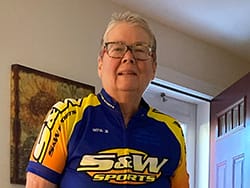
That said, the components that filled the months of preparation to reach Andre’s successful outcomes — and those might be temporary, depending on Andre’s maintained resilience to overeating — did not eliminate the self-doubt she had about success. Years of failure had taught her otherwise.
“Intellectually you know what bariatric surgery is, but you don’t know what it [entails] until you are doing it,” she said. Even with all the detailed instructions, “you still have doubts” about the outcome, Andre said.
It is an outcome that few experience: Less than 2% of those eligible for surgery — BMI > 40 or > 35 with significant disease, such as heart, kidney, diabetes — ever get it. Some reasons: fear of surgery, lack of insurance coverage, resignation to weight-loss defeat, lack of exposure to weight-loss programs.
Diane Biron, MD, medical director at New England Weight Management Institute, said the institute is “on a mission” to attract more patients. “[Society] spends so much money managing these diseases. If we treated obesity more aggressively, we wouldn’t even be dealing with these [obesity-related] comorbidities.”
As numerous studies have reported, gastric bypass surgery, along with good eating habits and exercise, can keep the extra weight off. And intense weight-loss programs by themselves also can prove effective. A new study in JAMA Pediatrics involving 41 primary care centers in four states showed that a few hundred youngsters lost a median of 6% of their weight over 3-12 months after they and a parent received at least 26 hours of instruction from their primary care physician (PCP). The instruction covered behavioral skills, diet, parenting, and physical activity.
With gastric bypass, 80% of patients will lose 40% and maintain that loss the rest of their lives, Wu and Biron said. For those who don’t achieve significant weight loss, the primary reason is their behavior, Wu said. Even prior to surgery, Wu said, 5%-10% of those seeking surgery will not get it because they haven’t met the exercise and meeting attendance requirements. One reason is that insurers often require them.
The program offers a tool, and patients must work with the tool. And that’s what Andre did. And what follows is how she did it.
The Road to Weight Loss
Each patient at the institute gets a three-hole binder whose contents spell out what a patient needs to do, and what he or she can expect prior to, and after, the surgery. It discusses caloric intake and expenditure and lists how many calories are used at a resting metabolic rate (50%-70%) and why eating protein is better than eating carbs or fat because it burns at least three times more calories.
Pictures of various exercises abound. The binder also has instructions on attending behavioral lifestyle group meetings and visiting with the nutritionist, exercise physiologist, endocrinologist, doctors, and receiving mental and physical assessments. Patients also must get a colonoscopy and endoscopy.

During the months leading to surgery, and for some months after it, Andre said “she felt removed from the world.”
No more ultraprocessed foods, beer, or bread — the latter being a staple with nearly every meal. She had to ignore commercials and social media that coaxed her to resume bad eating habits.
“I couldn’t eat that [processed food], though society wanted me to eat that stuff. I was a stranger in a strange land,” she said. “You don’t go into [the program] with that mindset. You literally can’t eat the way you used to. The classes give you permission to step away from that, to be someone else.”
Wu said Andre fulfilled all the presurgery requirements. Post-surgery, Andre worked out at a local gym, sometimes six times a week. She swam, lifted weights, and worked the machines. She and her spouse would bimonthly measure seven of Andre’s body parts, including her waist, hips, chest, thighs. The numbers are neatly recorded in a personal notebook.
By February 8, 5 months post-surgery, she weighed 175 lb. Since the surgery, she dropped five sizes and 11 in from her waist.
“I totally skipped size 38. It was crazy,” Andre said.
At this point, her weight has plateaued, sidelined by a couple of gallbladder attacks that led to the organ’s removal. Wu said this surgery is not uncommon.

Andre credits her spouse for being a cheerleader.
“To say they are proud of you, that is a lot.” Succeeding in the program is “exponentially more doable if you have someone supporting and helping you,” Andre said. It would be hard, she continued, if a partner made the patient feel guilty about going to the gym or needing a “12 pack of beer a week.”
Wu said he has witnessed partners trying to sabotage a patient’s efforts, like putting potato chips on a kitchen table. He agreed that a supportive family member can make all the difference. “I tell [the patient], bring in your spouse. When they are on the same page…and the spouse feels that they are buying in, then the whole family is healthier.”
When GLP-1s No Longer Help
A word about GLP-1s. Wu said GLP-1 patients elsewhere do not get the kind of instruction offered at the institute. Some, who are not happy with side effects, the amount of weight loss, or insurance changes, are coming to the institute looking to convert to surgery.
“That is the biggest boom we are seeing,” he said; a rough conversion rate estimate is 15% over the past few years.
And those conversions also happen with some of the institute’s medical weight-loss patients, said Alison Olsen, the institute’s clinical manager and lead physician assistant. Olsen supplied percentages of weight loss for five GLP-1s, both orals and injections. The highest GLP-1 loss percentage was 20%; the lowest loss from surgery was 23%.
Olsen said patients start with the drugs for many reasons. “Patients would prefer to try medications first, either they don’t qualify for surgery or they are afraid, nervous, or skeptical of surgery.”
Involving PCPs
Why do people get obese? Loads of reasons. Poverty, early traumas, genetics — Andre has family members who’ve had bariatric surgery — being injured, growing up in a certain food culture. And drugs. Olsen said staff ask about drug history because dozens of medications can cause weight gain, and those lb often stay put.
Another reason is lack of clinical resources in rural areas. Recognizing this fact, the institute opened up a satellite clinic 15 years ago in Berlin, (population 9400) 2.5 hours away from its Manchester (population 117,000) clinic. “Patients are involved with dietitians and we can meet online. We have been very successful with [this program],” Wu said.
The institute also has set up webinars for PCPs. Attendance isn’t huge, Olsen said, even though they hold the webinars at lunchtime and in the early evening. Most of the questions revolve around the GLP-1s, especially about getting prior authorizations.
Other questions involve referrals. Olsen said the clinic can’t see all people with obesity, so the institute counsels that PCPs should manage those in Class I (BMI of 30.0-34.9) and to start weight-loss conversations with those in Class II (BMI of 35.0-39.9). Those above that line, like Andre, need significant weight-loss management.
Wu said PCPs should ask questions about weight, like any other topic. “Obesity is not to be feared but should be talked about in the laundry list [of questions]. It should come naturally.” PCPs, he said, need to know the data on obesity.
Besides having less physical pain, being more active, and having a wife who is proud of her, Andre said the surgery has reduced her self-induced stress to lose weight. And even though she has never lost her appetite and still fears going backward, she said: “I know what I need to do and I [will] do it.”
No reported disclosures.