Admin_Adham
 Jump to Key Points
 At first, the woman didn’t recognize Clare Rudman.
Two years earlier, Rudman had spent a month talking to her while she lay intubated in a Denver ICU. The woman couldn’t answer, so Rudman supplied both sides of the conversation. She complimented the patient’s makeup and told her stories. As the woman slowly began to wake, she squeezed Rudman’s hand, nodded, and rolled her eyes in response.
Now the woman stood in the same ICU with a cane and portable oxygen. Rudman said her name. The woman heard the voice.
“Oh my god, it’s you!”
- Early-career physicians report ↓ autonomy, ↑ admin burden, and eroding public trust.
- COVID-era training exposed ICU intensity, moral distress, and patient hostility.
- Insurance prior auth and claim disputes can delay care and drive clinician burnout.
- Independent practice can restore scheduling control, but access may worsen with out-of-network models.
- Historical “golden age” nostalgia ignores past exclusion of women/minorities and unequal access.
They both began to cry.
This was the version of medicine Rudman thought she had signed up for. The other version involved people spitting at her, trying to kick her, and screaming at her.
Rudman belongs to a generation of physicians who entered medicine in the late 2010s and 2020s, after much of its traditional architecture had changed. As independent practices vanished and administrative burdens followed doctors home, public trust diminished. Physicians who once held unquestioned authority now compete with influencers and strangers in comment sections.
Whether Rudman and her peers missed medicine’s “golden age” depends on who you ask.
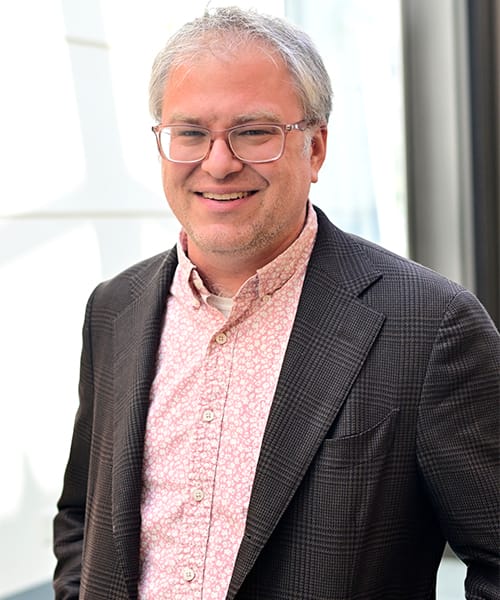
Adam Rodman, MD, MPH, a general internist, medical historian, and assistant professor at Harvard Medical School, said the golden age is always “a generation or two in the past,” close enough to survive in collective memory but distant enough that mourners may never have experienced it.
Doctors in the 1980s pined for earlier decades. Physicians in the 1860s worried that thermometers and stethoscopes were destroying the art of medicine. Each generation seems to inherit a profession alleged to be in decline.
We asked four early-career physicians whether they felt they’d missed medicine’s golden age. From hostile patients to insurance headaches to brief meaningful connections, their stories reveal a profession struggling over autonomy, time, trust, and who’s even allowed to participate.
Adapting to Practice Post-COVID
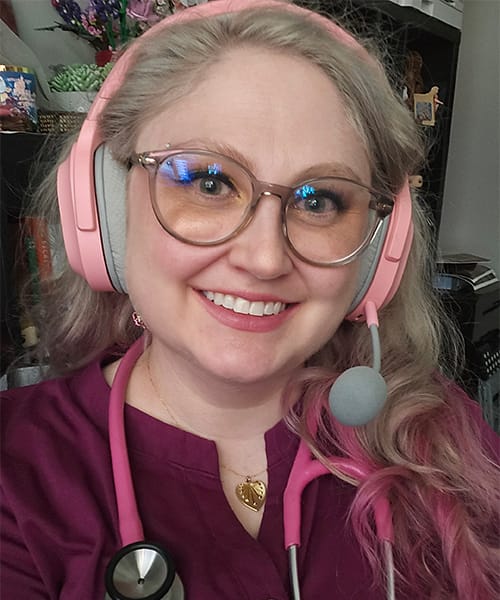
Rudman, an osteopathic physician, started residency in the summer of 2021, thrown into making life-and-death decisions in a COVID-filled ICU.
It was the Delta wave. Nearly every patient had COVID, and many were comatose. Rudman cared for some for an entire month, never knowing who might recover.
The woman who later recognized Rudman’s voice had been intubated and underwent a tracheotomy. Her family sent Rudman a thank-you letter, and a year later the woman called Rudman. When she said her name, Rudman broke down. It was the first time Rudman heard her speak.
In July 2023, Rudman returned to the same ICU as a senior resident supervising two interns. And there was the former patient, back to thank the nurses who cared for her.
That warm reunion represents one side of Rudman’s introduction to medicine. The other side had been revealed several months before residency, while she was a fourth-year medical student at a hospital outside Detroit.
In 2019, the parents of an 18-year-old patient had invited Rudman to their home for Thanksgiving. One year later, Rudman spent Thanksgiving alone. She’d spent her rotation being yelled at, spat on, and in one case, nearly kicked by a patient furious that she and a cardiology fellow were wearing protective equipment. Signs outside hospitals declared, “Heroes work here!” To Rudman, they felt “more like condescension than gratitude.”
Six months before graduation, she seriously considered leaving medicine.
The whiplash continued during residency. After one family decided to withdraw care, Rudman and a nurse remained with the patient and provided comfort until she died. Outside the room, the patient’s son removed his N95 and screamed that Rudman had better not list COVID as the cause of death.
Rudman, now 34, understands that some patients have legitimate reasons to distrust medicine. What she believes she missed was a time before so much medical care was governed by corporate and financial interests.
“Since becoming a physician, I have always felt the presence of faceless figures in suits looking over my shoulder at everything I do,” she said.
After nearly 2 years in a high-volume primary care clinic, Rudman left to establish a solo telemedicine practice focused primarily on adults with attention-deficit/ hyperactivity disorder. She started with almost no patient base but gained control over her schedule and the way she practices.
“The buck truly stops with me now,” she said, “and there is profound freedom in that.”
Including Women and Minorities
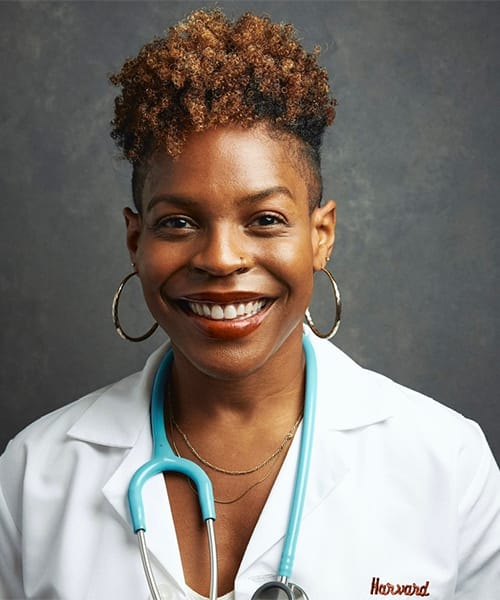
In 2024, LaShyra Nolen, MD, MPP, became the first person in her family to become a physician. “I didn’t have many images or connections to doctors growing up,” she said.
But her mother and grandmother embodied the dedication and altruism she hoped to bring to medicine.
“When I think about the ‘golden age’ of medicine, the first thing that comes to mind isn’t the culture of that time, but who didn’t have access to the profession in the first place and who still doesn’t,” said Nolen, now a primary care internal medicine resident at Brigham and Women’s Hospital in Boston.
Nostalgia obscures the downsides. Historically, medicine excluded women and people of color, along with exploiting and mistreating marginalized patients. Not something to romanticize, Nolen thought.
The present doesn’t feel golden, either. Recently, she spent hours on the phone trying to obtain insurance approval for a tweaked dosage of a medication her patient had taken for years.
“The prior auth process is grueling,” she said, “and I think processes like these contribute to the disillusion of clinicians and patients alike.”
She wants to offer “a new kind of healing,” repairing patients’ relationship with medicine one interaction at a time.
For Nolen, the golden age could be a future in which the physician workforce more closely reflects the people it serves, where patients can obtain the care their doctors prescribe, and medicine finally confronts the damage done in its name.
Addressing Trust and Institutional Cynicism
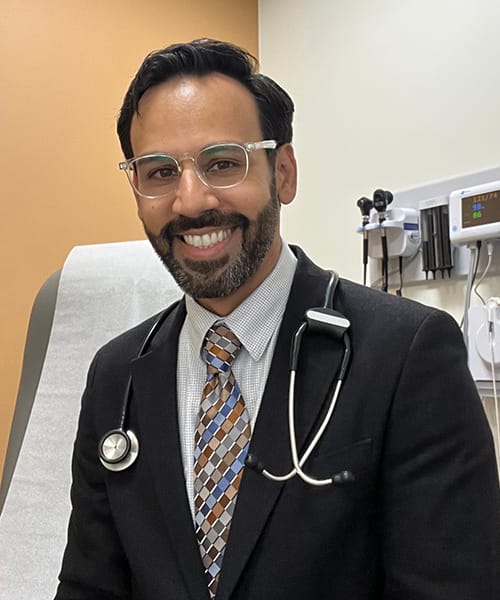
Adeel Khan, MD, grew up watching medicine consume much of his father’s life.
Both of Khan’s parents graduated from medical school in Pakistan. After immigrating to the US, his father trained in internal medicine, pulmonology, and critical care, entering private practice. His mother had practiced obstetrics and gynecology but gave up her clinical career to care for their sons.
Khan’s father would leave early and return late if he wasn’t working overnight. Medicine was his identity. Patients regarded him as an authority, following his recommendations with little resistance.
Khan, now 40, is a hematologist-oncologist and epidemiologist at the University of Texas Southwestern Medical Center, Dallas, where he specializes in blood cancers.
Some skepticism from patients is healthy, he said. He encourages second opinions and wants people to understand their disease and treatment choices. But he’s troubled by the increasingly common belief that physicians, medical institutions, and science itself are fundamentally corrupt.
One patient haunts him. The man was in his sixties and had newly diagnosed multiple myeloma — highly treatable, thought Khan, who recommended a standard four-drug regimen supported by clinical trials and national guidelines.
The patient hesitated and eventually revealed a belief that modern medicine was “in bed with pharmaceutical companies.” To him, the COVID pandemic had shown that doctors were either misinformed and indoctrinated, or knowingly directed patients toward expensive and ineffective treatments.
Khan described the patient as kindly and grandfatherly. He simply no longer believed the system deserved his trust.
He had refused the COVID vaccine and considered ivermectin a possible treatment for a range of ailments. For his cancer, he preferred an alkaline diet and other alternative approaches.
Khan told him that medicine is imperfect, and physicians can only offer the best treatments supported by what is currently known.
The patient stopped returning. “I have no idea what happened to him,” Khan said, “but I fear it wasn’t anything good.”
Khan knows that shared decision-making allows treatment to reflect a patient’s priorities, especially in oncology, where decisions may range from aggressive intervention to palliative care. But autonomy also makes room for the medically worse choice. Shared decisions require shared trust.
“I do not lament the golden age of medicine’s clinical care,” he said, “but I do lament the loss of esteem, especially as it has further eroded even basic trust and respect in our professional capacities as physicians.”
Escaping a Broken Healthcare System
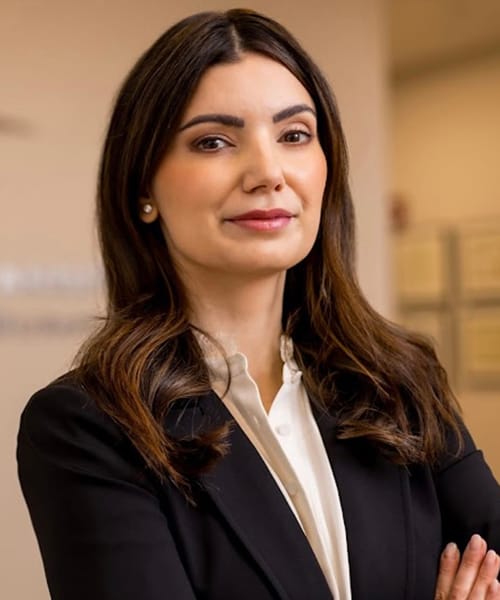
Anaïs Carniciu, MD, 37, grew up watching an earlier model of medicine from the back seat of the family car.
Her parents immigrated from Eastern Europe and built separate solo practices in the New York suburbs. Her father practiced family medicine, her mother neurology.
“I can’t even count how many times we would go out to dinner or to the mall and run into their patients who would recognize my mom and dad and say hello,” Carniciu said.
That, she assumed, was a doctor’s life: caring for people in the community, running an independent office, and building a comfortable living.
Carniciu became an oculofacial plastic surgeon and opened New York Eye & Face, a solo practice in Westchester County, not far from where she grew up. She didn’t plan to build an out-of-network, direct-pay practice. Insurance companies pushed her toward it, one dispute at a time.
The breaking point: Her office had obtained authorization for a surgery after submitting testing, photographs, and hours of paperwork. The insurer agreed that the procedure was medically necessary and paid the claim.
A year and a half later, the company removed the money from her practice’s bank account. “No warning, no documentation, just snatching cash out of my bank account,” Carniciu said. “It felt so violating.”
Carniciu never recovered the money. The insurer said the practice had missed its “claim reprocessing” window, despite the authorization and payment. “Bait and switch,” she called it.
Other insurers didn’t pay claims, ignored peer-to-peer calls, and denied care she considered medically necessary. Gradually, Carniciu dropped the contracts.
“Of course it’s frightening to make a change,” she said, “but it was almost scarier not to and to allow insurance companies to continue to dictate care.”
Her father’s practice was absorbed into a corporate system. Many of his patients followed him, and some still have his cell phone number so they can bypass the call trees of what Carniciu calls “big medicine.”
Carniciu chose another route. A few weeks ago, a woman called her office with a painful stye that required surgical drainage, and she had a family wedding the following week. A corporate practice in her plan had offered a consultation in 8 weeks, with the procedure coming even later.
Carniciu’s staff scheduled her for the next morning and drained the stye. She healed in time for the family photographs.
That flexibility, Carniciu said, is what independence gives her.
The freedom has limits. Her practice offers payment plans, but not everyone can afford it. Carniciu said her model lets her answer to the person sitting in front of her — not to an insurer or corporate administrator.
“I feel like I’m in my golden era because I still get to practice independently,” she said.
The Golden Age of Today
Rodman’s favorite artifact of medical nostalgia is Luke Fildes’s 1891 sentimental painting The Doctor. It depicts a physician sitting beside a gravely-ill child while the parents wait in the shadows.
Rodman believes it captures something physicians have lost: “the time to sit and be with patients.”
He remembers one morning when two patients died, one unexpectedly. Rodman spent hours with the grieving family, helping them understand what had happened.
At the same time, his pager kept sounding. The calls were about life-saving organ-donation rules, pulling Rodman away.
“I remember feeling that the entire system, despite good intentions, was going against what I felt was important,” he said.
Rodman studies how AI and technology may transform clinical practice. He worries that medicine will continue fragmenting the relationship between doctors and patients.
“I have no doubt that 20 years down the line,” he said, “a young physician will wistfully wish for the golden age of the 2020s.”
Back in Colorado, Rudman keeps the thank-you letter from her former ICU patient near her desk, along with other notes she’s received; “treasures more precious than gold,” she said.
The experts cited in this article reported having no relevant disclosures.