Admin_Adham
As Romania began reclaiming its national identity following the fall of communism, its cities grew, whereas its smaller towns shrank. Like in other parts of the world, Romania’s development has concentrated in its urban centers. This means that for the roughly 12 million people still living outside cities, rugged, unpaved roads winding through hilly terrain make it difficult to reach services that cluster in urban areas — like specialized cardiovascular care.
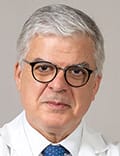
Much of the world looks to Europe as a model for healthcare, but “there is still inequity,” said Fausto Pinto, MD, PhD, head of cardiology at the Santa Maria University Hospital in Lisbon, Portugal, and former president of both the European Society of Cardiology (ESC) and the World Heart Federation.
Cardiovascular disease (CVD) is ubiquitous. It causes 45% of deaths worldwide each year and just under a third in Europe. Yet access to healthcare across the continent is an uneven patchwork between and within countries, with urbanization concentrating healthcare resources in large cities. Europe’s “cardiology deserts,” located far from cardiac services, can cost valuable time in emergencies and hinder preventive healthcare. A new effort to improve cardiovascular health across the continent aims to turn more of these deserts into oases.
What Makes a Desert?
To locate cardiology deserts, researchers need data, which are often scarce. Most datasets track medical outcomes rather than who can access care, where, and when, and few studies have mapped cardiology deserts in Europe.
Available data show a stark West-East divide in medical outcomes, including for CVD. CVD mortality ranges from 1100 deaths per 100,000 people in Bulgaria to about 200 deaths per 100,000 people in France. In Eastern Europe, CVD accounts for roughly 40% of deaths in men and nearly half in women compared with just under one third in both sexes across most of the rest of the EU. Notable exceptions include the Czech Republic, Poland, and Slovenia, where the share of CVD deaths resembles that in Western, Northern, and Central Europe.
The divide stems in part from the region’s history. After the Soviet Union dissolved in the 1990s, Eastern European countries began building their own healthcare systems, while Western Europe had already modernized its infrastructure. Current statistics can make Eastern European healthcare performance appear bad, but the reality is more nuanced.
We’ve got pockets of social deprivation in every country.
Lis Neubeck, ESC Patient Forum lead

In Latvia, for example, comparing cardiovascular data with Western Europe can obscure gains in risk factor management and prevention since the 1990s — improvements that have not been evenly distributed, according to Andrejs Ērglis, MD, PhD, a professor of cardiology at the University of Latvia and head of the Latvian Center of Cardiology, both in Riga, Latvia. Older people who lived through the Soviet era, for example, did not benefit from these changes in their younger years.
Beyond clinical outcomes, defining the bounds of cardiology deserts “depends on the availability of services,” said Przemysław Mitkowski, MD, PhD, a professor at the Poznan University of Medical Sciences in Poznan, Poland, and former president of the Polish Cardiac Society.

The phenomenon is not confined to one region or to low- and middle-income countries. Even Western European nations with well-established healthcare systems — Spain among them, with a life expectancy among the highest in Europe (about 84 years) — have such deserts. The rural-to-urban migration, especially among younger adults, has helped hollow out medical services outside cities. In Spain, medical deserts are found in rural interior regions. In southern Sweden, rural areas face similar gaps, with many older residents struggling to access emergency care. The pattern is magnified in Romania, where underdeveloped infrastructure outside cities can have dire consequences in cardiac emergencies, as treatment delays increase mortality.
How systems are organized also shapes access. Romania has many cardiologists — 128 per million people — but more than 80% of its doctors work in cities. The hospitals are spread across the country, yet not all can provide advanced cardiovascular care or have specialists available. One study found that only 161 of 546 hospitals had a cardiology department, and only 43 could offer more complex care.
There is not a one-size-fits-all measure.
Raffaele Bugiardini, cardiology professor, University of Bologna, Bologna, Italy
“Depending on the wealth of the country and [the resources] it’s putting into healthcare, that has an impact regardless of the number of cardiologists or doctors,” said Pinto. “But probably the most important [factor] is how [the healthcare system] is organized.” He pointed to universal, well-funded systems with strong networks linking primary and specialized care as a model to emulate.

Social determinants of health, such as gender, education level, and socioeconomic status, also shape cardiac outcomes. “We’ve got pockets of social deprivation in every country,” said Lis Neubeck, PhD, a nursing professor of cardiovascular health at Edinburgh Napier University, Edinburgh, Scotland, who leads the ESC Patient Forum.
Given the diverse drivers of poor access and outcomes, solutions must fit local contexts. “There is not a one-size-fits-all measure,” said Raffaele Bugiardini, MD, a cardiology professor at the University of Bologna, Bologna, Italy, and chair of The Lancet Regional Health-Europe Commission on Inequities and Disparities in Cardiovascular Health.
And where prevention is underfunded, even a high number of specialized treatment centers cannot offset the disease burden. “The volume of intervention cannot meet the needs of such a large ischemic disease population,” said Bugiardini.
Data gaps on access further limit leaders’ ability to identify problems and solutions. “We need to be able to get data in a way that enables us to change care and change practice,” said Neubeck. “Because if we don’t know what’s going on, it’s hard to then make changes.”
Creating Oases in the Deserts
Outside Europe, communities with limited resources have found creative ways to bridge the distance to care.
The Package of Essential Noncommunicable Disease Interventions-Plus (PEN-Plus) extends care for severe, chronic noncommunicable diseases in rural, low-resource settings, particularly in sub-Saharan Africa. With few cardiologists, most in cities, PEN-Plus expands the roles of nurses and mid-level providers like physician assistants. Cardiologists supervise them, sometimes remotely. In Rwanda, a PEN-Plus program reported substantially reduced 5-year heart failure mortality under nurse-led care.
India offers another approach. Cardiologist Devi Shetty, MBBS, MS, founded Narayana Health and adapted the mass production model of automobile producers to increase the availability of specialized cardiac surgery. In his team, cardiac surgeons specialize in one or two kinds of operations, honing skills in a narrow niche and increasing throughput. The result: more surgeries at a lower cost, with postoperative mortality comparable to that in the US. Like PEN-Plus, Narayana Health also uses task shifting to improve efficiency and access.
Many European countries already employ elements of task shifting, but broader, consistent standards for advanced practice roles could help. Advanced practice nursing (APN), which typically requires at least a master’s degree, is unevenly regulated across Europe. According to the World Health Organization, a little more than half of the European countries report APN regulations, up from just 30% in 2020.
Crafting a Plan
Despite being the continent’s leading cause of death, outpacing cancer, Europe only recently coalesced around a coordinated cardiovascular agenda.
The EU Cardiovascular Health Plan urges member states to boost health literacy, address socioeconomic drivers, and ensure equitable access to care and rehabilitation services, among other steps. The framework mirrors the EU’s Beating Cancer Plan, which secured €4 billion for cancer. Advocates argue that the absence of a comparable, funded cardiovascular policy has led to underinvestment in heart health.
With a shared blueprint emerging, countries are refining or developing national plans. “Cardiovascular diseases are still the number one cause of death and morbidity in Europe, so the medical community has been fighting for a cardiovascular plan,” said Pinto. “It provides a sort of matrix that can actually be used for better organization and interconnection of the different players in the healthcare system to provide better care.”
A key pillar is better data. “We need to harmonize data collection,” said Ērglis. Some reported figures for Eastern European countries, like Latvia, where he practices, do not match clinicians’ experience on the ground. Bugiardini also noted a lack of robust data on ethnicity, obscuring disparities across groups. Neubeck called for more granular, country-level data on care quality and who receives treatment — and when.
Success will also hinge on prevention and stronger system organization, both requiring investment and political will. Priorities include bolstering prevention and primary care, creating networks within and between countries to coordinate services and resources, and improving patient transport.
Cardiovascular diseases are still the number one cause of death and morbidity in Europe. So the medical community has been fighting for a cardiovascular plan.
Fausto Pinto, former president of the ESC
Primary care is central to prevention and early detection but needs support, especially in systems where overburdened clinicians have little time for patients. In the UK, for example, short appointments mean “the opportunities for incidental care are disappearing,” said Neubeck. Bugiardini agreed that strengthening primary care and referral networks is critical.
In Poland, Mitkowski said cardiologists are working with the Ministry of Health to shift more heart failure care from hospitals, where capacity is limited, to outpatient specialists and primary care. A standardized program already supports care for up to a year following myocardial infarction; the goal is to create a similar pathway for heart failure and move care into outpatient settings.
Technology is also extending reach. Polish cardiologists are remotely monitoring some patients with heart failure who have implanted cardioverter-defibrillator devices, which continuously track the rhythm and can deliver shocks if needed. Still, most heart failure patients do not qualify for such devices and not everything can be managed remotely — underscoring the need for better system organization and transportation.
The emerging cardiovascular plan is poised to give Europe a chance to set clearer, more consistent standards for care. “I hope we don’t miss this opportunity to really make a difference for people,” said Neubeck.