

 Admin_Adham
Stories are part of the human experience. They help us forge personal connections and make sense of the world. In the clinical arena, stories provide a framework for narrative-based medicine (NBM), a practice that offers clinicians and medical students an opportunity to restore empathy and trust and strengthen personal connections. NBM is gaining interest around the world.
“Part of the NBM framework is that our understanding of health, illness, sickness, and disease are really [collaborative] narratives that each person involved in care contributes toward to find the best approach for the patient,” Sarah Kim, MD, assistant professor of family and community medicine at Temerty Faculty of Medicine, University of Toronto, Toronto, told Medscape News Canada. Kim also is medical education health humanities theme lead at Temerty’s Narrative-Based Medicine Lab.
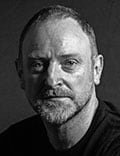
“It’s giving people equal agency within the illness or health discussion. It centers the physician in the moment,” said Conor McDonnell, MD, PhD, staff anesthesiologist at the Hospital for Sick Children in Toronto, associate professor of anesthesia and pain medicine at the Temerty Faculty of Medicine, and editor in chief of the Narrative-Based Medicine Lab’s Case Repertory.
NBM means that, “rather than thinking about the next thing, the next task, how many people are waiting in the clinic for them, physicians are more present and more conscious of the fact that they’re having, for example, a cancer discussion,” he said.
Listening Between the Lines
NBM was introduced in 2000 by Rita Charon, MD, PhD, Bernard Schoenberg professor of social medicine, professor of medicine, and executive director of Columbia Narrative Medicine at Columbia University in New York City. She developed the idea while she was pursuing her doctorate. NBM is currently offered in approximately 80% of US medical schools.

Canada is slowly catching up. “Our goal is to embed the things that I call ‘not biomedicine’ into the training and practice of medicine, ie, what practitioners need to know about to do their work better,” said Aruna Dhara, MD, MPH, assistant professor of medicine at Dalhousie University in Halifax and codirector of the university’s Medical Humanities-HEALS program.
Dhara emphasized that narrative medicine can be delivered in numerous ways, such as through art, music, movement, and writing. It is premised on investigation without judgment, with a view to understanding what is prompting the patient’s behavior. The doctor and patient are encouraged to define their perspectives through color, line, rhythm, and verse. For the practitioner, this expression becomes a communication tool to optimize relations and outcomes.
“It’s a way to not simply empower the patient but also to get healthcare workers used to listening to the silent conversation” between doctor and patient, said McDonnell. “Two phrases that are used frequently are ‘close listening’ and ‘reflective thinking.’ Sometimes what is not said is as important as what’s said.”
NBM instills what Charon called “engaged concern,” which requires authentic engagement with patients through compassion, as well as reflection on one’s practice.
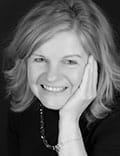
The “generous listening” technique of author Rachel Naomi Remen, MD, is also relevant, Pamela Brett-MacLean, PhD, director of arts and humanities in health and medicine and professor of psychiatry at the University of Alberta in Edmonton, told Medscape News Canada.
“Generous listening is a kind of attention where you set aside the judging internal voice and instead listen to the story being shared, allowing it to be told and appreciated from the perspective of the person sharing it,” she said.
A helpful analogy is riding on a subway and arriving at one’s destination, said McDonnell. “You’ve passed through all these stations and paid no attention to them because you’re only interested in your destination,” he said. “For some patients, this must be what their journey is like.” NBM encourages the practitioner to stop at a given station for a moment and see what it is about instead of speeding to the end, he explained.
Environmental Influences

“We’re very much influenced by our environment, but whether or not we can articulate that isn’t always certain,” said Kim. The structures of practitioners’ working environments influence how they interact with the patient, she noted.
Clinicians’ working environments are a major reason why NMB has received so much attention. It offers the potential to avoid physician burnout, which affects at least 46% of Canadian physicians.
“Creating supportive spaces for sharing stories and engaging in creative expression can help clinicians metabolize the challenging experiences that they face,” said Brett-MacLean.
“It can help with burnout, which often results from pushing down unprocessed, difficult experiences. Clinicians often lack the time or knowhow to deal with them,” she said.
Kim concurred.“The value placed on not articulating your suffering is an historical artifact of controlling the human body under the guise of discipline and commitment, but to a point where it moves from being a value to a vulnerability,” she said.
“The narrative space gives people permission to explore this for themselves and unpack it through different frames of thinking. What does it mean to be a healthcare provider? What did it mean for me when I started vs now? What will it look like for me in the future?”
“Each of us carries a story that’s influenced through society, culture, and family, institutional, and professional values,” said Kim.
Healer, Heal Thyself
NBM allowed McDonnell to embrace again and reintroduce himself to parts of himself that he had left behind when he became a doctor. This is a key reason that NBM is important to incorporate into the medical curriculum, he said.
“The reason this is really good for medical students to learn is to ensure they don’t put away the parts of themselves that are vitally important. At some stage, they might be sitting in their room asking when they became this monster,” said McDonnell. “It’s not an extra muscle that they need to work out; it’s actually part of what they need to become fully fledged physicians.”
The intersection of medical and health humanities supports the development of capabilities that are needed to be a good healer, said Brett-MacLean. These capabilities include caring, reflection, emotional resonance, attunement, making sense of communication, and interpersonal relations.
“Everything in medicine is relational,” she said. It comes down to making meaning, moving forward, and ultimately enlarging an appreciative understanding of the world and the complex experiences that we all live through.”
McDonnell, Kim, Brett-MacLean, and Dhara reported no relevant financial relationships.
Liz Scherer is an independent health/medical journalist who frequently reports on US, Canadian, and European health news.
