

 Admin_Adham
This is the second article of a 3-part series. Click here for part 1 and part 3.
The average geriatric patient with heart failure faces a laundry list of instructions from their cardiologist: Take medications as prescribed, follow a specific diet, get enough physical activity, call the doctor if they’re feeling unwell.
Those are just a few items that one patient might be tracking. Multiply that by millions more, each with their own nuanced laundry list, and it’s clear the future of cardiology in an aging America will include increasingly complex patients — and carefully personalized treatment options.

“I don’t think we take into account as often as we need to, what if this person has cognitive impairments, or they don’t have a lot of support at home, or they have mobility difficulties or food insecurity? All of these things are super common,” said Scott Hummel, MD, MS, a cardiologist at the University of Michigan and director of the heart failure program at the VA Ann Arbor Health System.
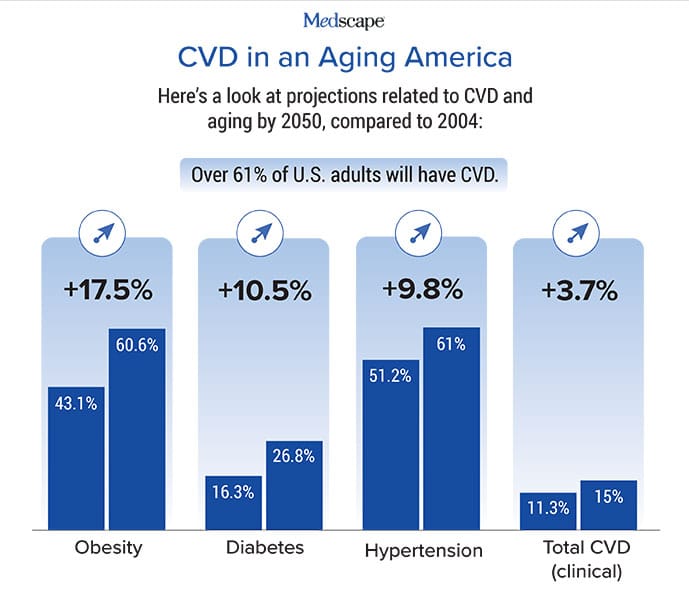
Heart failure (HF) affects 15%-20% of adults over 80, according to the American Heart Association/American College of Cardiology/Heart Failure Society of America Guideline for the Management of Heart Failure. HF with preserved ejection fraction (HFpEF), which becomes more likely after age 80, is related to other common conditions of aging, including hypertension, chronic kidney disease, diabetes, and obesity.
“Almost by definition, most people that have HFpEF have multiple comorbidities,” Hummel said. “You have to account for a lot of them when you’re thinking about how to help the patient best.”
This population also has higher chances of developing dementia and frailty, which affect 35% of adults age 90 and older and 31% of octogenarians, respectively. Older adults hospitalized for HF also have a high likelihood of polypharmacy; 68% take 10 or more medicines. Their perspective on what constitutes a good outcome, such as improved quality of life, may not align precisely with disease-specific care, further complicating treatment decisions.
Biggest Driver of Cardiovascular Disease, and Much More
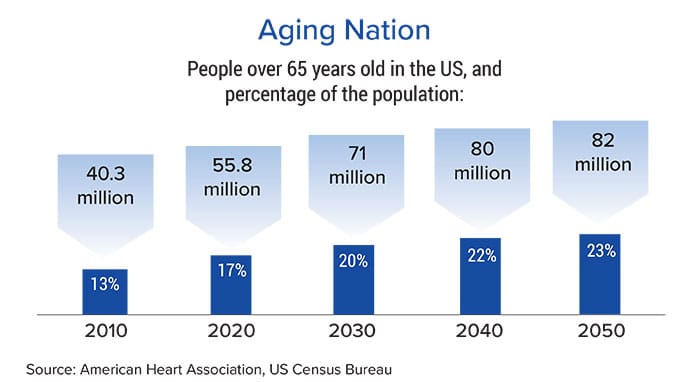
Adults over 80 represent about 4.4% of the US population — 15 million people — and their population is increasing at a rate of 3.8% per year, according to the US Census Bureau. By 2030, people over 65 are projected to outnumber people under 18 for the first time in US history.
“The biggest driver for cardiac disease is aging, and it’s also the biggest driver for chronic obstructive pulmonary disease, and sarcopenia, and 50 other things,” said Daniel E. Forman, MD, a geriatrician and cardiologist within the Department of Medicine at the University of Pittsburgh.
Several aging-related cardiovascular conditions — not just HFpEF, but also aortic stenosis and PAD— are systemic and associated with multimorbidity, Forman said. Frailty and sarcopenia change body composition and affect blood flow, stiffening vessels and reducing pulsation.
Frailty, an overall slowing and weakening of the body, makes it harder to fight disease and increases the risk for falls, hospitalization, and death.
“The muscle, the vessels, the conduction of the heart, I mean, everything starts to go haywire a little bit in the context of systemic changes,” Forman said.

Evidence-based protocols and caregiving priorities are in place for each condition related to aging. When those protocols and priorities clash, what seems like the perfect procedure can result in poor outcomes. The challenges of treatment have led cardiologists to underestimate the resilience of some older patients, spurring the rise of palliative care, Forman said. But older patients can do better with treatments than doctors may think.
“Geriatric cardiology is not palliative care. It’s actually a more exacting administration of best care cardiology,” Forman said. “In some cases that means the stent or the transcatheter aortic valve replacement or the sixth drug, but in some cases it means being a lot more selective about what you’re doing.”
Caring for Complex Patients
Older adults have been underrepresented in clinical trials, often for the same reasons that complicate their cardiovascular care. But improving outcomes in older patients in the coming years will demand a willingness among researchers and clinicians to embrace the complexity of this population.

Take HF, where treatment could potentially help address comorbidities, but cardiologists often are hesitant to prescribe yet another medication, said Parag Goyal, MD, MSc, a cardiologist and the founding director of the program for the care and study of the aging heart at Weill Cornell Medicine in New York City.
“If you treat the heart failure, you might actually improve some of the cognitive impairment, and you might actually improve frailty and physical function,” Goyal said.
When the patient has other conditions, treating HF requires extra vigilance, given the increased risk for adverse drug reactions. A medicine may help one condition but harm another. Goyal sometimes adds more frequent visits and recommends implantable or wearable devices to track progress.
Some patients may not want to take another medicine, or not be able to afford it, or have cognitive impairments that cause them to skip doses. Older adults who may lack digital literacy are increasingly seeking health advice online and through social media, leaving them vulnerable to misinformation about medication. Cognitive impairment also affects overall prognosis and the likelihood of patients benefiting from HF therapies, Goyal said.
“If you have some degree of cognitive impairment, my approach to getting you to take your medicines has got to be fundamentally different than someone who’s cognitively intact,” Goyal said. “We’re not traditionally trained to think about a condition like that.”
Frailty also complicates prescribing in this population. SGLT-2 Inhibitors for type 2 diabetes may reduce frailty and increase function but also can cause dehydration, hypotension, and potentially serious yeast infections.
A palliative care specialist might routinely withhold SGLT-2s to avoid potential risks, while a geriatric cardiologist might routinely weigh additional evidence, Forman said. The sarcopenic obese frailty phenotype, for instance, is considered likely to benefit from SGLT-2 Inhibitors.
“You could say, ‘frail: back off.’ Or you could say, ‘frail: let’s be exacting.’ It’s really a thought process,” Forman said.
The Rise of Pharmacogenetics
Pharmacogenetics (often used interchangeably with pharmacogenomics), which analyzes how DNA affects response to medications, has been gaining traction in cardiology for two decades. Still, “there’s no randomized control trial showing that using pharmacogenetic testing significantly improves clinical outcomes of patients with cardiovascular disease,” said Jasmine Luzum, PharmD, PhD, an assistant professor of clinical pharmacy at the University of Michigan.
A 2008 analysis found strong evidence to support genotype-guided warfarin dosing, for instance, but insufficient evidence to recommend for or against routine genetic testing for patients who’d never taken warfarin. While a 2013 randomized trial found that genotype-guided dosing of warfarin improved clotting compared to standard dosing, the trial did not measure clinical outcomes such as bleeding and thrombosis.
But recent large-scale research efforts are poised to expand the use of genotype-guided therapy in cardiology, Luzum said. The 2023 PREPARE study, for instance, found that pharmacogenetic testing provided a 30% relative risk reduction for adverse drug reactions — which cause up to 30% of hospital admissions in adults over 65.
The trial tested participants for 12 genes. Statins, warfarin, and metoprolol were among the most commonly used drugs by participants. Luzum’s clinical trial investigating the use of genetics to optimize beta blocker therapy in HF patients — using a polygenic risk score she developed — is expected to produce results in the next few years.
About 50 US health systems have already implemented pharmacogenetic testing, Luzum said. The Clinical Pharmacogenetics Implementation Consortium publishes guidelines for widely used cardiovascular drugs including statins, beta blockers, clopidogrel, and warfarin.
Testing usually involves a blood draw or saliva sample and clinical judgement. The physician might be prompted to test by an electronic health record message. At the University of Michigan, for instance, “the clopidogrel pharmacogenetics alert only fires in very certain circumstances, and we’re not testing everybody,” Luzum said.
Nearly all health systems included in a 2025 survey tested the CYP2C19 gene, which can indicate response to clopidogrel. Most providers also tested for the genes linked to warfarin response. A similar effort in 2017 found that the most commonly tested genes were associated with response to clopidogrel, thiopurines (a chemotherapy drug), simvastatin (a statin), and warfarin. A May 2026 commentary co-authored by Luzum calls for major cardiovascular societies to recommend pharmacogenetic testing before prescribing clopidogrel.
Researchers cite a lack of cost-effectiveness analyses as one barrier to expanding pharmacogenetics testing. Luzum is co-writing a scientific statement for the American Heart Association on the clinical use of pharmacogenetics, which she expects to be published this year.
“That will be a big step for bringing awareness for the cardiology field,” Luzum said.
Rehab and Nutrition Are Evolving
Diet is the greatest contributor to death from cardiovascular disease in the US, and researchers are developing strategies to help address those challenges in older patients.
Hummel is leading a clinical trial on nutritional support for older veterans after hospitalization for acute decompensated HF. It includes medically tailored meals and dietitian counseling for the first 3 weeks after discharge, when patients are vulnerable to complications.
Prehabilitation could also improve outcomes: Frailty is commonly part of the evaluation process for cardiology procedures, but few cardiologists are trying to reduce frailty beforehand through nutrition or exercise, Hummel said.
Standard cardiac rehabilitation is too difficult for many older patients, Hummel said. The REHAB-HFpEF clinical trial is exploring new approaches to physical rehab for patients hospitalized for HFpEF.
“There’s a lot more interest in these things, but not a lot of broadly applicable, practical ways to do this yet,” Hummel said.
Rehabilitation challenges drew Goyal to geriatric medicine. As a cardiology fellow, he saw many HF patients struggle after they left the hospital. He began interviewing patients, learning from geriatricians how to assess and manage cognitive impairment and frailty, and discussing sensitive issues such as prognosis and goals of care.
Goyal’s experience is atypical. Cardiologists often pursue an extra year of training in HF after their fellowship, but it leans heavily toward advanced therapies. Initiatives aimed at educating cardiologists about geriatric patients can fill in some of the knowledge gaps. Emerging tools can help cardiologists quickly assess geriatric conditions and cognitive difficulties. But a more fundamental shift in how cardiologists think about older adults is also needed.
Age-related cognitive and physical decline may not be inevitable, according to Yale University researchers. They followed about 11,300 adults over 50 (average age ~68) who were surveyed about their beliefs on aging and interviewed about their cognitive status or walking speed.
Cognitive and/or physical function improved for about 45% of participants during the 12-year study, published this year. Having positive beliefs about aging predicted both types of improvement, underscoring the need to “redefine aging so that it includes the possibility of improvement,” the researchers wrote.
Whether cardiologists are prepared for a new definition of aging remains to be seen.
“There’s still work to be done to get an increasing number of cardiologists to embrace the knowledge and the principles required to manage this complexity,” Goyal said. “It’s harder for these patients to bounce back, but many of them do.”
Resources for Cardiologists
Below are several online resources for cardiologists practicing in an aging America.
ACC’s Geriatric Cardiology Section
ESC’s Geriatric-Cardiology Resources
Heart Failure Society of America Learning Page
Overview of CVD Conditions for Older Adults
AHA Scientific Statement on Coronary Artery Revascularization in Older Adults
Geriatrics Healthcare Professionals Site
GeriKit Assessment App (Apple)
GeriKit Assessment App (Google)
Gerontological Society of America Learning Center
Michigan Surgical Quality Collaborative’s Frailty Resources
The 10-TaGA Geriatric Screening Instrument
Disclosures
Hummel reported receiving research grant support from NHLBI, AHRQ, NIA, Veterans Affairs, and the American Heart Association. He reported being a site principal investigator for clinical trials funded by Axon Therapeutics, Intellia Therapeutics, Corvia Medical, and Alleviant Medical and was recently a site PI for a trial funded by Novo Nordisk.
Goyal is supported by National Institute on Aging grants R01AG085420, R01AG088522, and R01AG091005.
Luzum and Forman reported no disclosures.
Sarah Amandolare is a freelance journalist and independent science and health reporter who regularly contributes to Medscape Medical News. Her work spans a variety of topics at the intersection of medicine, technology, and longevity.


