Admin_Adham
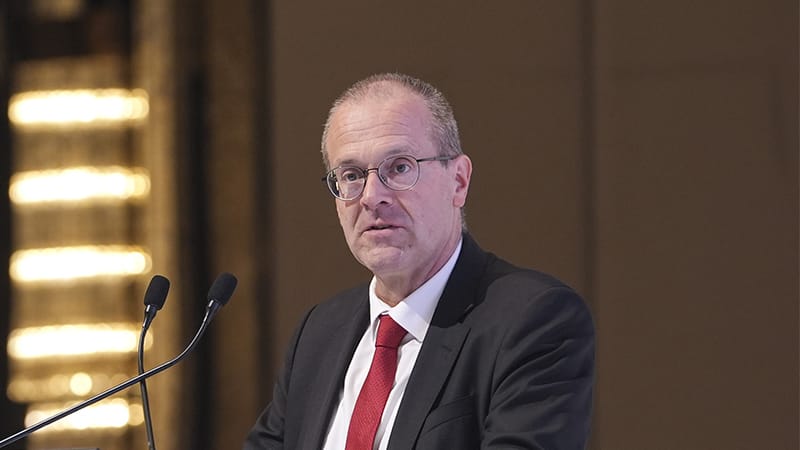
How can family physicians effectively respond to the global aging population? This question, posed by Leon Geffen, MBChB, honorary lecturer in the Division of Geriatric Medicine at the University of Cape Town, South Africa, was addressed by experts from Japan, the Philippines, and India at the 25th World Organization of Family Doctors (WONCA) World Conference 2025, recently held in Lisbon, Portugal. These countries are experiencing a growing elderly demographic.
“With 2 billion people over the age of 60 by 2050, of whom 1.6 billion will live in low- and middle-income countries, the need to rethink geriatric approaches in primary care has never been more urgent,” Geffen told Univadis Italy, a Medscape Network platform. “Even in Africa, where life expectancy after 60 is much lower than in other regions, the gap is narrowing. People are living longer, but the years lived without disability are not increasing at the same pace.”
Geffen also presented findings from a survey conducted in Cape Town, published in BMC Geriatrics, which showed that the main issue for older adults is not access to care but rather the quality of care. Many interventions fail to make a real impact on patients’ lives because they are not sufficiently person-centered. “That is where geriatric assessment comes in,” Geffen said. “It allows physicians to consider health issues in a broader context and make their interventions more effective. The goal is to develop tools for primary care that can assess both impaired and preserved functionality, identify psychosocial and cognitive problems, and help patients navigate through different care systems.”
WHO’s ICOPE Protocol
Yuka Sumi, medical officer at the World Health Organization (WHO) in the Department of Maternal, Newborn, Child, Adolescent and Ageing Health, presented the Integrated Care for Older People (ICOPE) protocol, designed to reorient health and social services toward more person-centered and better-coordinated care.
“Most geriatric assessments place too much emphasis on chronological age, but that’s incorrect,” Sumi said. “No two 80-year-olds are the same. One may be completely active, while another may be fully dependent.”
For the WHO, healthy aging means maintaining and developing the capacities that support autonomy in older age. “The model focuses on preserving mobility, the ability to learn, grow, make decisions, maintain stable relationships, contribute to society, and meet basic needs,” Sumi explained.
ICOPE evaluates intrinsic capacity (individual abilities) in the context of the environment, including factors like housing conditions and access to assistive devices or transport. The protocol follows a five-step approach: It starts with a basic screening using a validated nine-question tool to identify potential problems with intrinsic capacity and culminates in a personalized care plan.
“The use and rollout of ICOPE is part of the United Nations Decade of Healthy Ageing (2021-2030) actions aimed at achieving universal health coverage,” Sumi noted, adding that every assessment tool should have a therapeutic function, not just an exploratory one.
ICOPE also addresses urinary incontinence, fall prevention, caregiver support, and the evaluation and correction of sensory deficits (eg, vision and hearing loss). Screening covers five core domains: cognition, locomotion, vitality, sensory capacity (hearing and vision), and psychological well-being. When deficits are found, further assessments use validated tools like the Mini-Mental State Examination for cognition and the Short Physical Performance Battery for locomotion.
“Each health system differs in terms of its settings, workforce, financing, and care pathways,” Sumi emphasized. “Implementation actions should be integrated with existing health and social services. Screening can be offered in noncommunicable disease clinics, through community outreach, or even during vaccination campaigns.”
Philippine Experience: A Primary Care Model
Irene Maglonzo, MD, president of the Philippine Academy of Family Physicians, presented a pragmatic approach designed in the Philippines to address a challenge common to many countries: the shortage of geriatricians. “In the Philippines, there are only about 200 geriatricians, while demand for primary care services is high,” she said.
To address this, the academy developed clinical guidelines that divide geriatric assessment into three levels of care, using a “task-sharing” model rather than “task shifting.” Elder care is team-based, and each professional is equipped with tools suited to their level of expertise. In the absence of geriatricians — or even nurses — social workers can perform first-line assessments using a simplified validated tool.
At local health centers, nurses and family physicians use a screening tool partially based on the ICOPE protocol, while community health workers apply the “5Ms” model:
- Mind — memory screening using the Mini-Cog (a simple recall test)
- Mobility — fall risk assessment using the Timed Up and Go test
- Medications — identifying and simplifying polypharmacy
- Multi-complexity — evaluating and managing caregiver stress
- Matters Most — assessing daily functioning and patient priorities
“Caring for older adults is demanding; we need practical, flexible approaches,” Maglonzo said.
ICOPE in Daily Practice
Roshni Jhan Ganguly, MBBS, PGDGM, a family physician in Bangalore, India, and a newly appointed honorary life member of WONCA, illustrated the practical application of ICOPE through a real case: a 78-year-old man with diabetes and hypertension, living on the first floor of a building without an elevator, and caring for a wife with bilateral knee osteoarthritis. He presented with productive cough, fatigue, and increasing drowsiness.
“When we think of caring for older people, we should not stop at treating disease,” Ganguly said. “Aging is not just about blood glucose levels, blood pressure readings, or x-rays. It’s about the capacity to live, function, connect, and thrive in one’s environment.”
The case demonstrated how ICOPE addresses not only medical problems but also the social, environmental, and functional context of the patient’s life. “The way we, as family physicians, assess older adults helps them not just survive but live with dignity, purpose, and well-being,” she concluded.
Impact and Policy Support
A critical question emerged during the discussion: How can the effectiveness of these approaches be measured, and how can policymakers be convinced to invest in geriatric prevention? A participant from Sweden asked: “How do we know that, after 3 or 4 years of implementing a specific framework, our patients are actually doing better?”
Sumi’s response was pragmatic: “Screening without intervention is unethical. If you screen, you must provide care. Does the older adult return for follow-up? Can we track progress? Indicators must be measured at the clinical, service, and policy levels.” She emphasized the importance of periodically checking intrinsic capacity, patient satisfaction, and adherence to proposed interventions.
With a projected global shortage of healthcare workers by 2030, experts noted that geriatric care models are no longer just an option but a necessity to ensure quality care for rapidly aging populations. “Geriatric care should not only add years to life but add life to years,” Maglonzo concluded.
All speakers declared no conflicts of interest related to the topics discussed.
This story was translated from Univadis Italy.