Admin_Adham
In 2021, Romel Castillo Garcia, MD, immigrated from Cuba to Canada with the intention of getting his license and practicing medicine. Castillo Garcia had practiced for 7 years in Cuba and Venezuela and had dual certifications in family medicine and gastroenterology. Theoretically, his qualifications made him an ideal candidate for a country in desperate need of skilled practitioners.
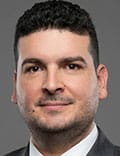
“The way I read the Medical Council of Canada website, it was simple: You do step one, two, and three, and then you get your license,” Castillo Garcia told Medscape News Canada. But when he arrived in Canada, he found that the process was more complex than he had thought.
Fortunately, the Health English Language Pro (HELP) program sponsored by the Canadian Medical Association (CMA) Foundation enabled Castillo Garcia to practice medicine in Canada as an internationally trained physician (ITP).
The HELP program helps ITPs meet language proficiency requirements, including proficiency in clinical and practice language, to navigate the Canadian medical licensure process. The program goes well beyond serving as a language lab; for 3 months, ITP participants meet weekly with physician volunteers to learn inclusive language skills; hone Canadian-centric patient encounter communications; gain a deep understanding of the system of referrals, console notes, privacy, and confidentiality; and build connections.
The latter are especially important when it comes to working through the intricacies of provincial and territorial regulatory processes, not to mention certification by the College of Family Physicians of Canada or the Royal College of Physicians and Surgeons of Canada.

Launched in September 2024, HELP is delivered through the Toronto-based workforce development charity ACCES Employment. “Long before HELP, we had been positioning ourselves to set up internationally trained healthcare professionals to be part of the solution to the healthcare crisis that had been looming for some time in Canada,” said Sue Sadler, senior vice president of services and program innovation at ACCES.
ACCES created programming in direct consultation with people who would be hiring ITPs. The programming was also designed to help ITPs gain alternative, nonlicensed employment within healthcare (e.g, as laboratory or medical assistants) as they prepare for licensure. And ACCES staff were instructed to work only with employers who are actively hiring.
It is also important that the newcomers have a means to connect with healthcare professionals who help them navigate Canada’s challenging and often fragmented licensing procedures, said Sadler. HELP participants have access to other ACCES programs, which Sadler said are intentionally interconnected.
The Initial Partnership
HELP was conceived when Eva Grunfeld, MD, DPhil, OC, professor emerita of public health at the University of Toronto, Toronto, volunteered to tutor a Syrian ob/gyn in medical English.

“Dr Grunfeld met with her once a week and went through the English language and medical terms (like ‘forceps’ and ‘speculum’) that enabled the individual to apply for and successfully complete her midwifery exams,” Margot Burnell, MD, CMA president and associate professor of radiation oncology and internal medicine at Dalhousie University in Halifax, told Medscape News Canada. “She now practices as a midwife in Milton.”
Initially, HELP had no funds. “I was grateful that ACCES was able to use existing resources,” said Grunfeld, also noting the partnership was serendipitous. “This was something that developed from an idea. My intuition told me they would want to participate.”

“Dr Grunfeld told us she wanted to team up and see if there was a way to use what we had been doing in this space, and the platform, and the flow of internationally trained, licensed medical doctors to bring this vision to life,” said Sadler. “There was a bit of proof of concept that was already in place through the initial mentorship, so we were all ears.”
Using Tutors’ Skills
Today, HELP has matched more than 100 newcomer physicians with Canadian physician volunteers like Jeff Sisler, MD, a retired family physician in Winnipeg. “Grunfeld approached me early on about this idea, and I was part of the first pilot group. I was newly retired and eager to help.” Sisler has mentored two newcomer physicians so far. Physician volunteers have access to various modules and cases to guide conversations, he explained.

Though it initially focused on doctor communication in English, HELP continues to evolve, providing ITPs with a solid foundation in the Canadian healthcare delivery framework, attitudes and expectations people have toward their doctors, and the way professionals work within hospital or clinic systems, said Sisler.
The experience has been fruitful for Sisler. “The program is such a good use of the talents and skills of semiretired or retired doctors. It’s great being in a teaching relationship with someone else, which is something many doctors do in their practice,” said Sisler. “The work is intrinsically interesting and because the focus is on vocabulary and English language skills, it’s the kind of work you can do as a retired doctor because you don’t have to be concerned with being out of date on modern treatments or diseases.”
Expanding the Program
In January, the CMA Foundation formally committed $645,000 over 3 years so that HELP can expand its services. “We’ve set a target of 110 new physician-to-physician partnerships,” said Sadler. “We want to build online group sessions to reach up to 500 participants per year. We are scaling the program to build in communities of practice to support ITPs and volunteer physicians.”
HELP needs a steady and consistent influx of physician volunteers and ITP participants, said Grunfeld. Roughly 13,000 ITPs are currently in Canada but not working in healthcare, which appears irrational, given the gaps in care delivery and access.
“The CMA would like a process that allows ITPs to go from an initial job offer when they are in their home country to immigration (including registration and residency), licensing and practice assessment, and onboarding. Then the process should support them when they’re in practice,” said Burnell. “We value the skills that they bring to our country.”
Improving the prearrival process is likewise important. “Many people arrive in Canada with medical skills but don’t make the connections necessary to get down the road,” said Grunfeld. “When we know someone is destined for Canada, let’s help them make those connections before they arrive to help them on the road to professional practice.”
Castillo Garcia, Burnell, Grunfeld, and Sisler reported having no relevant financial relationships. Sadler reported working for ACCES, an organization that has multiple business partnerships.
Liz Scherer is an independent health/medical journalist who frequently reports Canadian and European health news.