

 Admin_Adham
 Jump to Key Points
Cardiologists largely welcomed the Centers for Medicare & Medicaid Services (CMS) changes to coverage requirements for transcatheter aortic valve replacement (TAVR), although acknowledging the potential risk to patients if the heart team approach erodes and self-referral reigns.
CMS issued a National Coverage Determination (NCD) last month after a 9-month review process that engaged with the American College of Cardiology (ACC), the Society of Thoracic Surgeons, the American Association for Thoracic Surgery (AATS), and other groups.
The final version lifted the coverage with evidence development (CED) status for severe symptomatic aortic stenosis while adding coverage of TAVR for asymptomatic severe aortic stenosis with CED.
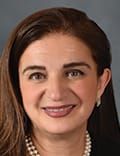
“It was the best thing that CMS did to basically marry the coverage to continuing to develop evidence, especially with new technology when TAVR first came out,” said ACC president Roxana Mehran, MD. “But also, it is matured now enough that it is no longer necessary [for aortic stenosis].”
- CMS lifted CED for symptomatic severe AS; added asymptomatic severe AS with CED.
- Hospital on-site cardiac surgery + critical care still required; volume thresholds removed.
- Heart team review remains: surgeon + interventional cardiologist chart review required.
- Single in-person eval/procedure by either operator now covered; second operator allowed if deemed appropriate.
- Main concern: incentives may erode heart-team care + increase self-referral risk.
The updated NCD still requires hospitals to have on-site cardiac surgery capabilities and access to critical care resources but eliminates hospital-level volume thresholds. Most notable were changes to heart team requirements.
While a team with at least one cardiac surgeon and one interventional cardiologist must still review the patient’s chart, a single in-person evaluation can be done by either an interventional cardiologist or a surgeon. Either one can do the TAVR procedure without the other. However, a second evaluation and second operator, as deemed appropriate by the heart team (either a surgeon or interventionalist), would be covered as well.
While the professional societies’ recommendations were not completely followed by CMS in this regard, the final policy “is easier operationally” and will reduce administrative costs, said Mehran, who is a professor of medicine and director of the Women’s Heart and Vascular Center at Mount Sinai in New York City.
“I think that they did a good job of maintaining, to the extent possible, the heart team approach,” agreed Thoralf Sundt, III, MD, a past president of the AATS. “It’s not surprising to me that it’s gone to where it will permit a single operator. I don’t know that that’s bad, as long as the decision-making is a joint decision-making.”
The key question will be how the policy is implemented in practice and how the financial incentives shape it.
“It’s inescapable that there will be concerns from the surgeons that everyone will have a TAVR, even people who ought to have a surgical valve,” acknowledged Sundt, director of the Cardiac Surgery Clinical Service for Mass General Brigham and chief of the Division of Cardiac Surgery at Massachusetts General Hospital in Boston.
“Show me the incentives, I’ll show you the outcome,” he said. “If the incentive is to perform the procedure yourself that you can bill for, then that’s the problem. And that’s human nature.”
Established TAVR programs have seen the benefit of heart team care, Mehran noted, but whether newer programs and those under the influence of private equity will continue the same path remains to be seen. Aortic valve replacement in ambulatory surgical units “is not what should ever happen with this kind of a procedure,” Mehran argued.
“The most important thing is that we have to, collectively as physicians and members of the heart team, make sure that the heart team doesn’t go away,” she said. “There’s always going to be the cowboy interventional cardiologist or cowgirl interventional cardiologist who says, ‘I don’t really need a surgeon.’ But, you know, that is not the way forward. We need to have the heart team.”
Real-world evidence has shown a 0.2% surgical conversion rate, but “with every scenario we will still have some disaster in the cath lab with a patient who is really complex,” she added.
Transparency in outcomes through public reporting will be important, Mehran said, as will “collecting some evidence to continue to see how this new NCD is going to be implemented throughout the United States and hopefully even across the globe. Because whatever we do here is what the rest of the world also follows.”
Mehran disclosed receiving institutional research grants from Abbott Laboratories, Abiomed, Applied Therapeutics, AstraZeneca, Bayer, Beth Israel Deaconess, Bristol Myers Squibb, CERC, Chiesi Farmaceutici, Concept Medical, CSL Behring, DSI, Medtronic, Novartis Pharmaceuticals, and OrbusNeich; consultant fees from Abbott Laboratories, Boston Scientific, Janssen Scientific Affairs, Medscape/WebMD, Medtelligence (Janssen Scientific Affairs), Roivant Sciences, Sanofi, and Siemens Medical Solutions; consultant fees paid to the institution from Abbott Laboratories and Bristol Myers Squibb; advisory board funding paid to the institution from Spectranetics/Philips/Volcano; consulting fees (spouse) from Abiomed, The Medicines Company, and Merck; equity of less than 1% in Claret Medical and Elixir Medical; DSMB membership fees paid to the institution from Watermark Research Partners; and unpaid consulting for Idorsia Pharmaceuticals and Regeneron Pharmaceuticals. He also reported being an associate editor for the ACC and the American Medical Association.
Sundt disclosed having no relevant relationships with industry.
Crystal Phend is an award-winning medical journalist with decades of experience reporting on clinical research and healthcare developments across specialties. When not walking the halls at a medical conference, she can be found at a keyboard in upstate New York.



