Admin_Adham
The drug colchicine may reduce cardiovascular outcomes among patients with gout, based on a range of retrospective data that suggest improved outcomes and mechanistic connections between gout and cardiovascular disease.

“Why do individuals with gout have increased cardiovascular disease? I don’t think we really know the full answer to that, but I think one likely link is inflammation. Both of these diseases, independent of each other, are diseases of low-level, chronic inflammation,” said Michael H. Pillinger, MD, during a presentation at the Gout Hyperuricemia and Crystal Associated Disease Network Annual Research Symposium (G-CAN) 2025. He noted that outcomes from short-term clinical trials have been mixed, and the true benefits of colchicine may come from long-term use.
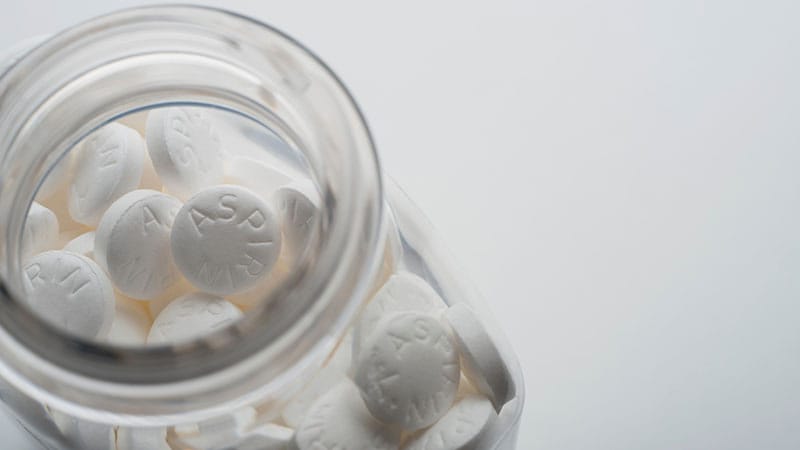
Is Colchicine ‘a Little Aspirin-like Without Inducing Bleeding’?
“We, and often cardiologists, don’t think of cardiovascular disease as a crystal disease, and yet it is. If you look at the plaques of patients with cardiovascular disease, cholesterol is not simply a mushy thing. It often forms crystals. Those crystals are locally inflammatory, just as they are in the bursae of patients with rheumatoid arthritis,” said Pillinger, who is professor of medicine at NYU Grossman School of Medicine, New York City.
“If we want to take it a step farther and maybe wade into controversy, we know that there’s at least a thought that maybe urate crystals also get into [atherosclerotic] vessels,” Pillinger said. He noted that there is still controversy over this idea, but urate crystals have been observed in atherosclerotic vessels in in vitro models. “So maybe there’s even a local commonality between the two diseases,” he added.
Similar disease processes suggest that colchicine, an alkaloid believed to interfere with inflammation triggers in white blood cells, could reduce cardiovascular risks, according to Pillinger. While in the US population the prevalence of myocardial infarction (MI) has been reported to be 14% in patients with gout vs 3% in those without, he cited retrospective, cross-sectional evidence from his group’s 2012 study of 1288 US veterans with gout suggesting that colchicine use was associated with a lower rate of MI than in those not treated with colchicine (2.6% vs 1.2%; P = .03).
Such findings led Pillinger and his group to further investigate colchicine’s effects. “Is it preventing or slowing the process of atherosclerosis, or is it like aspirin, let’s say, if present at the time of plaque rupture, reducing the inflammatory state when something happens? There’s actually evidence colchicine will lower the aggregation of leukocytes and platelets together, so it’s a little aspirin-like without inducing bleeding,” he said.
His group conducted another retrospective study examining whether colchicine users have a lower incidence of progression to coronary artery disease (CAD) than nonusers in a population of 722 patients drawn from the VA New York Harbor Health Care System between 2000 and 2009. Participants had no known CAD. There was a 51% decrease in incident CAD in the colchicine-treated population, although the comparison did not reach statistical significance (hazard ratio [HR], 0.49; 95% CI, 0.23-1.05). That reduction is in line with other studies in populations with gout. “In non-gout studies, it's more like 30%, which is interesting,” Pillinger said.
When the researchers looked at the first MI experienced, they saw an association with a larger benefit, which was statistically significant (HR, 0.37; 95% CI, 0.16-0.83). “So, this seems to suggest there may be a preventative benefit of colchicine on the development of coronary artery disease, sort of statin-like: take it a long time and you may get less disease,” Pillinger said.
They also looked for an association of colchicine with acute events, examining whether individuals were taking colchicine when they experienced a cardiovascular event. “Patients who had MACE [major adverse cardiovascular events] during this study, in this high-risk group, were less likely to be taking their colchicine actively, suggesting again, what I’m calling an aspirin-like effect, and kind of bringing things to the idea that there may be acute benefits to colchicine,” he said.
He noted that other studies have cast uncertainty on a potential effect of colchicine. “This makes me pause a little bit and think, but overall, I do think the preponderance of clinical data suggests a colchicine benefit that raises a lot of questions about how we should be using it and how long we should be prophylaxing. Maybe we should keep it on forever, which is what they do in high-risk cardiac patients when they use it,” Pillinger said.
Slow Prescribing of Colchicine by Cardiologists
In the question and answer session following his talk, an audience member suggested that cardiologists have been slow to prescribe colchicine to their patients, which Pillinger acknowledged. “They really like their lipids, and they’ve been slow to take up the idea of inflammation,” Pillinger said. He added that there has been uncertainty around some of the studies that suggest cardiovascular benefits of colchicine. “The first two large studies were fairly convincing, but as studies always are, they were picked apart a bit, and an even larger study was done called the CLEAR study. And the CLEAR study is even more controversial and is being picked apart, but its conclusion was that [after a first MI] there was no benefit” to taking colchicine in preventing a composite of death from cardiovascular causes, recurrent MI, stroke, or unplanned coronary revascularization, he said.
Another questioner, who identified himself as a former FDA employee, wondered whether concerns about drug-drug interactions with colchicine were “maybe one of the reasons that a lot of cardiologists may be more reluctant and hesitant to coprescribe [colchicine],” he said. Pillinger noted that in the LoDoCo-MI and COLCOT colchicine trials, nearly all patients were on statins and frequently on other drugs as well. “They did not have a single problem with drug-drug interactions. I think in the real world, most of the time it’s okay. I think one ought to be careful, especially with long-term use of the drug. I don’t think we know very well how to deal with people with both renal disease and multiple strong inhibitors. I get very careful with those people,” he said.
Pillinger reported consulting for Convergence Bio, Scilex, and Amgen, and serving as a site investigator for Amgen.
Jim Kling is a writer based in Bellingham, Washington.