Admin_Adham
TOPLINE:
Dual-energy CT (DECT) with virtual non-calcium (VNCa) reconstruction demonstrated a high specificity of 83% for the detection of bone marrow oedema in inflammatory sacroiliitis, making it suitable in confirming inflammatory activity when MRI is contraindicated or unavailable.
METHODOLOGY:
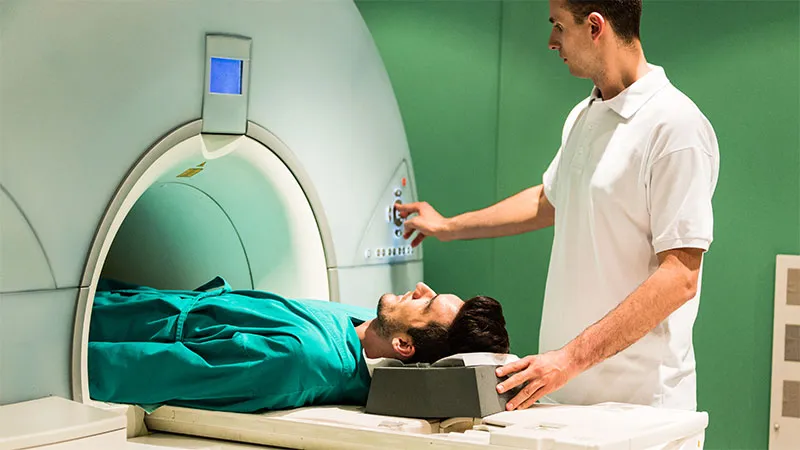
- Researchers performed a guideline-adherent systematic review and meta-analysis of seven studies involving 358 patients and 591 sacroiliac joints to evaluate the diagnostic performance of DECT with VNCa reconstruction in detecting bone marrow oedema in inflammatory sacroiliitis.
- MRI with fluid-sensitive sequences served as the reference standard for detecting active inflammatory bone marrow oedema.
- Quality assessment was performed using the Quality Assessment of Diagnostic Accuracy Studies 2 (QUADAS-2) tool, and pooled sensitivity and specificity were calculated using a bivariate regression model.
- Heterogeneity was evaluated using the I2 statistic, and statistical significance was set at P < .05.
- Subgroup analyses were performed for anatomical site (sacral vs iliac bone marrow oedema) and slice thickness (< 1 vs ≥ 1 mm).
TAKEAWAY:
- The pooled sensitivity of DECT VNCa for detecting sacroiliac bone marrow oedema was 78% (95% CI, 65%-88%), with moderate heterogeneity (I2 = 68%), and the pooled specificity was 83% (95% CI, 71%-91%), with high heterogeneity (I2 = 88%).
- The area under the summary receiver operating characteristic curve was 0.91 (95% CI, 0.88-0.93), indicating good overall diagnostic accuracy for DECT VNCa.
- Sensitivity tended to be lower for sacral than for iliac bone marrow oedema (approximately 69% vs 79%), although the difference was not statistically significant (P = .07); however, specificity was higher for acquisitions with a slice thickness of 1 mm or greater than for those with a slice thickness under 1 mm (approximately 90% vs 84%).
- QUADAS-2 assessment revealed a moderate risk for bias, primarily due to convenience sampling in patient selection; the certainty of evidence was low for sensitivity and very low for specificity.
IN PRACTICE:
"DECT with VNCa reconstruction demonstrates good diagnostic accuracy for detecting sacroiliac BME [bone marrow oedema], with high specificity (~0.83) supporting its role in confirming inflammatory activity when MRI is contraindicated or unavailable. However, moderate and variable sensitivity (~0.78), with a trend toward lower performance in sacral lesions, precludes its use as a standalone replacement for MRI in excluding active sacroiliitis, particularly in young patients," the authors wrote.
"Based on current evidence, MRI remains the reference standard for comprehensive assessment of sacroiliac inflammation, while DECT serves as a complementary tool with specific clinical applications," they added.
SOURCE:
This study was led by Armando Perrella, University of Siena, Siena, Italy. It was published online on April 27, 2026, in the Journal of Clinical Medicine.
LIMITATIONS:
This study was limited by the relatively small number of included studies and substantial heterogeneity. Further constraints included the hierarchical nature of reported data, lack of direct individual patient-level data, and reliance on specialised centres with experienced readers. Additionally, the analysis was restricted by a limited number of studies available for subgroup comparisons and a moderate risk for bias stemming from convenience sampling in patient selection.
DISCLOSURES:
This research did not receive any external funding. The authors declared having no conflicts of interest.
This article was created using several editorial tools, including AI, as part of the process. Human editors reviewed this content before publication.