

 Admin_Adham
Mohamad Ali Najia, PhD, bioengineer and stem cell biologist, has been awarded a fellowship for early career scientists to research how the legacy of humans’ ancient battles with viruses may play a role in a cancer that affects the immune system.
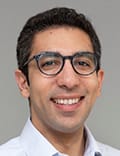
Najia is using his 2025 Society for Immunotherapy of Cancer (SITC)-Genmab cancer immunotherapy fellowship to investigate whether there someday could be a way to use this viral heritage, known as endogenous retroelements, in treating diffuse large B-cell lymphoma (DLBCL).
This $100,000 1-year SITC-Genmab award will aid his work as a postdoctoral research fellow at Boston Children’s Hospital, Havard Medical School, Boston.
Najia, age 33, is part of a movement in research to take a closer look at what was initially dismissed as junk, or filler, DNA in the years immediately following the 1999 announcement of sequencing of a working draft of the human genome.
In an interview with Medscape Medical News, Najia spoke about how he explains his research to his father (an electrical engineer) and his mother (a nurse).
“About 1% of the human genome encodes for proteins that make up all our cells, the core building blocks of life, whereas 8% are these remnants of over millions of years of viral infection,” Najia said. “So, in a way, we’re more virus than we are human.”
“I have been trying to understand how these ancient, fossilized remnants of endogenous retroviruses contribute to normal physiology and then, more importantly, how can we leverage them as a way to stimulate the immune system against certain cancers like DLBCL,” Najia said.
Najia earned a Bachelor of Science degree in biomedical engineering at the Georgia Institute of Technology in Atlanta in 2014 and then entered the Health Sciences and Technology (HST) program of Harvard-Massachusetts Institute of Technology (MIT).
There Najia worked in the labs of MIT’s Paul Blainey, PhD, and Harvard’s George Daley, MD, PhD, while earning his doctorate in medical engineering and medical physics from MIT in 2022. He continues as a postdoctoral research fellow in those labs at the Broad Institute of MIT and Harvard in Cambridge, Massachusetts.
Daley described Najia as being deeply intellectual and curious.
“When I first interviewed him, I was very drawn to his background in bioengineering at Georgia Tech,” Daley told Medscape Medical News. “Engineers tend to bring a very quantitative and analytical and rigorous approach to their thinking, and he certainly has done that.”
Daley is the dean of Harvard Medical School and a noted researcher. His own graduate work in biology in the late 1980s at MIT aided in a shift in the design of cancer drugs toward medicines aimed at specific targets. For example, working with David Baltimore, PhD, Daley in 1990 published a paper in Science that highlighted the role of the bcr-abl gene in chronic myelogenous leukemia, based on testing done on mice. This was part of the broad body of research that paved the way for the 2001 introduction of imatinib (Gleevec).
Many more targeted therapies have followed, including immune checkpoint inhibitors, which seek to unmask cancerous cells so that T cells will recognize and destroy them.
Checkpoint inhibitors have worked well in many cancers, including use of nivolumab (Opdivo) and pembrolizumab (Keytruda) in some forms of Hodgkin lymphoma, but have not proven as effective in others, such as LBCL. In the work covered by the SITC fellowship, Najia will seek to hone in on potential genetic causes underlying this difference in response.
“Mo’s [Najia’s] hypothesis is that whether a cancer incites an immune response has something to do with the activity of endogenous retroviruses,” Daley said. “Because in Hodgkin [lymphoma], they’re very active, and those cells are recognized by the immune system. But in large cell lymphomas, they’re silenced, and those cells are largely not recognized by the immune system.”
“He has preliminary data to suggest that if you reactivate them, you now stimulate their recognition by the immune system,” Daley said. “It’s all very consistent, but he’s got to slog through and do the difficult experiments to actually prove it.”
Najia earlier focused more on research into how to modify T cells and natural killers cells so that they would better recognize cells gone awry in cancer and attack them.
“In my postdoc now, I’ve been approaching the problem more from the other angle. How can we make cancer cells like malignant B cells more susceptible to immune recognition?” he said.
Many of the genes that are found frequently mutated in patients with cancers are chromatin-modifying enzymes, which have evolved to help repress some endogenous retroviruses.
“There’s an underappreciated aspect of this biology where we can try to connect some of the observations for patients with some of these strategies in targeting the repetitive genome,” Najia said.
Some next steps in the long process that someday could convert Najia’s work into research toward a new DLBCL therapy may include working with patient-derived cells grown in mice to see what interventions might work in better unmasking cancer.
Najia’s decision to study in the Harvard-MIT HST program was something of a homecoming because he grew up in the Boston suburb of Danvers. In his free time, he enjoys sailing on the Charles River and running and cycling in Boston.
“It’s a very conducive city for biking and walking,” he noted.
Kerry Dooley Young is a freelance journalist based in Washington, DC. She has covered medical research and healthcare policy for more than 20 years.
