Admin_Adham
Edward S. Cooper, MD, the first Black president of the American Heart Association (AHA) and a noted leader in stroke research and care, has died. He was 99.
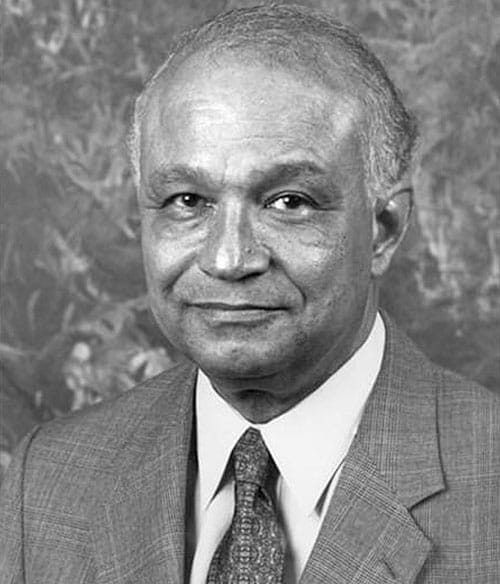
The many accomplishments over Cooper’s pioneering career include cofounding and codirecting a stroke research center at Pennsylvania General Hospital, earning the first tenured professorship for a Black person at the University of Pennsylvania, building a pipeline to increase the number of Black doctors, and even once examining the Rev. Dr Martin Luther King, Jr.
“Dr Cooper was a visionary leader whose commitment to advancing stroke care helped inspire transformative and lasting changes in medicine,” Nancy Brown, CEO of the AHA, said on the organization’s website.
“His kindness, warmth, and compassion touched countless lives and left an enduring legacy of health and hope for all,” she said.
Personal Commitment
Born in Columbia, South Carolina, on December 11, 1926, Cooper witnessed a commitment to patient care firsthand as a child.
Not only were his father and two of his uncles dentists, but Cooper, at 7, also had a fortuitous encounter with a local doctor who was treating his younger brother for scarlet fever. Noticing Cooper’s keen attentiveness, the physician patted the young boy on the head and said, “You’re going to be a good pediatrician.”
Cooper was drafted into World War II but received a military deferment to complete medical school — an obligation he later fulfilled, becoming the first Black chief of medical services at the US Clark Air Force Base Hospital in the Philippines.
In 1949, Cooper earned his medical degree from Meharry Medical College in Nashville, Tennessee. When he was accepted for an internship at Philadelphia General Hospital in Philadelphia, one of the nation’s oldest and largest hospitals at the time, he was the third Black intern in the hospital’s history and the only Black person in his 50-person cohort.
‘…And Stroke!’
While on a neurology rotation, Cooper observed that most stroke patients were Black, most strokes were hemorrhagic, and most stroke patients had uncontrolled hypertension. He began questioning why.
Around that time, he came down with pneumonia and a fever so high (105 °F) it triggered hallucinations. “Good Lord, if you help me through this, I assure you I will do everything I can to help those poor patients with stroke,” he prayed, according to a 2024 story in American Heart Association News.
His doctors soon found the right antibiotics for his illness and Cooper lived — along with his promise.
After serving on the AHA’s local board of directors in the 1960s and ’70s, Cooper joined the organization’s national board in 1982. That same year he became chair of the Stroke Council.
At the time, the AHA’s mission statement read: “The reduction of premature death and disability from cardiovascular diseases.” Whenever Cooper heard this, he’d quickly tack on, “…and stroke!” with a friendly smile.
In 1985, the AHA followed his example, adding those two words to the end of its mission statement.

Presidentship and More
Cooper was named AHA president in 1992. During his year of presidency, Cooper helped enact changes that created the food nutrition labels. He also raised awareness on two of his passions — inclusion and stroke.
Cooper’s contributions as a volunteer also included work for the National Medical Association, the largest organization representing Black doctors and patients.
His efforts helped create a pipeline from historically Black colleges and universities to medical schools, which contributed to the number of Black medical students increasing nearly twofold a decade later.
During his four decades in practice, Cooper amassed myriad scientific papers, trainees, and patients. One of those patients was King. While in the hospital to have a years-old scar smoothed out, King requested a physical. His dermatologist, who was working at the same hospital as Cooper, said he knew just the guy.
Familial Legacy
Cooper was preceded in death by his wife of 54 years and fellow physician, Jean, who died in 2006, and their son, E. Sawyer Cooper, Jr, who died of Hodgkin lymphoma at age 30.
Cooper’s surviving children all have doctorate degrees: Lisa Hudgins (pediatrics), Jan Cooper (internal medicine), and Charles Cooper (psychology). He is survived by four grandchildren — three of whom are also physicians — and seven great-grandchildren.
Brian Ellis is a freelance writer and editor who lives in Southwest Virginia.