

 Admin_Adham
The FDA has granted 510(k) clearance to Naox Link (NX01), a single-channel, in-ear electroencephalography (EEG) system designed to enable long-duration brain activity monitoring in both clinical and home environments.
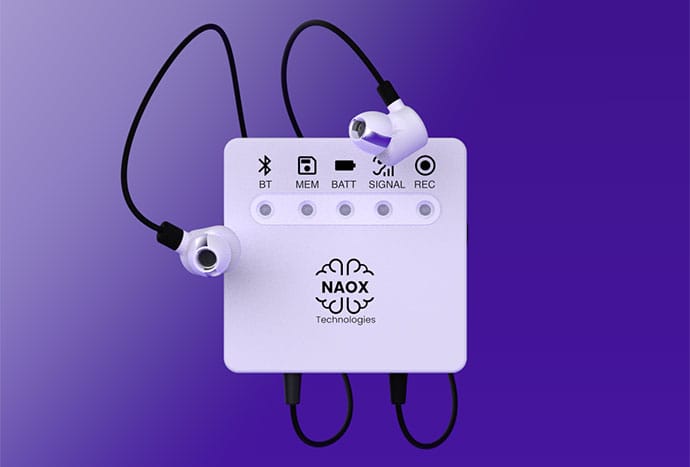
Developed by Naox Technologies, Naox Link is the first FDA-cleared EEG device to acquire, record, and transmit brain electrical activity via noninvasive electrodes placed inside the ear canal.
The system is intended for use in adult and pediatric patients aged 6 years or older, with the data generated interpreted by a licensed medical professional. The device does not provide any diagnostic conclusions about a patient’s condition.
Traditional EEG typically relies on scalp electrodes, conductive gels, and controlled clinical settings, often limiting recordings to short durations. Naox Link addresses these constraints by enabling more naturalistic and repeated EEG acquisition during everyday activities and sleep, including in the patient’s home, the company said in a statement.
The system uses soft, biocompatible in-ear electrodes integrated into wired earbuds to acquire, record, and transmit EEG data, supporting ambulatory and longitudinal monitoring that may complement conventional in-hospital EEG assessments, the company added.
A study published online in Sensors showed that Naox Link device provided viable signal quality for monitoring brain activity. A separate study in Frontiers in Neuroscience compared in-ear EEG recordings with conventional EEG in 30 healthy adults during wakefulness and sleep. This study showed comparable signal quality despite some motion-related artifacts.
Naox Link was designed to support a range of clinical and research applications by enabling longer-duration, ambulatory EEG recording outside traditional hospital environments. In neurology and epilepsy care, the system may complement short in-clinic EEG studies by allowing recurrent or extended monitoring, increasing the likelihood of capturing intermittent or rare events and supporting longitudinal assessment of neurological conditions, the company said.
In sleep medicine, the device enables overnight EEG recordings in the patient’s home, facilitating more natural sleep assessment and staging in real-world conditions.
The platform may also support clinical and translational research, including longitudinal brain monitoring in large cohorts and studies involving pediatric populations or patients at risk for neurodegenerative disease.
Naox Technologies is now collaborating with several European hospitals and research centers on studies involving pediatric epilepsy, focal epilepsies in adults, and epileptiform activity in patients at risk for Alzheimer’s disease. The company plans to expand clinical partnerships in the US.
Naox Link is currently available to selected neurology and sleep centers in the US, with broader clinical availability planned for 2026.
