

 Admin_Adham
 Jump to Key Points
Sometimes, all it takes is one patient to discover a clinical passion.
For Colleen Kelly, MD, it was a young woman with severe Crohn’s disease. She had a BMI greater than 50 and needed an ileal resection, but her surgeons did not want to operate until she lost weight.
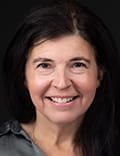
“That got me interested in this idea of obesity and inflammatory bowel disease (IBD),” said Kelly, a gastroenterologist at Brigham and Women’s Hospital and a faculty member at Harvard Medical School, both in Boston.
A common assumption is that patients with IBD are thin and malnourished. But the prevalence of obesity in this population largely mirrors that of the general US population.
- FDA-approved FMT products now largely replace conventional FMT for recurrent CDI prevention.
- Approved products not indicated for acute severe/fulminant CDI; ICU cases remain therapeutic gap.
- Open-label/registry data needed; placebo-controlled trials in critically ill CDI are ethically difficult.
- FMT research expanding to Crohn's disease; multicenter prospective enrollment ongoing, slow.
- Obesity common in IBD; severe obesity may require bariatric + genetic evaluation, despite surgical risk.
Kelly, who serves as a diplomate of the American Board of Obesity Medicine, was motivated to help this population and started a clinic where she sees patients with IBD and obesity.
Much of Kelly’s clinical research has focused on fecal microbiota transplantation (FMT) and Clostridioides difficile infection (CDI), but she has also been examining the use of FMT in patients with IBD.
Kelly has served on the American Gastroenterological Association’s Scientific Advisory Board for Gut Microbiome Research and Education. She led the first placebo-controlled clinical trial evaluating FMT for recurrent CDI and is currently a principal investigator for the FMT National Patient Registry, which was designed to provide real-world data on the effectiveness and safety of FMT.
In an interview with Medscape Medical News, Kelly discussed recent advances and challenges in FMT research, memorable patient encounters, and the importance of preserving human connection in medicine.
Can you provide an update on your FMT research?
Currently, we have two FDA-approved FMT products, and they have largely replaced conventional FMT for prevention of recurrent CDI. These products are not approved for treatment of acute, severe, or fulminant CDI in patients who may need FMT and usually require multiple doses. They’re very sick, septic, and often in the ICU.
The focus of what we’re doing — and trying to communicate to doctors — is how we treat those patients? That’s something we’ve been engaging the FDA about. We’re trying to close that gap.
Open Biome had been trying to figure out how they could pivot to be helpful, potentially offering donor stool to treat patients until we have an approved product.
It’s very hard to do a clinical trial of FMT in patients who are this sick. The ethics of a placebo arm are tough. Alexander Khoruts, MD, with whom I worked for a long time and who is one of the original people to conceive of stool banking, is planning that type of clinical trial. Meanwhile, we are hoping to collect open-label data showing that FMT can be used in these patients, potentially through the FMT National Registry. Interestingly, we’re not quite seeing as many patients with fulminant CDI as we used to. It might just be that we’re seeing less severe CDI overall.
We’re also working with Dr Khoruts and his colleagues on an open-label FMT study to see if it impacts Crohn’s disease. There’s been all this hope: It helps CDI, so could it help other diseases that involve dysbiosis? The next lowest-hanging fruit is possibly IBD. The study is being conducted at several sites, including Brigham and Women’s Crohn’s and Colitis Center. We’re recruiting patients with all different types of Crohn’s, following them prospectively, and seeing the impact of FMT on their disease course.
Enrollment has been slow but steady, and results are going to take a while. Patients have to be on stable therapies, among other requirements, which can make enrollment difficult. People experiencing an IBD flare sometimes aren’t able to wait or may be hesitant about enrolling in a research study.
What’s the most challenging case you’ve recently encountered?
Most recently, I saw a young patient with lifelong severe obesity. Their BMI has been very high since childhood; it’s currently more than 65. They also have severe IBD and had already undergone a total proctocolectomy and ileostomy. Additionally, they have cutaneous Crohn’s, so they’re on a lot of immunosuppressant agents. They also have poorly controlled diabetes related to the obesity.
They had no response to tirzepatide, even at the highest doses. They’d lost no weight. I don’t know if they have time to wait for other drugs in late-stage clinical trials to come to market. I think they need something sooner.
They were very hesitant about bariatric surgery, which was probably their best option for losing a significant amount of weight. I understand that because they’ve had multiple surgeries already. We don’t love to do Roux-en-Y gastric bypasses and other bariatric procedures in patients with Crohn’s, given the higher risk for complications. But in weighing the risks and benefits, it might be their best option because the obesity is going to greatly limit their life expectancy unless we figure it out.
They’ve been through a lot. Interestingly, they had scurvy a year or two ago. Although they were taking in enough calories, their diet was, at some point, devoid of vitamin C. So, they’re very worried about possible malabsorption and how this could impact them.
We’re working with a bariatric surgeon. I reached out about testing for a genetic, monogenic cause of obesity because their BMI is so high, their family shares that trait, and it’s been present from a young age. We’re trying to get their Crohn’s managed simultaneously.
What’s a memorable patient encounter that affected you?
I recently had an older patient — he was in his 80s — who was referred for diarrhea. When I see an older person with diarrhea, I think, “This could be overflow,” because a lot of times they get really constipated and have overflow diarrhea.
He seemed very sad and anxious. He was a widower and alone. His diarrhea was making it hard for him to walk his dog because he’d go out for a walk and it would leak out. He was socially more isolated as a result.
I sat and I listened to him. I came up with a treatment plan. We were going to start with an x-ray, and then I explained that if it confirmed constipation, I was going to do a half bowel prep, flush the system, and then start with a good bowel regimen.
I did what I usually do, explaining things to him. He looked at me and he said, “Are you real?”
I said, “What does that mean?”
He said, “Nobody talks like that to me anymore when I go to the doctor.” He talked about his wife’s dying process; she was very sick. And he said, “We would go in and just get shuffled around and treated just like a piece of meat, and you talk to me and you listen to me.”
He actually got tears in his eyes, and I thought, “I’m really happy that I connected with him in this way.” I think I’d asked him about his dog. I had to see a picture of his dog.
I had 20 minutes to spend with him, and I was glad I was able to do that. But it’s sad these connections that doctors have with patients, and the humanistic side of things, are becoming scarcer.
What’s your advice to aspiring medical students?
Don’t be a drone. When I did residency and training and early in my career, it wasn’t all on the computer. We had paper charts, and you’d be around the nurses’ station. You’d go into the rooms and see the patients. A nurse might say, “Hey, the patient’s family is in the room, and I know you wanted to talk to them,” and you’d go pop in.
But now everybody’s off in these workrooms where all the computers are. Doctors are in front of a computer most of the time, checking vitals, doing orders, and sending Epic messages to the nurses or text pages. We’re at risk of it becoming soulless.
A lot of people get into medicine — aside from the intellectual part, because it’s cool, stable, and interesting — because of their love for people, their interest in them as human beings, and that connection with them.
Patients can sense when they’re a job to you, when they’re a number to you, and when they are something more important.
Building those relationships is something you’ll be so happy to have. I have patients now who have been my patients for 20 years, and I’ve seen them through so many phases of their lives. Even in gastroenterology, particularly with IBD or people with bad irritable bowel syndrome, you might see patients a couple of times a year, or at least once a year, over the long haul. And it makes it a lot more fun.
How do you maintain work-life balance?
I’m getting better at it than I used to be. I take a little work home, like my research interests or papers I’m writing, but I don’t bring clinical work home. I don’t work on notes at night.
I close my notes at the end of the visit. They’re very bulleted, not long narratives. I usually write them right after the patient leaves, so my notes are done.
I don’t check the portal at all hours. I don’t feel like I’m owned 24/7 by anybody — the hospital, the patient, by anything. I need to compartmentalize. If a message comes in, it can wait until tomorrow. People know that if it’s an emergency, there are emergency rooms open all night and other people around to help.
I think the idea that you have to provide 24/7 access and can’t separate home from work contributes a lot to burnout. When I’m home, I want to spend time with my family.
I spend a lot of time with my husband. We’ll go out to dinner, go to the beach, or just watch a show.
I exercise. I’m in a running club that meets a few times a week, and I take a long walk with a neighbor every Friday.
And then there’s faith-related things. I go to Catholic Mass every week, and I have an hour where my cell phone is off. I’m sitting at Mass and reflecting on the lessons of that week in terms of what is most important and how to live a better life.
Kelly is chief medical advisor for OpenBiome and has served on an advisory board for Eli Lilly.
Jennifer Lubell is a freelance medical writer in the Greater Washington Area.



