

 Admin_Adham
 Jump to Key Points
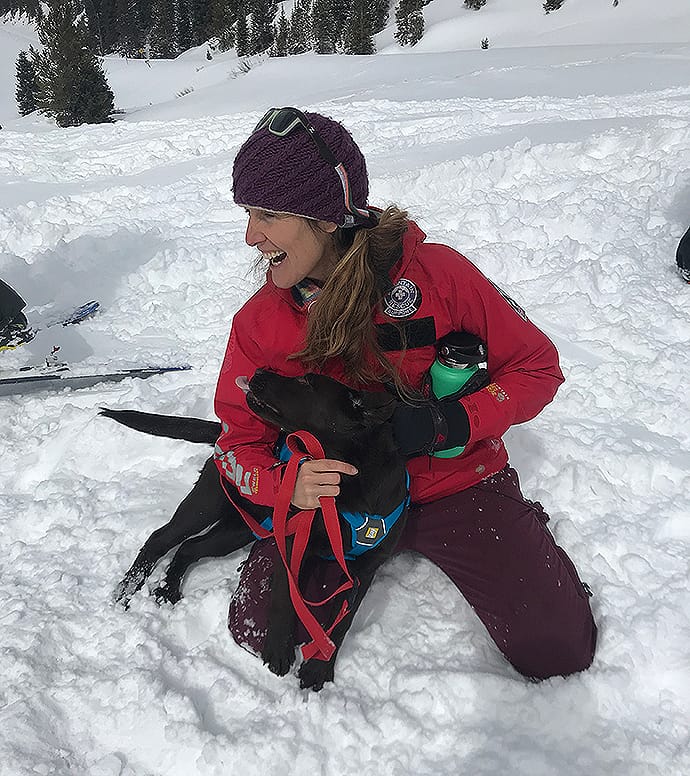
Laura McGladrey, PMHNP, FNP, has had a storied life. She has conducted pelvic exams with a book lamp in the jungles of the Dominican Republic and has delivered babies in South Sudan without so much as a paper towel. When asked what motivates someone to subject themselves to extreme environments and situations like these, she referred to something she calls the “DAS score.”
“I would say what is universal with everyone who practices wilderness medicine is what we jokingly call the DAS score — the demonstrated ability to suffer,” McGladrey, a fellow of the Academy of Wilderness Medicine, told Medscape Medical News.
All joking aside, McGladrey — who is founder/director of Responder Alliance Foundation, which educates and trains all types of responders on how to mitigate stress injury formation and recovery; senior instructor in the University of Colorado-Anschutz College of Nursing; and a dual-certified family/psychiatric nurse practitioner (NP) at UC Health University of Colorado Hospital, both in Aurora — provided context.
“People who excel in this work are not afraid to do the really hard, really scary things in an austere environment,” she said.
- Wilderness medicine = care in austere settings with limited resources/time to definitive care.
- Core traits: adaptability, perseverance, improvisation, triage under constraints.
- Prolonged field care is central when evacuation delayed for hours to days.
- NPs/PAs can apply prehospital skills to rural, military, tactical, and remote care.
- Training may improve psychological first aid, stress mitigation, and burnout resilience.
An Austere Environment
The term “austere environment” might be unfamiliar, especially among practitioners who work solely in conventional medicine settings, known as front-country medicine to folks like McGladrey.
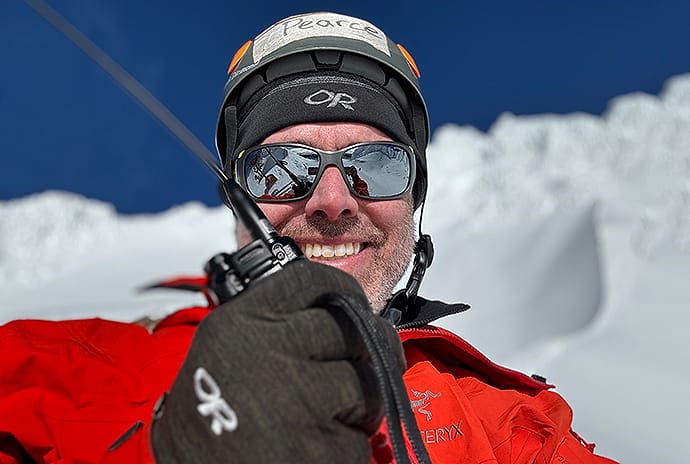
“In wilderness medicine, an austere environment is anywhere with limited resources, capability, or personnel to provide medical care, that is inhibited by either geography or time to definitive care,” said J. Pearce Beissinger, PA-C, a physician assistant (PA) in emergency and wilderness medicine with the Virginia Tech Carilion School of Medicine in Roanoke, Virginia, and medical provider with the 192nd CERFP Unit at Langley Air Force Base (Joint Base Langley-Eustis).
“You might have an ambulance crew that is cut off from front-country medicine; they only have what is available on their ambulance and are more than 2 hours from definitive care,” said Beissinger, who holds a Diploma in Mountain Medicine.
Frank Zuccala, DNP, FNP-BC, a certified wilderness paramedical and fellow of the Academy of Wilderness Medicine, is an emergency and tactical medicine practitioner, and instructor at Aerie BackCountry in Missoula, Montana. He is most drawn to situations that require prolonged care.
“I teach a lot of different classes —– wilderness EMT [emergency medical technician], wilderness first responder, and wilderness first aid. I’ve taught tactical medical classes for military and law enforcement personnel. The thing I’m most interested in beyond just a standard curriculum is prolonged field care,” said Zuccala.
“You’re responsible for the care of a patient far from definitive medical care, for keeping them alive for an incoming evacuation platform, or you’re socked in on a mountain top and have to walk them out over multiple days in a severely austere environment,” he said.
Call of the Wild
Wilderness medicine is not new. Anecdotally, it is rooted in early military and exploration endeavors and has arguably taken a page from indigenous medicine practices. It was not formalized until 1983 when the Wilderness Medical Society was formed. The organization offers clinical practice guidelines for a variety of conditions encountered in the wilderness, educational courses, training, certification, and immersive continuing medical education (AdventureEd) expeditions.
Many NPs and PAs who ultimately become certified — either as fellows or diplomates — receive their initial exposure to the field through humanitarian aid missions or in military or law enforcement settings. And at some point in their lives, most have been involved in a variety of outdoor activities, eg, mountaineering, river or wilderness guiding, or deep-sea diving.
The path is not always straight.
“I think for many, a career in wilderness medicine is a bit of a journey affected by where you’re at in your personal life, and so far as professional development, geography, time availability, and independent resources,” said Bessinger.
Many practitioners also appear to share certain personality traits.
“Adaptability is one of the most important,” said Glenn Barnes, DNP, RN, paramedic and a fellow of both the Academy of Wilderness Medicine and Wilderness and Extreme Medicine.
“How do you make do with limited resources? How can you use one thing for multiple reasons? How can you properly triage and prioritize the need for what resources you do have?” said Barnes, who is also a clinical associate professor and DNP-Extreme Environment Nursing content coordinator at Texas A&M University College of Nursing in Bryan, Texas.
He explained that perseverance was also key because the comfort factor, by definition, was gone.

“You may have a heater if you’re in the Arctic, but it is still going to be cold, and if you leave your building, you’re going to be facing an environment that could kill you. Or you’re in the jungle and facing constant humidity, fungal infections, snakes, and spiders,” he said. “It’s an uncontrolled environment.”
An ability to “think outside the box” is another important trait.
“There’s a tremendous diversity in wilderness medicine providers because of the environment, which transcends multiple geographies,” said Bessinger. “I believe it’s important to be explorative, to adjust one’s thinking from what’s been drilled into their heads as they studied medicine earlier and put it into a backcountry skill set (or mindset). “You know, how to work with what they have and perhaps see a piece of equipment in a different light,” he said.
Invaluable Training
Wilderness medicine skills are invaluable for NPs and PAs, regardless of whether it becomes a full-time pursuit.
“For PAs and NPs especially, I believe getting experience and training in pre-hospital medicine, and then applying themselves to wilderness medicine could be of benefit to a lot of rural parts of the country,” said Zuccala. “It’s an opportunity to blend a high-level knowledge of pathophysiology and pharmacology with an on-the-street level application of keeping yourself and your patient safe,” he said.
It also boosts mental health resilience.
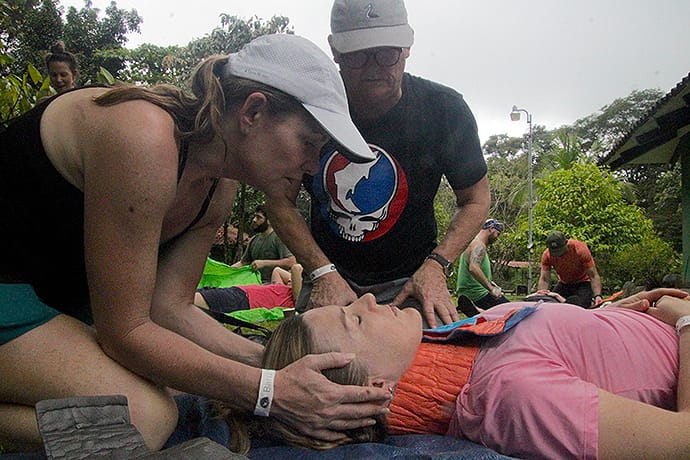
“Every single person from day 1 on the job — whether they’re mid-level providers or field responders — should be equipped with basic skills like psychological first aid, and the ability to recognize and mitigate stress in the field,” said McGladrey.
McGladrey also pointed to the personal benefits she and others have gained by honing their wilderness medicine skill set.
“Having a vocation, something we love and are passionate about, helps prevent burnout. There’s a bonus to have these reservoirs of other things we love to do,” she said. “I think it can really sustain people in day-to-day task saturation and the challenges faced in their day jobs,” said McGladrey.
McGladrey, Bessinger, Zuccala, and Barnes reported no financial disclosures of interest.
Liz Scherer is an independent health/medical journalist. In addition to her US health reporting, she also writes about health and policy in Canada and the EU.



