Admin_Adham
TOPLINE:
Most patients with cutaneous Crohn’s disease (CCD) in a US study were female and had concurrent intestinal Crohn’s disease and genital skin involvement, and biologic or small-molecule inhibitor therapies were associated with high rates of partial or complete resolution.
METHODOLOGY:
- Researchers retrospectively reviewed records of 57 adult and pediatric patients (age range at diagnosis, 10-57 years; 81% female; 81% White, 9% Black, 5% Hispanic, 2% Asian) with CCD treated at nine US academic centers between 2000 and 2020. The mean age of skin disease onset was 34.3 years, and the mean age at diagnosis was 37.1 years.
- Patients required at least one dermatology visit and clinical and histopathologic findings consistent with Delphi consensus diagnostic criteria.
- Treatment outcomes included clearance (complete resolution of cutaneous symptoms and active lesions), partial clearance (documented improvement without resolution), no effect (no change), or worsening (increased pain, size, number, or spreading lesions).
TAKEAWAY:
- Most patients (70%) had intestinal Crohn’s disease at the time of CCD diagnosis, with the terminal ileum being the most affected gastrointestinal site (40%).
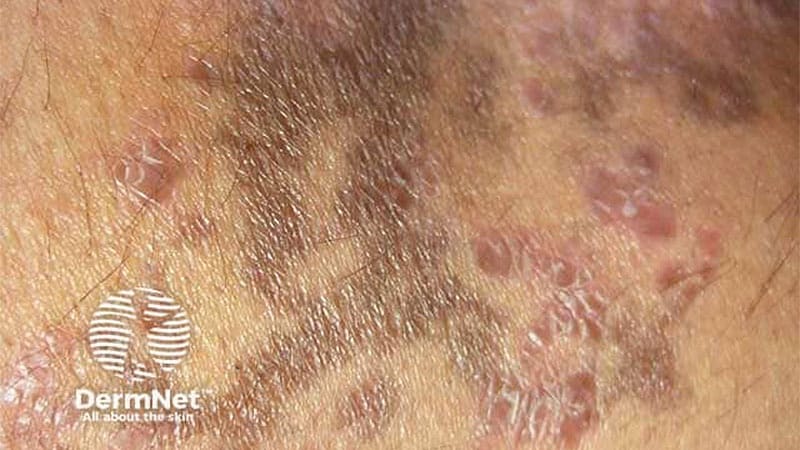
- Cutaneous lesions included ulcerations in 42% of patients, edema in 32%, fissures in 25%, nodules in 18%, and plaques in 16%, with genital CCD being the most common presentation in 44% of patients.
- Biologic or small-molecule inhibitor therapy was used to treat 82% of patients, with TNF-alpha inhibitors being the most common (85%), followed by ustekinumab (53%), risankizumab (11%), upadacitinib (9%), and tofacitinib (2%).
- Patients who initiated biologic or small-molecule inhibitor therapies before the CCD diagnosis showed higher rates of partial or complete resolution (90%) than those treated after diagnosis (71%), with dosing frequently escalated for improved disease control.
IN PRACTICE:
“In this multi-institutional US cohort study of patients with CCD, most patients were female, had intestinal Crohn’s disease involvement at time of CCD diagnosis, and presented clinically with vulvar edema and ulcerations,” the authors of the study wrote. The study “adds to the limited literature on CCD,” which they noted, is “a rare and underrecognized disease.”
SOURCE:
The study was led by Grace E. McKay, MD, MPH, University of Wisconsin School of Medicine and Public Health, Madison, Wisconsin, and was published online on May 27 in JAMA Dermatology.
LIMITATIONS:
The limitations included the retrospective study design and heterogeneity of the data.
DISCLOSURES:
One author reported receiving support from the Dermatology Foundation for this work. Several authors reported receiving personal fees, research support, consulting fees, and grants from companies, including Revolution Medicines, Priovant, Johnson & Johnson, Merck, and Novartis. One author disclosed authoring a chapter for UpToDate. Additional disclosures are noted in the original article.
This article was created using several editorial tools, including AI, as part of the process. Human editors reviewed this content before publication.