

 Admin_Adham
Anne Flower, MD, has been running and racing regularly since med school a decade ago. But she had never pushed herself to triple-digit mileage until taking on the Leadville 100-miler in Colorado this past summer. It turns out, Flower was made for the distance, winning the ultramarathon in the record-breaking time of 17 hours and 58 minutes. What’s more, Flower took second place overall, crossing the finish line behind just one man.
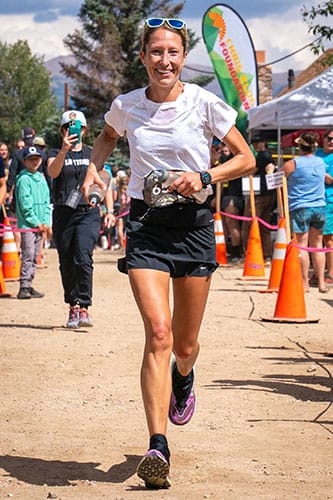
“Running 100 miles is the ultimate adventure,” said Flower, an emergency medicine physician in Colorado Springs. “I wasn’t sure I could complete the race and certainly didn’t expect to win. What else seems impossible?”
What else, indeed? Other physicians are asking the same question when it comes to pursuing a goal outside medicine that might seem extreme or unattainable. Unlike gardening, cycling, or pickleball, these doctors take their pastimes to another level, following passion projects that demand almost as much from them as their clinical work. And the payoff is just as gratifying.
What Kind of Mileage Can You Get?
Most of the elite runners in ultradistance racing do so full-time or at least with hefty sponsorship deals that allow them plenty of time to focus on their sport. But 35-year-old Flower isn’t one of them. Flower first got into running in med school, when it served as an antidote to the many pressures of training. “At that time, I just ran for fun and didn’t strive for any goal times in races,” she said. “I had no external pressures for what ‘good’ looked like.”
In many ways, that laid-back attitude toward running has allowed Flower to flourish in the sport. In her third year of medical school at Ohio University, Athens, Ohio, Flower ran — and won — her first marathon. During residency, she took on her first 50-mile race in Moab, Utah, again taking first place.
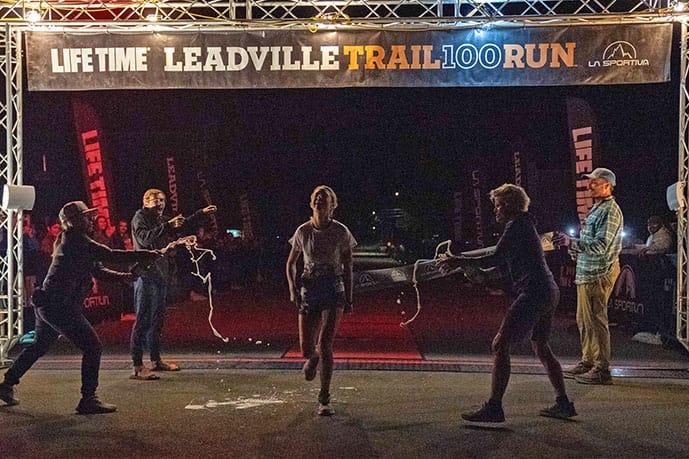
Without a sponsor, Flower says she’s in a unique position. “I’m not out to win bonuses,” she said. “I’m not in my head overthinking when I’m out there. It’s a great place to be in the sport — unknown and without expectations. I have the privilege to be able to run for the fun of it.”
Running has complemented Flower’s job in the emergency room, where she generally works 4 days on and 2 days off, or 3 days on and 1 day off. She often squeezes in shorter, less-than-an-hour efforts prior to time at the hospital. “Running gets me centered before shifts,” she said. “I can stop all my other projects and thoughts and just clear my head.”
Likewise, working as a physician has complemented her training. Long shifts on her feet mean that when she’s 40 miles into a race, she’s not as fatigued as she might otherwise be. “I’m still feeling good even if it’s a big day in the mountains,” Flower said.
She takes full advantage of the days she’s off to fit in her long training runs. With her husband, also an outdoors lover, albeit mostly on a mountain bike, she drives to the mountains to train and then spends the night in a van.
Flower points to her current stage of career as ideal for managing ultrarun training. “I finished residency 6 years ago, so I’m at that sweet spot where my skill level and interests are well matched,” she said. “My emergency work is still fun for me, but I’ve been practicing long enough where I feel like I’ve seen most things a few times over. There’s still plenty that gets me nervous and excited every day.”
For any colleagues who have put a passion on hold during training and early career, Flower recommends returning to it. “I didn’t jump into ultras when I started running,” she explained. “I built a strong fitness base and then got very curious about where my feet could take me.”
Serving Up Community
Opening a restaurant is widely considered to be one of the most arduous and exhausting projects to undertake. Long hours. Intense stress. And the statistics on success are not encouraging. But for primary care physician Rob DeMuro, MD, the rewards can’t be calculated.
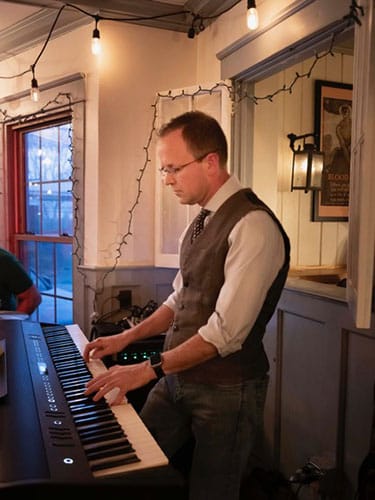
“I had always dreamed of restaurant ownership,” DeMuro said. “I think there’s something magical about a restaurant, where people gather to enjoy a good meal, expect to have a good time, and to be surrounded by people.”
The Deer’s Head Inn, Elizabethtown, New York, is the oldest tavern in the Adirondacks. When it closed and fell into disrepair, DeMuro and some friends decided to save the historic building and reopen it in 2016 as an inn and a restaurant. “At the time, I was a silent partner/financial backer,” he said, “working 5 days a week, taking call and inpatient work.”
That changed in 2017, however, when now 55-year-old DeMuro decided to scale back to 4 days a week and focus only on outpatient care. Today, he’s at the Deer’s Head weeknights and weekends, something that allows him to immerse himself in his community on a different level than as a doctor.
DeMuro is very hands-on at the Deer’s Head, making repairs to the property when needed and helping his partners keep the business running year-round — not an easy task in an area with heavy seasonality. A good winter means breaking even, at best. “I definitely don’t rely on the restaurant for income,” he said. “It’s a passion project, and the community has really embraced us.”
DeMuro says he loves how the restaurant or inn lights up his small town’s Main Street and “really makes it look alive. Seeing high school kids get jobs in the kitchen and front of the house and saving up some money, taking the responsibility to work has been an unexpected joy.”
Like Flower, DeMuro has taken advantage of a specific stage of his life and career. Being 25 years in allowed him to cut back his hours. Plus, “my kids are all grown and launched,” he said. In addition, DeMuro emphasizes the role of his co-owners and having a shared vision. “I couldn’t do this without my partners,” he said. “We share our different strengths and weaknesses.”
There’s a Plan for That
What does it take to produce two podcasts, teach online courses, maintain an active website or blog, and write a book, all while practicing medicine? According to Sarah Hart-Unger, MD, the answer is: planning.
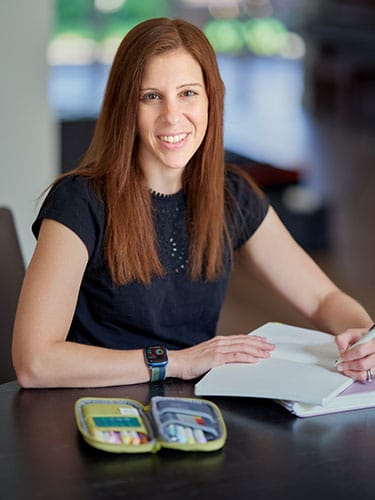
Like Flower, Hart-Unger started a side project in med school — in her case, writing a blog as a creative outlet. “I wrote daily for years,” Hart-Unger said, “in different iterations, from healthy living to mommy blogging, and continue to write freely about everything, but with extra coverage of work/life balance.”
The art of balance and organization became Hart-Unger’s passion. “It’s been so helpful to me, and I love sharing the techniques I’ve honed with others,” she said.
In 2017, 35-year-old Hart-Unger, pediatric endocrinologist at Joe DiMaggio Children’s Hospital, Hollywood, Florida, launched a work-life podcast called Best of Both Worlds with a fellow blogger. It quickly took off. “As it grew, I realized I was building a skill set separate from my medical career,” she recalled. “I also recognized that it could be a second career for me.”
When the pandemic struck, Hart-Unger added writing and podcasting about time management and planning, something she excels at as a doctor with a side gig and mother of three children aged 7-13 years. As this second endeavor grew organically, Hart-Unger decided it was time to cut back on her physician duties to make more time for what was quickly becoming a business.
Today she sees patients 3 days a week, dedicating 2 days for her other projects. “I’m a specialist and a decade into my job,” she said. “I love my medical work, but I feel comfortable enough to seek out other avenues as well. I’m lucky to have been granted the ability to drop back to part-time.”
Hart-Unger’s strong suit of planning and organization is key. “So much comes down to planning and intentionality,” she said. “In order to not get eaten alive with two jobs and three kids, I must be incredibly organized. Otherwise, it would be hard to move forward. I don’t want to rush out to the grocery store to buy a science project item the night before it’s needed. I want to build that task into my weekly shopping trip.”
It’s not always perfect, of course. At times something must give. “Usually, it’s a kid thing that will develop, and when that happens, I work on the weekends,” she said. “I’ve also chosen not to pursue a management or leadership track in medicine.”
Like Flower and DeMuro, Hart-Unger emphasizes the joy she finds in her nonmedical interests. “You should pursue these projects out of love and passion,” she said. “I’ve received emails from women who tell me that after putting some of my techniques to work, they’ve met big life goals or established habits that they’ve struggled with for years. This is so gratifying.”
So, what else seems impossible? And what might the rewards be for doing it anyway? “I run ultras to test the limits — of my body, my mind, my heart, and my grit,” said Flower. “This is applicable in so many other aspects of life.” For any passion project, perhaps it’s a matter of stepping onto the road and seeing where your feet can take you.


