

 Admin_Adham
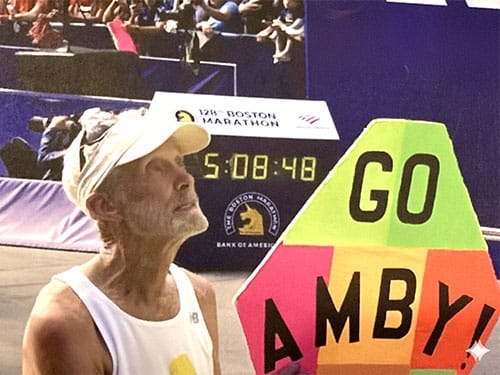
Amby Burfoot is no weekend warrior. He won the 1968 Boston Marathon when he was in his twenties and has kept on running. In fact, he’s training for the 2026 Boston Marathon, albeit somewhat slower than he did 58 years ago.
Treating athletes like Burfoot can be tricky for cardiologists. The literature on high-level athletes typically doesn’t account for them. And the literature for aging people who are athletic doesn’t always factor in these hard chargers known as masters athletes.
To provide cardiologists guidance, the American College of Cardiology Sports and Exercise Cardiology Council has issued a state-of-the-art review that includes a host of recommendations for cardiovascular imaging in this population.
The recommendations may not apply to the multitudes of aspiring masters athletes flocking to gyms across America this month to make good on their New Year’s resolutions, but both groups need to be mindful of their cardiovascular risks, sports cardiologists told Medscape Medical News.
For Burfoot, there was a time in 2012 when he cut back his training for a couple of years — the same year that a seminal study led by James O’Keefe, MD, was published. The study found that long-term excessive endurance exercise can lead to cardiovascular risks in some older athletes, such as arrhythmias and patchy myocardial fibrosis. At that time, Burfoot had been diagnosed with high coronary artery calcium (CAC).
“I thought, crap, what am I going to do?” Burfoot said. “Am I going to be dead soon?”
He sought the advice of Paul Thompson, MD, former chief of cardiology at Hartford Hospital in Connecticut and a competitive marathoner. “He told me to cool it for the next 2 years and monitor the situation, and if I was still kicking after that, then go for it,” said Burfoot, a former editor-in-chief of Runner’s World magazine and an author or co-author of eight books on long-distance running.
After a couple of years, he went for it. Now age 79, he has entered a few races, which he said he runs at a 95% effort level. Since his high CAC diagnosis, he has taken a statin and ezetimibe. “I’ve never had a symptom other than the fact that I’m getting older and slower, which I don’t like,” he said.
Risks Vary by Runner
Masters athletes are defined medically as people aged 35 years or older who participate in competitive high-volume sports or exercise training. Cardiovascular considerations for this group are far different from those in younger athletes.
“The risks of cardiac arrest in masters athletes are from coronary disease as opposed to younger athletes, for whom the risk of cardiac arrest is primarily due to structural heart disease or electrical heart disease,” said Lili Barouch, MD, director of sports cardiology at Johns Hopkins University in Baltimore.

In this population, “the rate of coronary disease outpaces the risk of other reasons why someone might have a cardiac problem when they’re exercising,” said Barouch, herself a triathlete and runner.
"Just because you exercise a lot and you have high cardiorespiratory fitness — certainly it has a very strong cardiovascular protective effect — but it's not an absolute mitigating factor for the development of cardiovascular risks or for the development of cardiovascular disease in this older population,” said Jonathan Kim, MD, co-author of the ACC review and founding director of Emory Sports Cardiology in Atlanta.
The use of multimodal cardiovascular imaging in this population requires a nuanced approach, Kim said. “I want to make it abundantly clear that just because you’re a masters athlete doesn’t mean you need all this extensive testing,” he said.
The review provides best practices for use of multimodal cardiovascular imaging in masters athletes and outlines how physiologic and pathologic considerations differ from those in younger competitive athletes. The review also calls for the creation of a registry for masters athletes that replicates the existing Outcomes Registry for Cardiac Conditions in Athletes for younger competitive athletes.
Cardiologists who care for these patients need to understand that even masters athletes face the same risks as their less active, similarly aged counterparts, Kim said. That includes hypertension, atrial fibrillation, and high CAC, as Burfoot had.
Not ‘Bulletproof’

Years of vigorous exercise can induce changes in the cardiac structure. A 2020 meta-analysis found that older male athletes have larger cardiac dimensions and better cardiac function than healthy nonathletes, but evidence is still lacking, Kim said. “The ‘athletes heart’ that we talk about in young athletes hasn’t been as well vetted from a scientific standpoint among older athletes," he said.
“The general principles hold, but the bottom line is because you are going to see enlarged hearts in those individuals who train and compete among older individuals, you have to be able to differentiate those adaptive changes from the impact of these cardiovascular risk factors or cardiovascular disease,” he said.
The review includes an algorithm of cardiovascular conditions, including right and left ventricular remodeling, myocardial fibrosis, and atrial fibrillation, and confirmatory imaging findings.
The review serves as a reminder to cardiologists that older patients who exercise at a high level sometimes deserve closer clinical scrutiny, said Matthew Martinez, MD, director of sports cardiology at the Morristown Medical Center in New Jersey and a co-author.
“It's a misconception that just because you are an athlete that you are bulletproof from coronary disease,” Martinez said. “Exercise is medicine; it absolutely improves outcomes, it lowers risk, it makes people more fit, which is a great predictor of better outcomes. The misconception is that they are not going to have an event, that they can’t develop coronary disease, and that's not true.”
‘Dig a Little Deeper’

The review emphasizes that when these older athletes have symptoms, the standard cardiovascular workup and use of standard risk calculators may not be enough, Martinez said. “You really have to dig a little deeper,” he said.
Cardiologists need to be more guarded with people who have a history of coronary artery disease or a past heart attack who may have turned the corner to be masters athletes, he said. “Those coronaries have not forgotten about the buildup of coronary disease and the potential for future events, so imaging really helps dig into that.”
For the masters athlete, the review recommends different cardiovascular imaging protocols for the following:
- Exercise intolerance: Transthoracic echocardiography (TTE), along with a clinical evaluation, 12-lead electrocardiogram (ECG), and lab studies.
- Symptoms with underlying concerns for coronary artery disease: Coronary computed tomography angiography (CTA) for intermediate- to high-risk symptomatic individuals age 65 or younger; exercise stress testing with imaging for symptomatic individuals age 65 or older or of any age with a previous coronary intervention or diagnosed extensive CAC.
- Myocardial fibrosis: Clinical evaluation and risk stratification for nonischemic late gadolinium enhancement (LGE) with extensive scar burden; cardiac CTA or invasive angiography when coronary distribution subendocardial or transmural LGE indicates underlying ischemic-related scarring, along with a clinical evaluation that includes a 12-lead ECG, ambulatory rhythm monitoring, and exercise stress testing as additional clinical risk stratification.
- Right ventricular (RV) disease: Cardiac magnetic resonance for ventricular arrhythmias and unexplained RV enlargement, along with a clinical evaluation and genetic testing.
- Unexplained aortic dilation or aortopathy or both: Complete cross-sectional tomographic imaging at least once, and TTE to define aortic valve morphology and function.
The review advised against routine CAC assessment in low-risk masters athletes, but the recommendations for the general population should guide CAC assessment for asymptomatic individuals at intermediate or high risk.
Additional risk evaluation can include exercise stress testing with imaging or coronary CTA. Coronary CTA can be considered in masters athletes aged 50 years or younger who have no symptoms but have a strong family history of early coronary artery disease.
"I want to make it very abundantly clear that just because you're a masters athlete doesn’t mean you need all this extensive testing," Kim said. The review provides a “nuanced approach” depending on the individual’s history and symptoms or lack of them, he said.
"Everything begins with good primary care and going through the basics: family history, social history, prior tobacco use, alcohol [use], and risk factors, baseline cholesterol, diet — all those things just like you would anyone else,” Kim said. “It does not start with a stress test or advanced imaging."
Burfoot, Kim, Barouch, and Martinez have reported no relevant financial relationships.
Richard Mark Kirkner is a medical journalist based in Philadelphia.
