Admin_Adham
Arab countries of the Eastern Mediterranean Region (EMR) are working to strengthen general practice through joint investments and coordinated initiatives, aiming to become a model even for nations with longer traditions of community-based medicine. Experts described these efforts at the 25th World Organisation of Family Doctors (WONCA) World Conference 2025, held recently in Lisbon, Portugal.
Speakers outlined a common picture, made more concerning by the region’s political instability: a severe shortage of family physicians coupled with high population needs. To address this, governments and international organizations are investing in training programs and tools to standardize clinical practice.
Although organizational models differ from country to country — public, private, or mixed — all share one objective: to reinforce primary care and recruit new doctors to support health reforms and move toward universal health coverage.
‘Bridge’ Diploma to Fill Gaps
Mona Osman, MD, associate professor of family medicine; co-director of the Refugee Health Program at the American University of Beirut, Beirut, Lebanon; and member of the Strategic and Technical Advisory Group on the Prevention and Control of Noncommunicable Diseases, World Health Organization (WHO), explained that the shortage of family physicians in the EMR is structural. In 2016, the region had just 0.08 family doctors per 10,000 inhabitants compared with the WHO target of 3 per 10,000.
“To increase numbers, WHO set out two approaches: increase specialists through traditional residency programs and, in parallel, create bridging programs for general practitioners already in service but without formal training in family medicine,” Osman said.
This led to the creation of the Regional Professional Diploma in Family Medicine, developed by the Arab Board of Health Specializations (ABHS) and WONCA, with support from United Nations agencies including the United Nations Children’s Fund and the Joint United Nations Programme on HIV/AIDS. The ABHS, founded in Damascus in 1978 by decision of the Council of Arab Ministers of Health, was established to improve healthcare services across the Arab world by strengthening research and training.
The family medicine diploma presented in Lisbon attracted interest from many professionals working in regions with shortages of family doctors. “It’s a 2-year competency-based course delivered through Moodle, with remote tutoring (one tutor for every 20 students), field training in accredited health centers, and final evaluations including an OSCE [Objective Structured Clinical Examination] exam,” Osman explained.
The program is aimed at physicians with at least 5 years of postgraduate experience (three of them in primary care), active clinical practice, and strong English and computer skills. “Modules cover family medicine concepts; noncommunicable diseases; mental health; common medical and surgical problems in adults; and women’s, child, and elderly health,” Osman said. “We also include a course on emergencies such as pandemics and conflict.”
Tuition fees are relatively modest — less than $3000 for the entire program, sometimes supported by scholarships. Students are able to continue working while studying and benefit from online forums to exchange experiences across different countries.
The first cohort of 122 participants, representing 10 countries from North Africa to the Arabian Peninsula, is now nearing completion of the diploma. A second cohort of 169 participants is expected to appear for final exams in 2026, while applications for the next intake will close in September 2025.
“It’s an important program but with limitations,” Osman acknowledged. “Recognition of the diploma is not uniform across countries. Expatriate doctors are few, since it is difficult for them to obtain the necessary certification. We also saw significant dropouts in Palestine and Syria because of the ongoing humanitarian crises. And language remains a barrier: The course is in English, but French is more widely spoken in North Africa.”
The 2-year diploma can be followed by an additional 2 years of distance learning and the official Arab Board exam, which grants full specialist status in family medicine. Osman stressed that this pathway is particularly valuable where immediate national recognition of the diploma is lacking.
Nagwa Nashat Hegazy, professor of family medicine at Menoufia University in Shibin El Kom, Egypt, underlined the importance of such initiatives, pointing to Egypt’s health reform plan. “Our universal health coverage plan, launched in 2018, foresees that 80% of health problems will be managed at the primary care level, with referral reserved for more complex cases,” she said. “But without enough trained family doctors, structural challenges such as the high prevalence of noncommunicable diseases — 18% of the population has diabetes — alongside poverty, brain drain, and the urban-rural gap, only worsen.”
Experiences From the Arabian Peninsula
Community-based primary care is not only relevant in countries with limited resources. During the conference session, speakers from Bahrain and Saudi Arabia presented their national strategies.
Faisal A. Alnaser, president of the Bahrain Family Physicians Association; honorary professor at Imperial College London, London, England; and president-elect of WONCA EMR, recalled how Bahrain pioneered primary care despite being the smallest country in the region. “The first family medicine specialty program was launched in the 1970s, thanks to a health minister who was also a physician,” he said.
In recent years, Bahrain’s Ministry of Health has assigned a family physician to every household and built a network of health centers that act as gatekeepers to hospitals and specialist care. “Family doctors are recognized as full specialists and are paid at the same level as other specialties,” Alnaser noted. “Yet we still have only 450 family doctors, against an estimated need of 830.”
He said the strategy has also driven cultural change. “Health centers were designed to resemble small modern hospitals, with midwives and nurses, which reassured patients about quality of care. In the 1980s, patients often demanded to see hospital specialists directly. Today, when a family doctor suggests referral, many prefer to remain in primary care.”
In Saudi Arabia, efforts are focused on unifying primary care practices while taking into account territorial and cultural differences. Adel Yasky, a primary care physician and Saudi representative of the WONCA Young Doctors’ Movements, presented DaleelFM, a national platform created to harmonize training and clinical practice in a country of 35.5 million people, 110,000 physicians, and around 350 new family medicine specialists graduating each year.
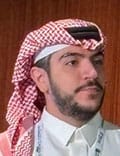
“The project was initiated by the Ministry of Health,” Yasky explained. “We gathered the best international guidelines, adapted them to the Saudi context, validated them with all stakeholders, and made them available online.”
DaleelFM now provides more than 6000 pages of references, over 200 practice-oriented clinical protocols, a bank of 3250 exam questions for the Saudi Board (the national licensing exam), flash cards, biweekly lectures, and training manuals.
“Content is updated twice a year by a network of more than 1200 consultants, fellows, and specialists, under the sponsorship of the Saudi Society of Family and Community Medicine, the Ministry of Health, and the Saudi Commission for Health Specialties,” Yasky concluded.
Alnaser noted that Europe could look to these experiences for lessons in networking across countries with shared interests. “It’s a stepwise process: rapidly train where specialists are lacking, standardize practice, and strengthen the entry point into the system. The EMR examples aren’t perfect, but they provide models adaptable elsewhere,” he said.
All speakers disclosed having no relevant financial relationships related to this topic.
This story was translated from Univadis Italy.