

 Admin_Adham
CHICAGO — Dermatologists who have ventured into the business world describe a passion to fill a void. Three leaders in the field were among those who shared their thought process for developing projects recently at the American Society for Dermatologic Surgery (ASDS) 2025 annual meeting.
Sandra Lee, MD’s path to become TV personality “Dr. Pimple Popper” started in 2014 when she posted a video on social media on blackhead extractions.

“I wanted to show a little window into my world,” she told Medscape Medical News. The number of clicks quickly mounted. “People were either obsessed with it immediately or disgusted. Either way, they tagged someone and that’s how engagement grew.” Lee, who practices in Los Angeles, started putting new content up every day and branched out to different social media platforms.
That led her to seek consent from patients to share de-identified videos of their visits. She said the videos on YouTube were generating more income than she made as a dermatologist, but “that didn’t last long,” she added.
“I got a million followers somewhat quickly,” she said, and the influence proved to be a way to attract new patients to her office. “We were getting people outside of the country, even. They could see what I did and they trusted me.” The exposure has also led to a large-scale spotlight on what dermatologists do, she said.
That growing audience led Lee to create a skincare line, then came a book deal, then an offer for the TV show now seen on Lifetime internationally, which has filmed more than 110 episodes.
Lee said that her mission to succeed was partly driven by the crush of failure.
She didn’t originally match in dermatology, which she said was the low point of her life. “I was devastated. You prepare for this moment your whole life and it’s gone,” she said. “But it made me the person I am. Failure makes you realize how much you want something.” She took a year off to prepare again and got her match.
The jump from medicine to business is intimidating, she warns other would-be entrepreneurs. Suddenly, she found herself surrounded by agents, book publishers, and lawyers.
While she didn’t have an adviser, she said she hired people based on where their heart was. “I felt if I made a bad move, at least I made a decision based on that.”
Lee also said the skincare line, her show, and her 2-day-a-week dermatology practice often take all 7 days a week. “I’m kind of built like that. I’m a ‘yes’ person. It creates stress, but I feel very lucky,” she said.
She encourages dermatologists to test an idea first with family, friends, and others you trust. “Don’t be afraid to have them sign an NDA [nondisclosure agreement]” to protect your intellectual property, she said.
‘Antiaging Pillow’ Closer to Launch
Cyndi Yag-Howard, MD, saw a need in her private practice in Naples, Florida, for addressing patients’ sleep lines. After years of thinking about a solution that would help avoid the lines, she went full force into designing her “Longevity Pillow” about a year ago, she told Medscape Medical News.
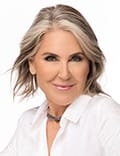
Patients often have sleep lines on one side of their face, she noted, and they are different from aging lines, such as crow’s feet or smile lines. Sleep lines are often vertical with deeper grooves and caused by the pressure of the pillow smashing on the face. “You can’t really treat them like you can treat expression lines,” Yag-Howard said.
She approached an upholsterer to make the first prototype, and several prototypes have followed. “I’m very particular about the dimensions I want so that you can sleep without any pressure on your face or on your back so you don’t want to roll over,” Yag-Howard said. The pillow, which eventually will be sold under her “I Heart My Face Longevity Pillow” trademark, is not yet available.
In any business venture, knowing your audience is critical, she said. Her audience is people aged 25-75 years who “care about their skin, who often have had procedures, and who want these procedures to last.” But the target audience also includes dermatologists and plastic surgeons who will be able to recommend the pillow to patients when it launches, she noted.
Yag-Howard recommends starting by asking family and friends first to weigh in on whether they think an idea is valid. “Then try patients and staff, but don’t share too many details to protect your intellectual property and get people to sign an NDA first,” she advised.
Also, doing the research to know your product is unique, is essential, she said.
She learned the hard way that having the right team in place can make the difference. She had the wrong advice for her previous endeavor 15 years ago, a sun-protective clothing line, which she now calls “a disaster.” She recommends finding a mentor who has succeeded with a similar endeavor.
Also be prepared to sink substantial resources into legal protection, Yag-Howard said. For the pillow project, she hired both a patent lawyer and a trademark attorney, an attorney to write NDAs, and a fourth lawyer to protect the intellectual property.
A legal tip that she shared is that inventors can get a provisional patent before a regular patent to protect the idea for up to a year before the exact specifications are available to apply for the patent. “It basically gets you in line,” she said.
As for finances, she advised using personal funds for as long as possible before looking for investors. “The reason is you have complete control over everything when you’re using your own money. When investors get involved, you’re beholden to a whole new group of voices.”
She also recommends finding a partner who complements your skills. In her case, that person was her daughter who has an MBA and a branding background and business skills she doesn’t have.
Like Lee, Yag-Howard often works evenings and weekends as she juggles her 4-day-a-week practice with her pillow venture. “It’s a passion project for sure,” she said.
App Helps Patients Retain Information
Arisa Ortiz, MD, a dermatologist in San Diego, discovered her own passion project when she realized: “The only part of my day that was inefficient was the consultation because I’m trying to provide a lot of education and patients get so overwhelmed.”
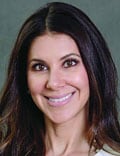
Patients often turn to social media to fill in what they can’t remember from their dermatology visit, Ortiz told Medscape Medical News, and that can be a hotbed of misinformation.
She developed an app called Your Previsit. Once patients book a consult, they get a link to download the app that will take them to a series of videos based on their preferences. If a patient’s concern is wrinkles, for example, the app will direct the person to 3- to 4-minute videos explaining what services are available at a particular practice, how the procedures work, recovery time, costs, and potential risks so patients have a comprehensive understanding when they come in and the physician can work more efficiently, Ortiz said.
Your Previsit launched in December 2024, and the 2.0 version became available in November 2025. The new version includes post-care information and other updates.
The app uses artificial intelligence (AI) to generate the videos that are customizable to each practice, reducing physician burden, Ortiz said. AI can also create a realistic avatar of the dermatologist, so it appears the physician in the video is speaking directly to their patient.
“It’s a subscription service,” she explained, “and it’s the practices that pay for it. Patients use it for free.”
Ortiz hired legal help to apply for a utility patent, now pending, and to develop risk and liability language for the website. She also worked with a software developer.
Some of the best advice she’s received, Ortiz said, was to start small. When she started developing the app, ideas for what it should include multiplied.
But an acquaintance who had led a major online company told her, “Make sure that your small group of customers is very happy with the product before you grow too quickly.”. She took that to heart and waited to launch the new version a year after the original release, based on customers’ wants. She also hopes to branch out to other fields of medicine.
“I think the best solutions and most successful products are things you, yourself, need,” Ortiz said.
What she has also learned as an entrepreneur is that “nothing ever happens on time. Being flexible with the timing of things and being patient — that’s the biggest lesson I’ve learned.” Version 2.0 was supposed to launch 6 weeks before it did, she said.
Like Lee and Yag-Howard, Ortiz said she doesn’t have set days off. When she’s not seeing patients and after her daughter goes to bed, her attention turns to the app.
Often important innovative ideas never get realized because would-be inventors have a misguided sense that perfection is the immediate goal, Ortiz said.
“If you wait for the perfect product, you’re never going to launch,” she said. “Just start.”
Lee is an independent contractor for Incyte Corporation, SUN Pharmaceuticals, and UCB Pharmaceuticals. Ortiz reported she has a patent pending with Your Previsit. Yag-Howard reported she has a provisional patent with her pillow design.
