Admin_Adham
A single high dose of psilocybin produced measurable changes in the brains of people who had never previously used psychedelics, while also improving their sense of well-being and cognitive flexibility for at least a month, researchers reported.
The psychedelic increased the entropy of brain activity during the acute experience, and those changes in neural complexity and diversity predicted later gains in psychological insight and well-being.
“The weight of the human evidence suggests that the trip experience is critical for therapeutic benefits,” senior author Robin Carhart-Harris, PhD, professor of neurology, University of California San Francisco, told Medscape Medical News.
The study was published online on May 5 in Nature Communications.
Brain Changes on Psilocybin Revealed
Psilocybin, the psychoactive compound found in “magic mushrooms,” has attracted increasing scientific interest in recent years over its potential to treat psychiatric disorders.
Earlier clinical trials have suggested the drug could help reduce symptoms of treatment-resistant depression, cancer-related anxiety, and alcohol use disorder. Animal studies have also hinted that psychedelics may stimulate structural brain changes — including the growth of synaptic connections — but evidence in people has remained limited.
To investigate further, Carhart-Harris and colleagues studied 28 healthy adults who had never used psychedelics. Participants first received a 1-mg dose of psilocybin that served as a placebo, followed a month later by a 25-mg dose capable of inducing a strong psychedelic experience.
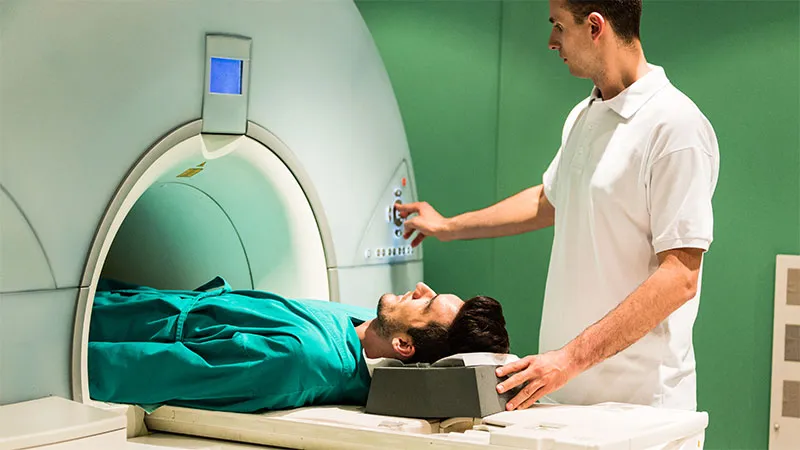
Participants were monitored with EEG, functional MRI, and diffusion tensor imaging before, during, and after dosing sessions. They also completed psychological surveys and cognitive tests measuring well-being, psychological insight, and cognitive flexibility.
Within an hour of taking the 25-mg dose, participants showed marked increases in brain entropy. The greater the increase in entropy, the more likely participants were to report heightened psychological insight the following day and improved well-being 1 month later.
Brain scans also revealed decreases in axial diffusivity within prefrontal-subcortical white matter tracts 1 month after the high dose of psilocybin. That may reflect neuroplasticity, although researchers cautioned the findings require replication.
“Of an array of findings, decreases in the diffusivity of large tracts running between the prefrontal cortex and the center of the brain are perhaps the most intriguing,” Carhart-Harris said. “We don’t yet know what the functional implications of these changes are, but we do plan more research to find out.”
The study also revealed reductions in brain network modularity — a measure of the segregation of different neural systems — and those decreases were associated with improvements in well-being.
All but one participant described the psychedelic session as the single most unusual state of consciousness they had ever experienced. Participants also showed improvements in cognitive flexibility 1 month later.
“Psilocybin seems to loosen up stereotyped patterns of brain activity and give people the ability to revise entrenched patterns of thought,” lead author Taylor Lyons, PhD, a research associate at Imperial College London, London, England, said in a statement. “The fact that these changes track with insight and improved well-being is especially exciting.”
The research was exploratory and involved a relatively small group of healthy volunteers rather than patients with psychiatric illnesses, investigators emphasized. Also, the study used a fixed-order design — participants always received the placebo-like low dose before the higher dose. Therefore, practice or expectation effects cannot be fully ruled out.
Carhart-Harris said, recent federal actions to expand research on psychedelic-based therapeutics could facilitate more work in this area. “We’ve not yet had any success in this regard but, with the executive order, are now hopeful of change,” he said.
Addressing Unanswered Questions
The study helps address an important question in the field — whether psychedelics produce long-lasting changes in the human brain, Alex Kwan, PhD, professor, Meinig School of Biomedical Engineering, Cornell University, Ithaca, New York, told Medscape Medical News.
“We know that the drug can have enduring effects on human behavior, but what happens in the brain? This study moves the needle by providing evidence for persistent structural brain changes following psilocybin use,” said Kwan, who studies psychedelic-related neuroplasticity but was not part of the new research.
Kwan also cautioned that the results come from a relatively small sample of healthy humans.
“One unanswered question is if we repeat the experiment in patients with mental illnesses, will we see similar changes? More importantly, will the structural and functional changes in the brain predict if the drug is efficacious for an individual?”
This work was funded by philanthropic donations to the Centre for Psychedelic Research, Imperial College London, the Alex Mosley Charitable Trust, and the Beckley Foundation. Disclosures for the authors are available in the original study publication. Kwan had no relevant disclosures.