Admin_Adham
Eventually, every doctor becomes a patient. For many physicians, experiencing serious illness and treatment is humbling; eye-opening; and, in the end, transformative. Dr. Patient is a Medscape series telling these stories.

It was the end of my fellowship in pediatric rheumatology, and I had just given birth to my second child. I took a couple of months off and decided I was ready to start my first job as a full-blown doctor. There’s a lot going on when you first come out of training, learning how to run your own clinic and manage your own patients. I started to get extremely tired.
I dismissed it. I was a mom of two now and juggling. But it got to the point where I would come home after work and just want to take a nap. That wasn’t like me. It was the first red flag. I thought, I should probably see a doctor. Yeah. Didn’t do that.
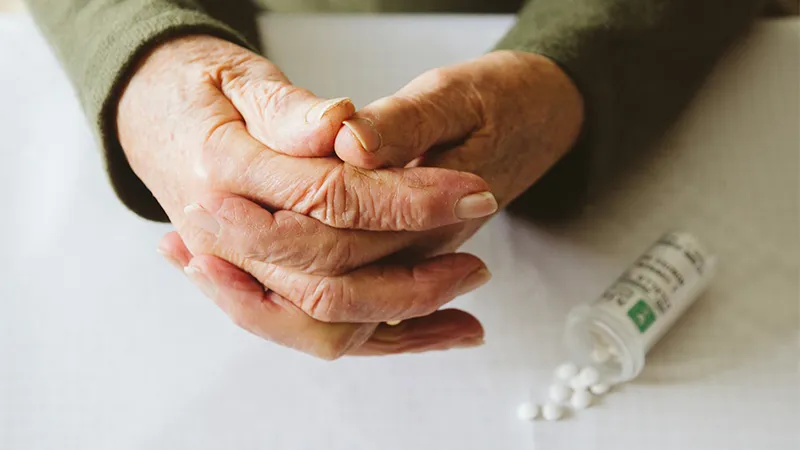
Months went by, and I started having stiffness in my hands. This was a problem because my life depends on being able to feel other people’s joints. Getting up in the morning I felt slower, stiffer. But that got better throughout the day, and I decided it wasn’t anything.
Finally, I reached the point where I couldn’t bend my fingers in the morning. My rings weren’t fitting. I realized it was time to go see one of my rheumatology colleagues. Part of me still thought it could be a postdelivery issue. Maybe I was retaining a lot of fluid. I still wasn’t connecting the dots.
The rheumatologist did the exam. Then she just looked at me and said, “This is RA. You have rheumatoid arthritis.”
It was like I had transcended out of my body into some other space and was looking down at the conversation thinking, This is not real. My heart was pounding. The room felt cold. It was pure disbelief.
I’m a rheumatologist, I know what an RA diagnosis meant — a chronic illness that now I would have to deal with on top of everything else. So my first reaction was denial, not let’s embrace this and see what we need to do. Denial.
As I got started on treatment, I had a delusion that the symptoms would magically go away and I would be in remission without medications forever. Not only did that not happen but also the drugs didn’t work. As I progressed up the ladder of medications, nothing was working other than steroids. That’s when I knew it was real. And it wasn’t going away.
I’m a problem solver. Give me a problem, and I think, All right, what do we have to do to fix this? Step 1, 2, 3, boom, boom, boom.
But failure after failure of medication, frustration after frustration, it felt like going through the stages of grief. And throughout that process, no one sat me down and said, “This is a lifelong thing that you are going to have to accept.”
Finally, I thought, I’m doing all this work. I’m trying so hard to take my meds, be compliant, and show up to doctor’s appointments, and it’s still not helping. So maybe there’s a different angle that I need to take.
I started tracking my flares and symptoms, and I could see that they were directly related to my stress level and how I was sleeping. Trying to fight through this disease was loading stress on top of my already stressful life. I was just adding more fuel to the fire.
I started asking my doctors, “Is it possible that my sleep or my diet could be doing this?” They would say, “There’s no good data on that.” And they’re right. Nowhere in the literature does it say that getting this many hours of sleep equals a flare. It’s so person-to-person and anecdotal that you can’t make a blanket statement.
But on the patient side, you think, Well, I know what makes me feel like crap.
For the first time, probably since kindergarten, I was forced to slow down. Let me just say, it’s a really uncomfortable feeling that required a lot of unlearning on my part. I was taught to always work more and work harder, otherwise I was going to miss an opportunity to succeed.
In my head, there was always more to do, when in reality I’d already done it. I had gotten through medical school and training. I was helping people. I had achieved everything I wanted. But I still had this unrealistic notion that if I slowed down, it would all slip away and I would never get it back. It would all be for nothing. That is not true at all.
As my symptoms improved, I kept thinking, There’s got to be a connection to the lifestyle pillar. Why are we not teaching this to patients?
That’s when my career pivoted, and I went into integrative medicine. I thought, Let me at least get trained and board certified in this so I’m not just reading blogs. It was the birth of the way I practice now.
I left the children’s hospital and now have my own practice where I’m able to deliver the care I wish I’d had when I was first diagnosed. In training, we learn to say, “This is the diagnosis. This is the treatment strategy. I’ll see you in 3-4 months. Hopefully you’re in remission. If not, we’ll pivot and start a new med.”
But in real life, it’s not just the medical part that needs to be addressed. Of course, you need a good doctor for that. But there is also the biopsychosocial model and the emotional component of having a disease. There is your sleep, diet, and movement. Also, who is my support system? Who understands what I’m going through? Who is still going to be friends with me when I cancel for lunch or brunch or dinner? It’s a human-to-human conversation.
Some doctors don’t see that as part of the visit. Their job is to fix the disease and move you along. But if you don’t address the emotional component, it’s like an elephant sitting in the room. If you don’t ask the questions, you’re going to miss it.
Now, when I break the news about an RA diagnosis, I take a minute to pause. I take a deep breath before I speak, and I allow the patient to process. I explain that I’m going to walk them through what things will look like right now, 6 months from now, and years down the line. Because I do pediatric rheumatology, I’m also talking to the parents. The child is watching them, seeing the fear on their faces. So I will go back and forth with the dynamics from parent to child, depending on their age.
Obviously, no one wants to have to deal with a chronic illness. But this has been the greatest teacher for me by far. Living with RA has opened up a whole different realm of understanding. As the patient, you’re coming in with questions like a stream of consciousness. For children, it’s: How often can I play baseball? Can I jump? What’s dangerous for me? Later it might be: Should I ask for accommodation? Should I be on vitamin D? What do you think about nightshades? Basic day-to-day questions that may not even cross your mind as the doctor.
What’s missing is time. Traditionally, if the insurance is going to pay for a 30-minute visit and you go over by 15 minutes, you’re doing that work for free. Most doctors are going to spend as much time as they can. But when you feel rushed as the doctor, that feeling is amplified for the patient, and there is no way to address everything. There’s no time to ask, “How are you feeling about this?”
My model is different. I now spend almost 2 hours with new patients. I do a deep dive into history and lifestyle factors; how they’re eating, sleeping, and moving; and what the stressors are. And I talk about empowerment. What are we going to do to ground ourselves and not let this disease bleed into all realms of our life? Unfortunately, I have to be out of insurance network, and I was terrified to take that leap. But I believe it’s the only way to educate patients properly. The next step is how do we make this more accessible to everyone?
I remember the first time I shared my diagnosis with a patient. It came up completely naturally in conversation. I said, “Oh, I was scared the first time I had to do an injection too.” They were shocked. “You have RA? You know what I’m feeling?” I realized how powerful that is. Not to shift the conversation toward me but to build trust that I’ve been on this path. I am still on this path.
I have patients that come to me thinking, “You’re integrative medicine, so you will not put me on this ‘poisonous’ medication and only fix me with supplements and diet.” I tell them, “Medically, this is what we know. I’m open to trying those things, but this is a risk/benefit game.” Then I have the luxury of saying, “I have this diagnosis and I’ve been on these ‘poisonous’ medications, which have been life-changing for me. If I’m doing it myself, I feel very comfortable recommending it to you.”
As the years have gone by, I’ve had to rethink my definition of success. I thought I would live and die in academics, publish papers, and teach. Instead, I’ve become okay with knowing my limits and focusing on what makes me happy. I’m okay touching the lives of the people that come to me and educating people the way that I can.
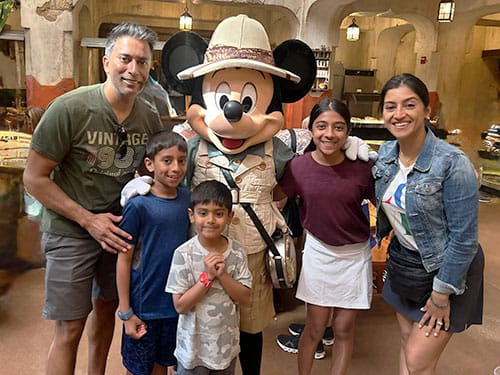
My husband and my kids have been incredibly supportive. With my family, I’ve realized it’s not the big moments that you remember but the tiny moments of dinnertime madness or laughing at a joke. If you’re not there physically or mentally, those memories are lost. It’s a different type of success, and it might not be measurable to anybody but me. Without this diagnosis, I never would have known that.
Saimun Singla, DO, is a pediatric rheumatologist at Rheum to Grow in Houston.
Are you a doctor with a dramatic story about life as a patient? Medscape would love to consider your story for Dr. Patient. Please email your contact information and a short summary to access@webmd.net.