

 Admin_Adham
 Jump to Key Points

One thing healthcare professionals share across disciplines is the job and all that comes with it. The “medical life” is serious and high-stakes but also a carnival — roller coasters and merry-go-rounds and guessing games. This Medical Life collects the stories and captures the moments that resonate.
When I started telling people that I was interested in surgery, they generally said, “Oh, that’s adorable. You can be an ob/gyn.” It’s funny, but it’s not funny. I went to medical school in the ’90s, and that’s what a whole generation of female doctors were told.
The way to have a surgical career as an ob/gyn was to do gynecologic oncology. Looking back, I can see that originally, I was in it for the surgery and afraid of the oncology. But over time, I fell in love with the cancer care part.
I never had a woman attending while I was in training. I learned to become a surgeon entirely from men. I wouldn’t have had the privilege of learning my skill set if men hadn’t believed in me and felt that I was valuable enough to teach. Then, when I went into operating rooms (ORs), hospital wards, or emergency rooms and acted like a surgeon, the response from people was, “Who do you think you are?”
- Female surgeons in training faced pervasive sexism; ORs often not designed for women.
- Equipment/bed height mismatches added ergonomic barriers to surgical performance.
- Bias persisted despite women-only departments; sexism described as ingrained and often invisible.
- Repeated microaggressions, bullying, and tone-policing contributed to attrition from clinical practice.
- Shared storytelling/community screening used to reduce isolation and highlight cumulative harms over 21 years.
I thought, Well, I’m the doctor. I’m behaving like a doctor. I spent a lot of my professional time trying to figure out how to behave differently, wondering, Why is my personality so bad? Meanwhile, I was accommodating and navigating and meeting the expectations of other people, while at the same time taking care of patients who were very, very sick.
The environment of the OR is not physically made for women. Surgical techniques become more challenging when equipment isn’t made for the width of their hands or the bed height is too tall. We are so programmed, especially in surgery, to work around it and solve the problem and figure out how to get it done. But when you stop and think about it, there’s a realization: This universe is not built for me.
I had varying levels of power and authority within clinical services and hospital systems during my career. When I would start to bring these things up, generally, people would say, “You work in an ob/gyn department that’s all women; there’s no sexism.” Or “We don’t have that problem here.”
But it’s everywhere. Sexism is so pervasive and ingrained in our society — and certainly in medicine where Aristotle first defined female as the inverse of male — that it’s like water. You don’t see it.
For the women of my generation and those younger, none of us are the first anymore. Those firsts were all a generation or two above us. We’re all the second, the third, the 15th woman to be in a certain space. That changes your experience and the way that other people perceive you. The response you get is, “Oh, that’s not true anymore.”
When I was in training and in the early part of my career, I would go to women-in-medicine events and they were almost entirely about being a mom. When I talked publicly about sexism, the first question I got was always about pregnancy. I hadn’t mentioned pregnancy in my talk because it’s not an issue for me, and other people are talking about that. It seemed obvious that if we could fix these other sexist things, then we could figure out a way to have pregnant doctors, too.
I practiced from 2006 until 2020. During the pandemic, I had what I call my “last lifetime fight” with a hospital administrator. It was about my tone of voice. Over the years, my fights with department and hospital leadership had been similarly ridiculous. You’re too ambitious, they told me. You’re too serious. You’re too smart. Of course, women who are naturally bubbly or maternal also pay a social penalty: You’re not serious enough.
There are only so many times you can have the same battle. I realized I couldn’t be successful and take care of patients in that environment anymore. I had reached the end.
By that point, I had started to write about my experiences and talk to other female surgeons. It was like sharing a secret. People felt a lot of shame. Surgeons are the most type-A, high-achieving people. They’re being told that they’re doing things wrong, while those very things are outside of their control.
One of the issues that often came up in those conversations was about other women. Of course, some people shared stories of being sexually harassed or having a terrible male figure in their career. But men don’t have the monopoly on sexism. By and large, every woman had experienced being bullied by women as well.
That type of bullying is not typically someone yelling or shoving — the way we imagine a bully to behave. And it’s often perceived differently by authority figures or leadership, which is primarily still male. But some of the most painful parts of my career were being undermined or bullied by other women. I really hate to say that because there are probably women who felt like I bullied them. We all need to recognize when we’re treating people differently because they’re women.
When I decided to stop practicing, I felt this drive to tell the story of what had forced me to leave clinical medicine. I felt like there was a shared experience, almost a universal experience of being a woman in a high-stakes professional setting. I had this crazy idea to make a documentary film. So I did.
At first, with my typical surgeon attitude, I thought, Oh, how hard can that be? And then at some point, I realized, Oh, this is really hard. But what made me finish the project was that so many people reached out to me. I would put something on social media about the film, and five people would message me that day, asking, “Can I tell you my story?”
At some point, the desire to tell this story turned into a responsibility to all those people, to represent the barriers and challenges for women.
We see this in politics, law, engineering, or any profession where women are required to be decision-makers. When I first showed the film at festivals, what was remarkable was the number of women who were not in medicine but had the same experience and then the number of older men who said things like, “I’m so proud of my daughter. I didn’t realize this was what she was going to have to face in her career.”
What we tried to show in the film is how resilient women are. They will experience microaggressions or slights or be sexually harassed or have things work against them, but we all are problem solvers and we figure out how to make it work. Over time, though, it’s not sustainable for so many women, and we see this from the attrition numbers.
Our goal with the film was to build awareness and start a conversation, but I think it has also shown people that they are not alone. We have been doing community screenings so people can watch it as a group, and that creates a space for people to share those feelings, which is really powerful.
We called the film 1001 Cuts as a link to Scheherazade and One Thousand and One Nights, the idea of storytelling to save our lives. It is now being broadcast on PBS and is available to stream on the PBS app. The point of the film is also that this experience is never about just one thing. It’s a slow accumulation of so many things that happen over and over. For me, it was throughout my time training and as an attending — 21 years in medicine.
In the end, I made a film about all women in professional spaces. It just happens to take place in the space where I felt it the most acutely: the OR.
The expert cited in this article had no relevant disclosures.
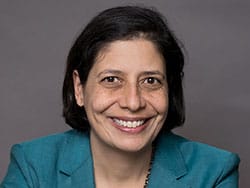
Sarah Temkin, MD, is a gynecologic oncologist, physician-scientist, and director and producer of the award-winning documentary, 1001 Cuts.
Are you a doctor with a compelling story about your life in medicine? Medscape Medical News would love to consider you for This Medical Life. Please email your contact information and a short summary to access@webmd.net.



