

 Admin_Adham
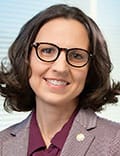
In October, Sarah Nosal, MD, FAAFP, became the 78th president of the American Academy of Family Physicians (AAFP). Nosal practices in the South Bronx section of New York City. She is also the vice president for innovation and optimization and chief medical information officer at The Institute for Family Health, a group of federally qualified health centers serving patients in the Mid-Hudson region, as well as the Bronx, Manhattan, and Brooklyn.
Medscape Medical News spoke recently with Nosal about the challenges faced by family medicine specialists and her goals for her term leading the AAFP. This interview has been edited for clarity and length.
Medscape: The AAFP has joined other medical societies to try to counteract what appear to be efforts by the Trump administration to undermine public confidence in vaccines. What are you hearing from your membership about this issue? And what do you think individual physicians can do to make sure their patients are receiving the most accurate information about immunizations?
Nosal: Thank you for the question. I practice in the South Bronx, so I see patients of all ages, all genders, newborns, and pregnant people. We do procedures. I’m an HIV specialist. Every kind of person in your family will see me for care. And I also get to see people as a whole group. I get to see grandma bringing in the great grandkids and their grandkids.
What that means as far as vaccines is that I am really the place where people go to ask questions. I am not a big fan of the word ‘hesitant.’ I think that it is appropriate that people have questions. And when we say people are hesitant to get a vaccine, it is as though we are saying there is something wrong with them. As family doctors, I think it is appropriate that our patients have questions and that they know we’re the people they can come to.
What we are hearing from members is that patients have more questions than they used to about vaccines because a lot of the information that is being presented to them as medically sound is confusing and is not as straightforward as it used to be.
Medscape: What other areas of misinformation are you finding problematic for your members?
Nosal: What our members are seeing and what I am seeing in my office is my patients get inundated with information from social media, from emails, from WhatsApp groups. And we know through research that people believe information that comes from someone closest to them.
When they come into the doctor, my patients actually will show me those videos. They will say, “I saw this on TikTok. Is this real?” Or they will bring me a pill bottle that they saw in a WhatsApp group, which is very common in my community. WhatsApp is where there is a lot of medical misinformation going around — and they will say, “Is this safe to take?” And I cannot tell you how many times the thing that they want to take will actually harm them and make their medications not work. So I think that it is OK that people are looking at lots of places for medical information. I think that is normal and expected. And I think it is really great and important to have a trusting, open relationship with your family doctor.
Medscape: Do you have any tips for how clinicians can navigate those conversations and reestablish a sense of authority or at least, you know, believability and authenticity?
Nosal: I regularly discuss with patients that anything they put in their mouth or are going to start to take regularly, we need to discuss. Most patients are looking for something to stay well.
I avoid thinking of physicians as authoritative, but definitely as collaborative. We are really partners with our patients. You give them multiple opportunities to both ask questions and to agree or not to agree to recommended therapies. That consistency and willingness to continue to provide information is incredibly critical. That is why when we look at successful vaccination efforts during the pandemic or at other times, we know the most successful are in the family doctor’s office and that while it is wonderful to have other places that vaccines can be available, the most high-risk patients are most likely to get those vaccines in the context of the family physician visit an office where they have a continuous relationship with a physician that they trust and know and knows their family.
Medscape: Roughly 1 in 3 family medicine residency slots last year in the US were filled by an international medical graduate (IMG). Is the AAFP concerned that the administration’s policies regarding immigration will discourage IMGs from seeking training in this country? And how might that affect family medicine training programs generally?
Nosal: I think the first thing is to reiterate how much we appreciate our international medical graduate members. That is a huge portion of family doctors who come and practice in the US and they disproportionately are going to practice in our under-resourced areas. We are very concerned for both the people looking to come to study here and the people who are here now who we would like to have stayed, who have been trained by us, who are interested and dedicated to the communities they are in.
For example, the $100,000 for a visa is not just a signing bonus, as some people may think. Not when you are in a tiny rural clinic. That is your whole salary. That clinic cannot afford to get one doctor at that rate, let alone to staff the needs of a community.
Medscape: Maternity deserts are an increasingly important problem for ob/gyn. Are family medicine doctors now being asked to deliver more babies or care for pregnant women more than they were in the past because there are so few ob/gyns in certain places?
Nosal: It definitely is affecting family doctors. There has been a shift where there is need for family doctors engaging in more prenatal care and performing deliveries. I also would tell you where we have lost hospitals, that those entire communities have really lost, because no matter what doctors are in the community, we do not have that nearby care. And family doctors do a ton of postpartum care as well. Family doctors are more likely to be in those communities that do have very limited access to obstetrics or family medicine.
Obviously, we need continued funding for obstetric care in those communities, but also extending that insurance coverage for a year, postpartum coverage, particularly in Medicaid, makes a tremendous difference in a community where we have high rates of postpartum morbidity and mortality. In Black and Brown communities, and underresourced communities generally, when you extend appropriate medical care, we have reduced the poor outcomes — things like hypertension that manifests during pregnancy and that can appear later. People have complications postpartum for up to a year, like blood clots, and we are able to really improve the long-term health of that entire family by extending that postpartum care. Family doctors are both stepping in during pregnancy, delivery, and postpartum period and providing that critical care for the whole family.
Medscape: Let's talk a little bit about your term as president and what you hope to accomplish. Can you tell us a few of your signature goals and initiatives? How would you measure success at the end of the term?
Nosal: There are certain things as we get to take the helm at the AAFP, that we are always really concerned about. Some of the things we’ve already talked about like, making sure we have future family doctors and making sure we are being paid in such a way that makes being a family doctor, a sustainable career.
But the main things that I have personally been focusing on are joy, innovation, and inspiration, and how we can deal with the moral injury we are experiencing as a [healthcare] community now that [we have deprioritized] making sure everyone has access to healthcare, which is our key priority for all family doctors and for the AAFP.
I am also a chief medical information officer, and I think we are at such a great place where technology can help with the things that are not so enjoyable — the more administrative burdens and tasks that do not require me to be a doctor to do.
I think that’s going to be a place where we can innovate. We know that primary care and family medicine increase lifespan in communities, decrease inequities in outcomes, and improve quality more than any other specialty.
