Admin_Adham
Imagine a patient in their late sixties who has been living with a bioprosthetic aortic valve when, due to calcium buildup, the valve begins to fail and must be replaced.
Because of the patient’s anatomy and long history of heart disease and cardiac interventions, a standard valve replacement carries a high risk of blocking blood flow to a vital coronary artery. Open-heart surgery is not an option. Minimally invasive alternatives are unlikely to work.
Now imagine your team is able to perform a coronary artery bypass anyway, not through an open chest but through blood vessels accessed in the patient’s leg. That’s what happened in a first-in-human case using a procedure called ventriculo-coronary transcatheter outward navigation and re-entry, or VECTOR.
While accessing the heart through blood vessels in the legs is not new — this approach is routinely used in procedures such as transcatheter aortic valve replacement (TAVR) — what made VECTOR different was what happened once the team reached the heart.
Rather than attempting to protect or reopen the threatened coronary artery opening, the VECTOR procedure created a new one. Using specialized guidewires, transcatheter electrosurgical tools, and covered stents, the team formed a new coronary artery opening in the aorta, safely away from the aortic valve. They then constructed a new pathway for blood flow by deploying a covered stent graft between this new aortic opening and the coronary artery.
Six months after the procedure, the patient remained free of coronary obstruction.
Ready for Prime Time?
Christopher Bruce, MB ChB, a member of the patient’s healthcare team and first author of a case report published in Circulation: Cardiovascular Interventions, is excited about the many potential uses of VECTOR. But he doesn’t think that will happen overnight.
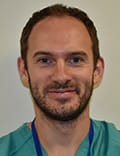
“Now that we have shown there is an option for these patients, it is likely that we will discover there are many more in whom VECTOR might be used to enable TAVR,” said Bruce, an interventional cardiologist at WellSpan Cardiology - York in York, Pennsylvania, and the National Heart, Lung, and Blood Institute (NHLBI) in Bethesda, Maryland, as well as an adjunct assistant professor of cardiology at Emory School of Medicine in Atlanta.
The procedure is technically complex and combines many interventional techniques, including transcatheter electrosurgery, Bruce said.
“In its current form, it pushes the boundaries of what can be accomplished, but it is not ready for widespread adoption,” he said. “Further experience is needed to shorten the procedure time, and we think it is feasible for VECTOR to be performed without ECMO [extracorporeal membrane oxygenation].”
The patient’s care team also included Adam B. Greenbaum, MD, a professor of medicine (cardiology) at the Emory University School of Medicine; Vasilis C. Babaliaros, MD, also a professor of medicine (cardiology) at Emory; and Robert J. Lederman, MD, a senior investigator who leads the Laboratory of Cardiovascular Intervention at NHLBI.
Future Potential
A number of interventional cardiac specialists weighed in on the future of VECTOR as a potential alternative to traditional bypass surgery, and all agreed that the field is still years away from broad clinical adoption. Key barriers include scalability, funding, and the training required to safely perform such complex procedures.
“For now, this procedure is unlikely to change traditional open-heart surgery in the near term,” Bruce said. “Our patient was too high risk for surgery and ineligible for other transcatheter options. But that’s often how major innovations begin. It is also possible that VECTOR may be useful in different patient populations, such as those with aorto-ostial stent failure or heavily calcified aorto-ostial stenoses.”
But none of that should temper the excitement of this procedure, Bruce said.
“VECTOR has already shifted what is thought possible in nonsurgical coronary revascularization,” he said.
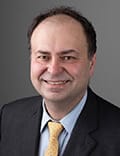
Roger J. Laham, MD, director of the Structural Heart Disease Program at Beth Israel Deaconess Medical Center in Boston, marveled at the technical success of the procedure.
“The idea of ‘moving the ostium out of the danger zone’ reads almost like science fiction, yet it was executed with wires, catheters, and human ingenuity,” Laham said.
At the same time, Laham cautioned, many factors stand in the way of expansion.
“This was one patient. A procedure performed by brilliant specialists at world-class institutions is not the same as a scalable solution in everyday hospitals,” he said.
“New minimally invasive technologies tend to carry high costs and steep learning curves, which risk widening rather than narrowing healthcare inequality,” Laham said.
“The true test for VECTOR will not be in the pages of a journal but in hospitals years from now — performed safely, repeatedly, and affordably. That future is not guaranteed, but it is now within reach,” he added.
‘This Is Where We’re Heading’
Andrea Scotti, MD, a structural interventional cardiologist and assistant professor of medicine (cardiology) at Montefiore Medical Center/Albert Einstein College of Medicine in New York City, also sees VECTOR’s promise.
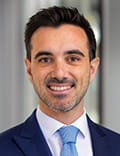
“In the near term, this innovation is unlikely to supplant conventional surgical revascularization,” Scotti said. “More importantly, it opens the door to treating patients previously considered inoperable and left to face adverse prognoses.
“Once fully validated and ready for broader clinical use, it should be integrated as a bailout option for patients deemed unsuitable for surgery, reinforcing the pivotal role of percutaneous approaches in the management of both structural and complex coronary disease.”
Adnan Chhatriwalla, MD, medical director of structural heart interventions at Saint Luke’s Mid America Heart Institute in Kansas City, Missouri, believes the procedure could eventually become widespread.
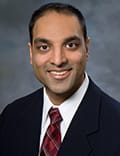
“Only the most skilled electrosurgical operators would be able to perform such procedures,” Chhatriwalla said. “At present, these are largely off-label device indications, and industry does not yet support proctoring or teaching of these techniques. While the FDA appears supportive of studying these approaches, larger human studies are needed, and the question remains: Who will fund them? This is not currently a replacement for bypass surgery, where arterial grafts often last a lifetime.”
Still, he added, the potential is exciting.
“This is where we are heading,” Chhatriwalla said. “Twenty years ago, no one imagined we would be replacing heart valves with catheters, and now we do it routinely. The future is minimally invasive — or even noninvasive — cardiac care.”
Bruce, Rogers, and Lederman reported being inventors on patents, assigned to National Institutes of Health for electrosurgical devices. Rogers reported being a consultant and physician proctor to Edwards Lifesciences, Medtronic, and Boston Scientific and an advisory board member for Medtronic, with an equity interest in Transmural Systems. Babaliaros and Greenbaum reported receiving institutional research support from Abbott Vascular, Ancora Heart, Edwards Lifesciences, Gore Medical, JenaValve, Medtronic, Polares Medical, Transmural Systems, 4C Medical and consulting fees from Abbott Vascular, Edwards Lifesciences, and Medtronic, with an equity interest in Transmural Systems. Laham, Scotti, and Chhatriwalla reported having no relevant financial relationships.
Lois Anzelowitz Levine is a medical writer living in Dallas.