Admin_Adham
A quarter century ago, hematologist-oncologist Patricia Ford, MD, performed the world’s first bloodless stem cell transplant. The patient was a Jehovah’s Witness, a member of a faith whose members don’t accept blood transfusions. Ford, a pioneer of bloodless surgery and medicine , has performed more than 200 bloodless stem cell transplants and is expanding to bloodless CAR T-cell therapy.
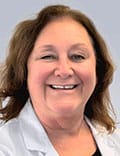
In an interview with Medscape Medical News, Ford spoke about how a procedure she performed as a junior partner came to define her career. Ford, currently director of the Center for Transfusion-Free Medicine at Pennsylvania Hospital and clinical professor of medicine (hematology-oncology) at the Perelman School of Medicine, University of Pennsylvania, Philadelphia, also described the challenges and rewards of treating a unique patient population.
The interview was edited lightly for clarity and length.
How did you end up in hematology-oncology?
I actually started as a nurse. I wanted to continue, and I got into medical school. I just really loved oncology based on the deep connection you have with patients, and the explosion I felt was going to happen in science and treatment. From the beginning after fellowship, my interest was in autologous transplants. When I joined my partners about 25 years ago, it was to be a general hematologist-oncologist but also to set up their autologous transplant program.
How did bloodless medicine come into the picture?
About a year into my time as a new attending, Jehovah’s Witness elders came to Pennsylvania Hospital and asked the administration if it would be willing to serve as a center of excellence for Jehovah’s Witnesses.
The hospital said yes, but it needed a physician leader. As the junior partner, I was assigned that project.
The Jehovah’s Witnesses really needed a center that would be open to treating them without blood products. [Roughly, 46,600 Jehovah’s Witnesses live in the Philadelphia metropolitan area, according to more recent estimates].
They were quite discriminated against and, at some level, still are. People can be uncomfortable taking care of Jehovah’s Witnesses because you can’t transfuse if you have a big hemorrhagic event.
What drew you to this kind of work?
I knew this was part of their religious belief system and convictions, and this was something I could very much respect. I would want my religion to be respected.
What will Jehovah’s Witnesses accept and not accept?
Jehovah’s Witnesses define the word “blood” differently than we do as healthcare providers. For us, blood is whole blood, like when you go to the Red Cross and donate a unit that then gets fractionated into different parts. The Jehovah’s Witnesses define it as four primary products they will not accept: red cells, platelets, white cells, and plasma. They’re allowed to take other fractions, but they need to make an individual decision on that.
Another principle is about when blood leaves the body. If the circuit is broken, meaning you donated your own blood and stored it, you can’t take it back. But you can do cell salvage, dialysis, and apheresis, where the blood leaves the body, enters tubing, and goes back in a closed circuit.
There are lots of different techniques we use even in the ICU, where we modify the way nurses draw blood so it can be readministered to the patient rather than discarded.
How did you learn to perform a bloodless stem cell transplant?
At that point, there weren’t centers performing this in the US, so I went over to Germany to learn from anesthesiologists, surgeons, and other hematologists about ways to care for this population without blood products. In Europe, physicians were ahead of us in looking at alternatives to blood transfusions. They relied on preparing surgical patients by increasing their hemoglobin before surgery with iron, B12, and erythropoietic-stimulating agents. Then during surgery, they used cell salvage and surgical techniques to minimize blood loss.
The technique of taking blood, filtering it, and readministering it to the patient was a major change. Normally, any blood lost in the surgical field gets sucked out and thrown away.
What were your first bloodless transplants like?
The first patient was someone in his 20s with relapsed lymphoma who had exhausted all chemotherapy and would have died within a couple of months. A [stem cell] transplant had a 50% chance of curing him, but it had never been done without blood product support. I had to let him know he would be the first.
He did wonderfully, was out of the hospital in 3 weeks, and indeed was cured. He’s still alive.
The second transplant was a young woman who flew in from California, dying of Hodgkin lymphoma. Unfortunately, she died from lack of blood transfusion.
At that point, I was thinking about stopping the program. But it was actually her husband and family who came back and said they wished I would reconsider because I was the only one who had given her any hope.
I continued and just got better and better. I’ve now done well over 200 transplants in Jehovah’s Witnesses with zero mortality for the last 100.
Has this work changed practice for patients beyond Jehovah’s Witnesses?
Absolutely. After I’d done about 30 [bloodless] transplants, I was invited to present my case series in Berlin, Germany. Other American physicians — all surgeons — approached me and asked if I’d be interested in being a founding member of the Society for the Advancement of Blood Management. We realized all the strategies we were using in Jehovah’s Witnesses were providing what appeared to be better outcomes across the board. We expanded and coined the term PBM — patient blood management — with these blood conserving or bloodless strategies now utilized across the country.
Is the bloodless approach still controversial?
It’s more widely accepted, but not by everyone. There’s fear of bad outcomes, and if you’re taught to transfuse anyone with a hemoglobin under 8 [g/dL] before surgery, it’s hard to break the pattern.
What about cost? Is bloodless surgery cheaper?
We looked at cost in our general patient population a couple years ago [internally], going International Classification of Diseases (ICD) code by ICD code comparing those getting transfused vs Jehovah’s Witnesses. [The Jehovah’s Witness population] had 1-day shorter length of hospital stay. If I’m not transfusing them, I’m not holding them an extra day for the transfusion or for a reaction to the transfusion, so our cost was a little less.
What’s next for your program?
We’ve started offering CAR T-cell therapy to Jehovah’s Witnesses. We’ve done more than 20 so far, with excellent results, similar to patients who allow transfusion support. I’ll probably write this up when I get to 30-50 patients.
There are still unique challenges. You need to know how the cells are manufactured. If they’re manufactured with plasma, you need to change that, or it’s not acceptable. I don’t expect everyone to memorize what Jehovah’s Witnesses will and will not accept, but if you’re caring for them, you need to be aware.
What remains the biggest challenge in bloodless hematology?
Acute leukemias. You have to give such high doses of chemotherapy so many times that you nearly eradicate the patient’s normal bone marrow, and there can be weeks where they don’t make their own blood cells and need transfusion support to survive.
Newer targeted drugs that don’t lower blood counts as much are coming along slowly, but it’s still one of the more difficult diseases to treat without blood products.
What has this work meant to you personally?
It was an unexpected path. It was not something I sought out. It just kind of happened. Now it’s the biggest part of my career. It has been extremely rewarding to help people who may not be able to find services locally, and to know that you are saving lives because you have the experience. They are so appreciative and such a nice group of patients to care for.
Ford reported having no disclosures.