Admin_Adham
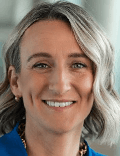
Joss Reimer, MD, MPH, will become Canada’s chief public health officer on April 1. In this position, which she will hold for 3 years, Reimer will advise the federal minister of health and the president of the Public Health Agency of Canada.
Reimer grew up in rural Manitoba and studied obstetrics, gynecology, and public health. Her previous roles have included chief medical officer for the Winnipeg Regional Health Authority, medical lead and official spokesperson for Manitoba’s COVID-19 Vaccine Implementation Task Force, and president of the Canadian Medical Association.
Medscape News Canada recently spoke with Reimer about the agenda that she will adopt in her new role.
As you step into the role of chief public health officer, what are your top three priorities for the first year in this job, and how will you measure progress?
My top priority is to get to know the folks working in the Public Health Agency of Canada and learn from them about what's working and where there are challenges. Also, I want to work with my counterparts across the country, making sure that I have an opportunity to learn from them about what their specific issues are and how the public health agency might provide support. Misinformation and disinformation, for me, is a high priority. What I need to do is learn about the work that the public health agency is already doing in that area. Finally, the hot topic right now is the measles cases that we're seeing across the country. Whether measles becomes a long-term priority remains to be seen, but that is certainly something that needs attention today.
Vaccine hesitancy and misinformation remain significant challenges. How do you plan to rebuild public trust in immunization and public health institutions, particularly among communities where confidence has eroded?
I want to see provincial and federal information that gives a consistent message so that Canadians have access to reliable, evidence-based information. I want to make sure that we can support healthcare providers to provide accurate information with empathy and understanding. We are making decisions to try to be healthy. That is the common message that we need to start from — that we're all trying to do the best that we can and find the best path forward.
Given the ongoing crisis in access to primary care, how can federal health policy better integrate with front-line family medicine clinicians to strengthen prevention, screening, and chronic disease management?
Most healthcare provision comes under provincial jurisdiction, but I think there's a lot of learning and support that we can provide across jurisdictions. National organizations can be incredibly helpful in that regard. When the ministers of health all get together, those are really productive meetings where challenges are discussed. At the federal and provincial levels, we can come up with common solutions and then find ways to partner together.
The COVID-19 pandemic exposed weaknesses in data sharing between provinces and the federal government. What changes are needed to modernize Canada’s public health surveillance infrastructure, and how realistic are they in the current political environment?
There's no question that sharing data is critical for us to understand what the challenges are for the health of Canadians, to understand what's working and what's not working, and to make sure that when there are new diseases or spikes in diseases, we are able to catch those really early on.
What role should the federal public health office play in advancing Indigenous-led health initiatives and addressing the structural determinants that continue to drive disparities?
Indigenous health must be a top priority for all aspects of the federal government's work. The historical and ongoing impacts of colonization are clear. In health outcomes, we see disparities in the different diagnoses. Even in life expectancy, there are disparities. I want to make sure that Indigenous health experts take a lead role working with the Public Health Agency of Canada and bring their voices to help shape the steps that we take to improve the health of Indigenous communities.
Rural and northern communities face unique public health risks, from infectious disease outbreaks to climate-related emergencies. How will your office tailor national strategies to meet those realities?
As someone who grew up in rural Manitoba, I hope to bring to this position a perspective from different parts of the country. I had the absolute honor to travel across this country when I was president of the Canadian Medical Association and learn about the different challenges that people face in different parts of the country. I also learned about excellent things that are working well in different parts of the country.
You come to this role from organized medicine. How will you engage physicians, nurses, and other clinicians as partners in national public health initiatives rather than simply as implementers of policy?
I first want to learn from the existing networks. I know that there are chief public health officers in each province, and they're going to be able to bring a lot of expertise about what works or doesn't work in their jurisdictions. They will have those connections within their own provinces. There are national organizations focused on different topic areas that are going to be wonderful partners to work with on national public health initiatives.