Admin_Adham
Carlo Acutis, the first Roman Catholic saint of the millennial generation, was in the right place at the wrong time.

When he developed the rare, aggressive blood cancer called acute promyelocytic leukemia (APL) as a Milan teenager in the mid-2000s, hematologists in Italy were close to testing what would become a near cure for the disease. But the boy destined to become Saint Carlo became ill too soon to take advantage of the therapy. He died within days of diagnosis in 2006, at the age of 15.
Now, the stunning transformation of APL into a largely treatable disease is in the spotlight, as Catholics honor the young man canonized by Pope Leo XIV in September 2025.
“These days, APL is considered to be one of the more favorable blood cancers, when it was one of the worst 30 years ago,” said Richard A. Larson, MD, MS, professor of medicine at the University of Chicago in Chicago.
Here’s a closer look at APL and the stricken Italian boy who is now known as a “digital disciple” and “God’s influencer.”
What Is APL?
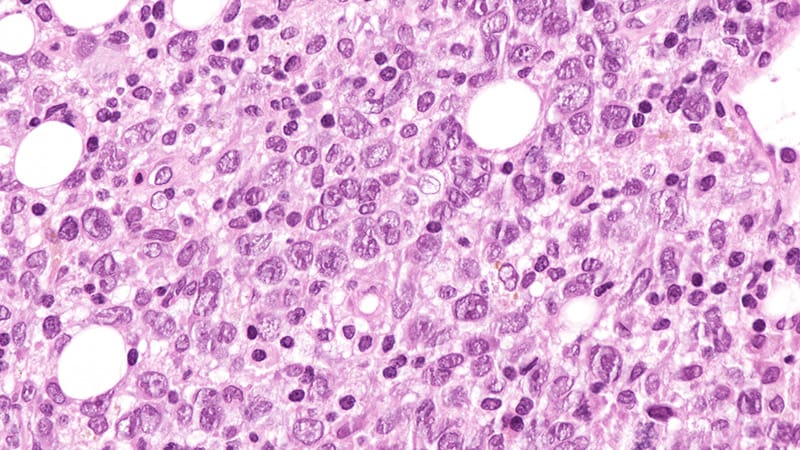
APL is a rare, aggressive subset of acute myeloid leukemia. It’s caused by a genetic mutation that spurs the production of immature white blood cells called promyelocytes in the bone marrow.

When the cells break up as part of their natural dying process, they liberate material that “completely disturbs the body’s coagulation system,” said hematologist Farhad Ravandi-Kashani, MD, MBBS, professor at the University of Texas MD Anderson Cancer Center in Houston.
“It’s very common for these patients to present with severe bleeding problems,” he said. “It could be anywhere — bleeding into the head, bleeding in the GI [gastrointestinal] tract. I’ve had young women who have intractable menstrual bleeding.”
Less commonly, patients develop clotting problems and may have strokes. “Your body’s coagulation system is a very meticulous system,” he said, “and if you disturb it dramatically, then you can either get severe bleeding or occasionally clotting.”
How Common Is APL?
According to the Leukemia Research Foundation, APL affects 1 in every 250,000 people and is most common in adults around 40 and in children aged 8-10 years.
What Happened to Carlo Acutis in 2006?
Carlo Acutis was a deeply religious young man with a knack for computer technology. He developed a website in multiple languages that documented miracles at the moment of consecration in the Catholic Mass, when the eucharistic host is believed to transform into the blood and flesh of Jesus Christ.
In 2006, Acutis became ill and died of a brain hemorrhage within a week of a diagnosis of APL. It’s not clear how he was treated, but Ravandi-Kashani said it’s clear that “had he developed this a few years later, he would still be with us.”
Acutis is now known as “God’s influencer” and remembered for his powers as a digital pioneer. His doctors and chaplain have spoken with reverence of his final moments.
His preserved body — clad in jeans, sweatshirt, and Nike sneakers — is visible in a tomb at a church in Italy. It can be viewed 24/7 via livestream, NPR reported. His pericardium, meanwhile, has traveled the world as a relic.
How Has APL Been Treated Over Time?
Early treatments for APL, which was first described in 1957, relied upon chemotherapy. But while the treatment could induce complete remission, patients often relapsed within a year, according to a 2024 report.
In the 1980s, treatment for APL was transformed when researchers in China and France developed all-trans retinoic acid (ATRA), an oral form of vitamin A. ATRA’s mechanism of action made it revolutionary.
“The problem in any leukemia is that there’s a mechanism that keeps the cells in an immature state,” Ravandi-Kashani explained. The traditional strategy of chemotherapy aimed to break the cells down, he said, but it comes with other risks.
ATRA, in contrast, “goes after the mechanism that prevents the leukemic cells from maturing. It just makes them mature, a process that we call differentiation,” he said.
How Did Treatment Change in the 1990s and 2000s?
The next major advance was the use of arsenic trioxide, a drug that turns out to work in similar ways to ATRA.
“The Chinese were the first to show that arsenic trioxide, if given in a controlled way, is actually very curative of this disease,” Ravandi-Kashani said.
A team at MD Anderson Cancer Center developed a protocol to just give ATRA and arsenic trioxide to patients and avoid chemotherapy entirely, he noted.
In Italy, Germany, and Austria, researchers in 2007 began studying the two ATRA-based approaches in patients with low-to-intermediate risk.
The study findings were published in The New England Journal of Medicine in 2013. They showed ATRA plus arsenic trioxide outperformed chemotherapy plus ATRA in patients with newly diagnosed APL, with remission rates of 100% vs 95% and 2-year event survival rates of 97% and 86%, respectively.
“This trial definitively proved that this regimen has higher response rates and more durable responses,” Ravandi-Kashani said.
What Should Clinicians Watch For?
Early recognition and treatment initiation are critical.

“The usual presentation is that someone goes to the emergency room [ER] with fever and multiple bruises,” Larson said. “Sometimes they’re bleeding or there’s blood in the urine, and sometimes they have a headache from intracranial bleeding.”
According to Ravandi-Kashani, APL should be high on the differential diagnosis when any patient who comes in with bleeding or low blood counts and there’s a concern for leukemia.
Larson noted that diagnosis can be challenging. “Unlike some leukemias, some patients with APL are diagnosed when there are no circulating leukemic cells. That is, their white blood cell count is actually low. Usually, the platelet count is also low, and they’re anemic as well.”
This condition, when there are low levels of the three main types of blood cell, is known as pancytopenia and can be caused by diseases such as aplastic anemia and myelodysplastic syndrome.
“It’s important to look for evidence of bleeding and intravascular coagulation because they can be important clues,” Larson said.
When Should Treatment Begin?
Both Larson and Ravandi-Kashani stressed the importance of starting treatment immediately when APL is suspected.
“If you think the patient may have APL, there is no harm to start ATRA,” Ravandi-Kashani said.
The challenge, Larson noted, is that “a lot of community hospital pharmacies don’t stock ATRA because this is not a very common disease. A number of referrals will come to our center or other academic medical centers because the ER physician or the local hematologist is concerned that the patient might have APL. They want to get them started immediately on ATRA, which they can’t do locally.”
The drug works quickly. “The disseminated intravascular coagulation usually subsides within the first 24 hours after the patient gets started on ATRA,” Larson said.
What Are APL Outcomes Like Today?
“We can cure 99% of patients. We never say 100% because there are rare cases that can be resistant,” Ravandi-Kashani said. “I have now probably at least 50 patients on my own who have received this treatment and are doing well. Many of them don’t even come and see me anymore because they are from 15 or 20 years ago.”
Recently, he said, he treated a young high school student “who came in with a very high-risk situation and now is in remission, getting consolidation therapy, and doing very well.”
What’s On the Horizon?
Looking forward, researchers are now working on making APL treatment less onerous. “Our group has also pioneered developing an oral form of arsenic trioxide,” Ravandi-Kashani said. “The arsenic is normally given in the vein, and you have to give it for extended periods of time. The whole regimen is about 9 months. We said, ‘Why can’t we develop an oral form of arsenic to make life a lot easier?’
“An MD Anderson team is working to prove to the FDA that an oral formulation is equivalent to the IV [intravenous] form,” he said, and other companies have the same goal.
Larson said it’s also important to look back. “In the 1970s, work done on APL showed that that a specific genetic rearrangement or mutation can lead to a very specific clinical disorder like APL. This was really the opening event in understanding that cancer is a genetic disease.”
“Now,” he said, “we believe that all cancers have some underlying mutation which results in their malignant potential.”
Ravandi-Kashani disclosed having relationships with Quetzal, SDK, and Pfizer. Larson had no disclosures.