Admin_Adham
Proximity to primary care was associated with increased use of primary care, decreased emergency department use, and increased uptake of recommended cancer screening in a recent analysis.
In a study that included nearly 10 million patients enrolled with family physicians in Ontario, those who lived further than 30 km away from their doctors were more likely to use the emergency department for nonurgent care, not to have seen any family physician in the past 2 years, and not to have had screening for colon, breast, or cervical cancer compared with patients who lived closer. They were also more likely to be male, to be younger than 65 years, to live in low-income neighborhoods, and to be newcomers to Ontario.
“When we talk about the primary care shortage, we often talk about people who don’t have access to primary care, but this study highlights that even those who are attached to a family physician are struggling with access, and that increased distance is a potential barrier to receiving care,” study author Archna Gupta, MD, a scientist at Upstream Lab and a family physician at St. Michael’s Hospital in Toronto, told Medscape News Canada.
The study was published on November 3 in CMAJ.
Timely Research
The Ontario government recently passed the Primary Care Act, which establishes a vision for providing publicly funded primary care for everyone who lives in the province by 2029.

“Our results are timely. The legislation’s first commitments are that everyone in the province should have an opportunity to have a relationship with a primary care clinician or a team and that this access should be convenient and inclusive,” Gupta said.
“As we think about how to do this effectively, we need to think about geographics. When people move, every child has access to a school district. We could do something similar, developing primary care districts.”
To see how distance might affect healthcare use and quality, the investigators conducted a population-based study of all patients who were enrolled with a family physician as of March 31, 2023. They examined the relationship between travel distance to the physician and emergency department visits, primary care visits, continuity of care, and cancer screening rates during the previous 2 years.
The study included 9,967,955 patients. Of these participants, 1,262,112 (12.7%) lived farther than 30 km from their family physicians. The farther away patients lived from their physicians, the less continuity of care they had, the fewer family physician visits they had, the more emergency department visits they had, and the less cancer screening they had.
Distant patients had greater odds of having nonurgent emergency department visits in the past year (odds ratio [OR], 1.43), having no visits with any family physician in the previous 2 years (OR, 1.28), and not having had screening for colon cancer (OR, 1.17), breast cancer (OR, 1.24), and cervical cancer (OR, 1.17).
“Distance is a determinant of health that can affect our access to care and should be taken into consideration as we think about how to improve access to primary care,” Gupta said.
Proximity vs Trust
Commenting on the findings for Medscape News Canada, Howard Bergman, MD, professor of family medicine, geriatric medicine, and oncology at McGill University in Montreal, agreed with the researchers’ premise that the distance from health services is an important factor in healthcare access.
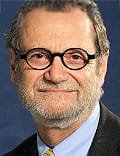
“But for some people, driving a greater distance might not be a particular problem. For any medical care, there is always the aspect of choice,” Bergman said. He did not participate in the current study.
“In Sweden, they did an experiment. There, you had no choice. You went to the primary care clinic that was in your neighborhood or district. And they moved away from that at some point because they said that it removed choice. There’s a balance between having your medical care at a reasonable distance and having a choice of primary physician,” he said.
“I know of many instances where people move for one reason or another, but still want to keep their family doctor, even though it means a longer drive. It’s a balance between having somebody relatively close and having somebody whom you trust.”
The study was supported by ICES, which receives funding from the Ontario Ministry of Health and the Ministry of Long-Term Care. The study also received funding from the Innovations Strengthening Primary Health Care Through Research Program, which is funded through the Health Systems Research Program of the Ontario Ministry of Health. Gupta and Bergman reported having no relevant financial relationships.