Admin_Adham
TOPLINE:
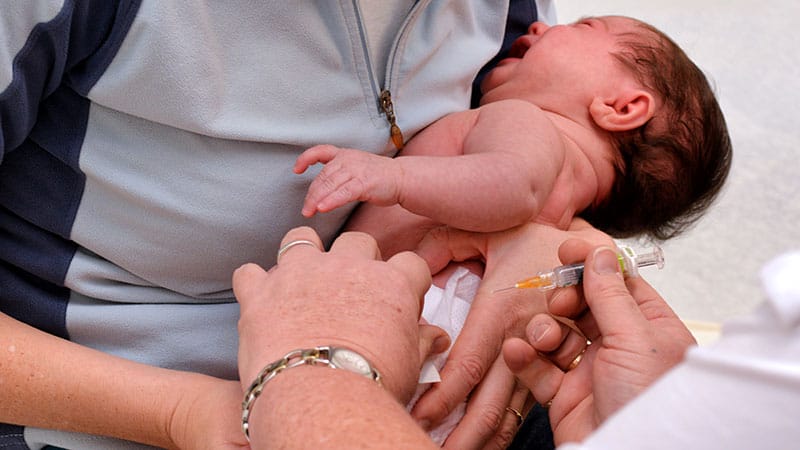
Among Scandinavian mother-child pairs, a higher maternal prepregnancy BMI and greater birth length were associated with increased odds of atopic dermatitis in offspring by 3 years of age, whereas shorter birth length was associated with lower odds.
METHODOLOGY:
- Researchers conducted an exploratory analysis of the PreventADALL study to determine the associations of maternal prepregnancy BMI, newborn anthropometric measurements, and fetal growth with the risk for atopic dermatitis by 3 years of age.
- A total of 2107 mother-child pairs were included for the prepregnancy BMI analysis, 2035 pairs for newborn anthropometric measurements, and 1590 pairs for fetal growth assessments; all infants were born after 35 weeks of gestation without serious illnesses.
- Fetal thoracic and abdominal circumferences were measured using ultrasonography at mid-pregnancy and again at birth, along with birth weight and length.
TAKEAWAY:
- A higher maternal prepregnancy BMI was associated with increased odds of atopic dermatitis in offspring by the age of 3 years (adjusted odds ratio [aOR], 1.03; P = .043).
- Greater birth length was associated with higher odds of atopic dermatitis in offspring by 3 years of age (aOR, 1.06; 95% CI, 1.01-1.12), whereas shorter birth length was associated with lower odds (aOR, 0.71; 95% CI, 0.51-1.00).
- No associations were observed between birth weight; thoracic, abdominal, or upper arm circumference at birth; and fetal growth and the risk for atopic dermatitis in offspring.
IN PRACTICE:
“Our results highlight the importance of early-life growth patterns for the development of atopic dermatitis,” the authors of the study wrote.
SOURCE:
Frida Berents, with the University of Bergen, Bergen, Norway, was the corresponding author of the study, which was published online on March 23, 2026, in the Journal of Allergy and Clinical Immunology: Global.
LIMITATIONS:
This study was limited by the predominantly Scandinavian cohort and small sample sizes in the extreme anthropometric subgroups. Using both ultrasound‑estimated fetal weight and measured birth weight may have introduced measurement error.
DISCLOSURES:
The PreventADALL study was supported by various public and private funding bodies, including the Regional Health Board South East, The Research Council of Norway, and Oslo University Hospital. The authors declared having no conflicts of interest.
This article was created using several editorial tools, including AI, as part of the process. Human editors reviewed this content before publication.