

 Admin_Adham
 Jump to Key Points
In a recent survey of 1834 undergraduate medical students at eight institutions, also known as Wave 1 of the Basic Needs Study of Medical Students, researchers found that 1 in 5 struggled with food insecurity, higher than that of the US population, according to a JAMA Open Network study published in 2025.
The irony is that these are the very people on the front lines who will one day talk with their patients about the importance of access to adequate and nutritious food for greater physical and mental health benefits.
“Food insecurity is insidious. As with any other person, it can happen when you are waiting for your next check or when you experience an unexpected cost in another area of life that shrinks your budget for the period,” lead researchers Bassel M. Shanab, an internal medicine first-year resident physician at the Brigham and Women’s Hospital, Boston; and Pavan Khosla, a medical student at the Yale School of Medicine, New Haven, Connecticut; wrote in response to emailed questions.
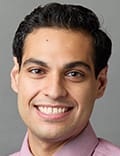
“Medical students are not an exception with their own intense schedules, high loan burdens, and, often living in the same food deserts as their patients,” they wrote.
- 21.2% of surveyed U.S. medical students reported food insecurity.
- Prevalence ≈2× USDA national estimate (13.7%).
- Risk ↑ in racial/ethnic minorities, dependents, financial strain.
- Parental tuition support associated with lower food insecurity.
- Food insecurity may impair well-being, academic success, and physician workforce retention.
Of those surveyed, the study found that 21.2% were food insecure.
Food insecurity was higher among ethnic and racial minority students and those with dependents and experiencing financial constraints.
Not surprisingly, it was lower among those students with tuition assistance from their parents, according to the study.
There is a range of severity of food insecurity, according to the US Department of Agriculture (USDA), that goes beyond hunger.
Geisinger College of Health Sciences in Scranton, Pennsylvania is among those schools taking steps to make a difference in access to nutritious food.
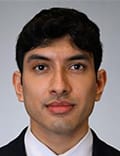
The issue of food insecurity was brought to the school’s attention mainly through students and student initiatives.
“I think the newer piece of information for me is coming to the stark realization that this issue impacts people in medical school pursing advanced degrees,” said Joel Rosencrance, MSEd, director of Student Well-Being at Geisinger College of Health Sciences in Pennsylvania. “Typically, this is not a profession where you’d think an individual would be concerned about food insecurity, but it shows the true nature of this issue.”
These students are trying to use their education to help the people and the communities in the areas they will be serving, “and they don’t know where their next meal is coming from.”
The college has a food bank, stocked with donations from faculty and staff as well as members of the community. Geisinger is also in the process of implementing a food pantry at each regional site.
Anitza Quintero, MD, who is currently doing her residency at the University of Texas at San Antonio, was part of the research group of medical students of Wave 2 of the Basic Needs Study on Medical Students. She also collaborated with Yale University’s Office of Student Research team on the Basic Needs Study examining food insecurity among medical students. Roughly 30 medical schools participated in the national survey.

Quintero said students can be very vulnerable and many were hesitant or embarrassed to admit they struggled with access to nutritious food, making anonymous surveys especially valuable.
“My role was to make sure there was a culture of understanding and no judgement,” she said.
What is most meaningful, she said, isn’t whether any one individual experienced food insecurity.
“It’s that this project showed us the issue exists, often in ways we don’t recognize, and that it affects more people than many of us realize.”
She added that working the project shaped the way she thinks about patient care.
“It helped me better understand that food insecurity can affect anyone, often in ways that aren’t immediately visible, and reinforced the importance of approaching every patient and family with empathy rather than assumptions,” she said.
“By creating a safe space to talk about challenges with food access, we can empower families, connect them with meaningful resources, and help address barriers that directly impact their health.”
In general, food insecurity, which can be caused by household economic and/or social conditions, is widely defined as having limited or uncertain access to nutritionally adequate and safe foods or the limited ability to access nutritious foods.
It can be both quality and, sometimes, quantity of food due to limited financial resources.
Researchers used the USDA’s Household Food Security Survey Module to assess food insecurity.
In their work, Shanab and Khosla found that 23.8% of medical students were food insecure: a percentage that is nearly double the amount of the latest USDA nationwide assessment of 13.7%.
They looked at students enrolled in undergraduate medical education relative to graduate medical education, which refers to residency, fellowship, and beyond.
The study did not look at premed college students or students in pos-baccalaureate programs.
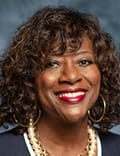
“Food insecurity is not merely a financial challenge — it is a student success issue,” Sandra Harris-Hooker, PhD, interim dean for Academic Affairs at Morehouse School of Medicine, Atlanta, said in a statement.
Leaders at the Atlanta-based medical school recognize that its students can’t “fully thrive academically or clinically when they are burdened by concerns about meeting their basic needs. That is why we remain steadfast in our commitment to reducing barriers through scholarships, comprehensive support services, and essential resources that enable our students to focus on their training.”
The school also has formal and informal, long-standing relationships with area food pantries, churches and social service providers, both public and private sector.
The average parental household income for a medical student there is $70,000, substantially less than with those enrolled in larger academic institutions.
By supporting student well-being today, the Atlanta-based medical school is strengthening the pipeline of “compassionate, highly skilled health professionals our communities need for tomorrow,” she said.
At Emory University School of Medicine officials direct students to already established support initiatives, including access to the Atlanta school’s farmers market for fresh, healthy food and other established Emory programs for food insecurity and student hardship needs.
There are also counseling services available as needed.
Still, it’s difficult to determine exactly how many medical students are food insecure.
For instance, some students, either living on or off campus, may visit food banks run by community organizations or churches.
Some food banks, particularly those that receive government assistance, require eligibility documentation, number of people in the household, and income statements.
Others use an honor system and may simply rely on an ID and self-declaration.
Overall, food banks generally do not keep track of whether or not that person is a medical student – or a student at a college or university.
So why hasn’t this issue gotten more attention?
“Limited awareness of food insecurity is multifactorial,” the researchers wrote. “Given its stigma, some students do not speak to the issue for fear of embarrassment, especially in the context of an institution that may not be able to better support that student.”
And, historically, institutions have not generally examined how severe the issue is among students. That is changing.
Long-term, the most benefit could be seen if schools align their financial aid packages with the true cost of living their students are facing.
“In a perfect world, no one should be food insecure,” Shanab and Khosla wrote.” Given its detrimental impact, food insecurity may not only compromise a student’s well-being but the future physician workforce.”
And if that puts students at risk of dropping out, then they would not be able to serve the communities most in need.
“Ultimately, the general population’s health is at risk if their own doctors are unable to sustain themselves.”
The experts cited in this article had no relevant disclosures.



