Admin_Adham
Medical work across Europe should be formally recognized as an “arduous occupation” to address a staffing crisis that threatens both physician wellbeing and patient safety, medical organizations and patient safety experts said at a conference held at the European Parliament last week.
The conference discussed a proposal by the European Federation of Salaried Doctors (FEMS), which argues that formal recognition would serve as “a strategic lever to improve recruitment and retention of doctors across Europe,” according to FEMS president, Alessandra Spedicato, MD. She emphasized the move would significantly improve the attractiveness of medical careers, particularly in demanding specializations, helping to reduce migration, early exit, and burnout.
The issue has “never been explicitly addressed before,” Spedicato told Medscape News Europe, even though strategies to support and expand the medical workforce are widely discussed within the EU.
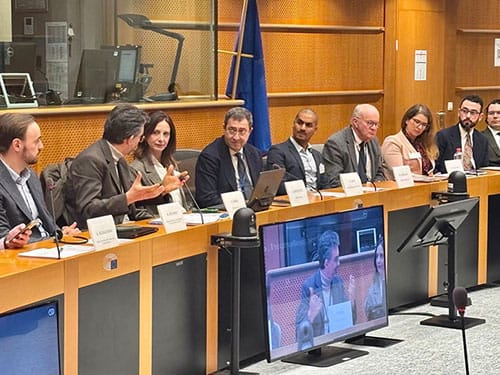
The conference brought together medical organizations, trade unions, patient safety experts, and EU-level occupational health bodies to examine the evidence backing the FEMS proposal.
Healthcare workers consistently report the poorest job quality in the EU, Adam Rogalewski, LLM, PhD, policy officer for health and social services at the European Public Services Union, told the conference. Recent survey data showed 30% work beyond their contracted hours, with pressures aggravated by workforce shortages exceeding one million workers across Europe.
Certain specialties carry particularly high risks, according to Marc Hermans, MD, from the European Union of Medical Specialists. Emergency medicine, intensive care, oncology, psychiatry, and surgery face elevated rates of burnout, chronic fatigue, mental health deterioration, and family disruption.
Patient Safety Inseparable From Working Conditions

Patient safety “is inseparable from working conditions, workload, staffing levels, and the ability of healthcare professionals to sustain safe performance over time,” said Mirka Cikkelova, MEc, general secretary of the European Patient Safety Foundation (EUPSF). She warned that exhausted doctors pose direct risks to care quality.
From the patient perspective, harm remains frequent, costly, and largely preventable, she said. From the workforce perspective, fatigue, burnout, and emotional exhaustion run high. These “are two expressions of the same system under strain.”
Fatigue signals that “systems are operating too close to their limits,” Cikkelova said. While it affects vigilance and decision-making, it does not automatically lead to errors “only because healthcare professionals continuously compensate,” sometimes at the cost of their mental and physical wellbeing.
She described a vicious cycle: Chronic fatigue undermines staff wellbeing, retention, continuity of care, and technology adoption, increasing vulnerability to adverse events and prompting workers to leave. This hampers recruitment, leading to higher workloads for remaining staff and more pressure. Strong correlations exist between staffing levels and patient safety indicators, she noted.
Fatigue-Related Harm Often Invisible
In most other high-risk industries such as aviation, nuclear energy, and railways, “fatigue has long been recognized as a major systemic risk. This is still not the case in healthcare,” Cikkelova told Medscape News Europe.
Fatigue-related harm for both patients and healthcare professionals remains largely invisible because “it is dispersed across individual patients, departments, hospitals, and even countries and is frequently followed by a search for individual responsibility rather than a discussion about system safety.” Unlike a plane crash, the consequences are rarely seen all at once, even though cumulative harm can be considerable.
“Without formal recognition of fatigue as an occupational risk in healthcare, it is very difficult to move towards meaningful prevention, whether through regulation, organizational obligations, or concrete safety measures,” she said. “As in all high-risk sectors, fatigue cannot be eliminated entirely, but it can and should be actively managed.”
Bogdan Deleanu, MA, from the European Agency for Safety and Health at Work highlighted physical risks including musculoskeletal disorders from manual patient handling, awkward postures, and high workloads. Psychosocial risks such as stress and burnout are strongly interlinked with physical injuries, he said, all contributing to reduced performance, absenteeism, and quitting.
Psychological Support Needed
While psychological support after traumatic events is widely recognized as essential in many professions, young doctors and other healthcare professionals are “often left to cope alone with extremely distressing situations,” Cikkelova said.
“Occupational health is for everybody except the doctors,” she said. But they need psychological support and burnout prevention just like other professionals.
The EUPSF supports structured “second-victim” support for the emotional and psychological impacts of adverse events on healthcare professionals. These are widely recognized in the scientific community but remain “insufficiently addressed in everyday healthcare practice.” EUPSF has become the umbrella organization for the RESCUE project, which promotes certification and standards for supporting healthcare professionals after adverse events, and has initiated a Fighting Fatigue Together campaign.
Supporting healthcare professionals “does not in any way diminish the central role of patients and their families as the first victims of adverse events,” Cikkelova stressed. “On the contrary, ensuring appropriate support for professionals is an essential condition for safer care and better outcomes for patients.”
A Strategic Necessity
Doctors routinely face intense workloads, high cognitive load, emotional pressure, long shifts, sleep disruption, and continual exposure to stress from clinical complexity and organizational challenges. The work combines high medical responsibility, professional liability, and cumulative exposure to physical and psychosocial risks with long-term impacts on physical and mental health.
The conference examined these issues from multiple perspectives — patients, hospital management, social partners, medical trade unions, and doctors — providing valuable input to improve recommendations presented in a 2025 FEMS policy paper, Spedicato said.
The conference's concluding message was unequivocal, she told Medscape News Europe: without structural changes — legal, organizational, and preventive — the sustainability of health systems, patient safety, and the attractiveness of the medical profession will continue to deteriorate. “Recognizing medical work as an arduous occupation is not only a matter of fairness for healthcare professionals but also a strategic necessity for Europe.”