Admin_Adham
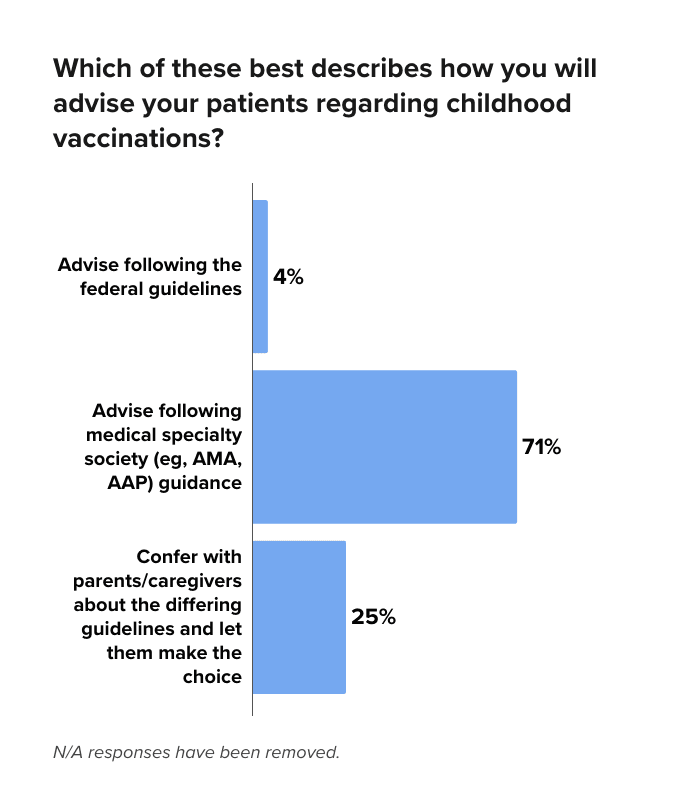
A new poll of nearly 1000 Medscape readers found that over three fourths of respondents do not support the latest changes to the federal childhood immunization schedule and more than 70% said they would follow alternative guidance from medical specialty societies such as the American Academy of Pediatrics (AAP).
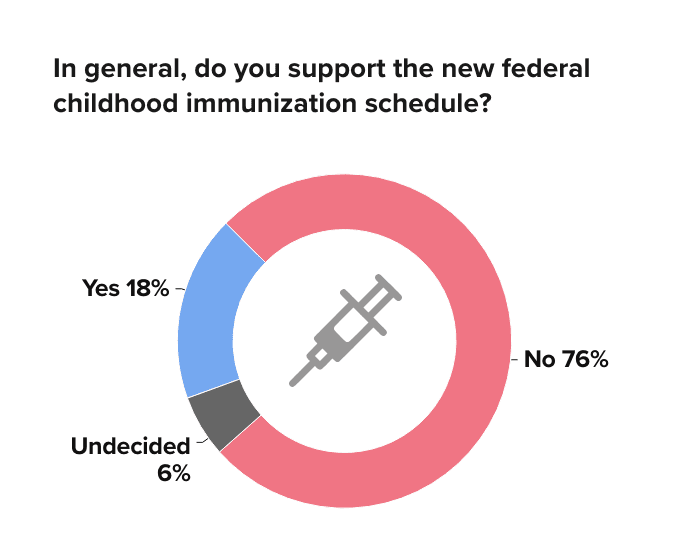
In January, the US Department of Health and Human Services announced significant changes to the childhood immunization schedule, cutting the number of vaccines from 17 to 11. To assess how clinicians view these changes, Medscape surveyed its readers between January 16 and 26, 2026. The poll received responses from 543 physicians and 441 nurses and physician assistants. Sixty-two percent of respondents were female and 32% male; 52% were over age 65 years.
The results suggest that healthcare providers have significant concerns about the updated recommendations.
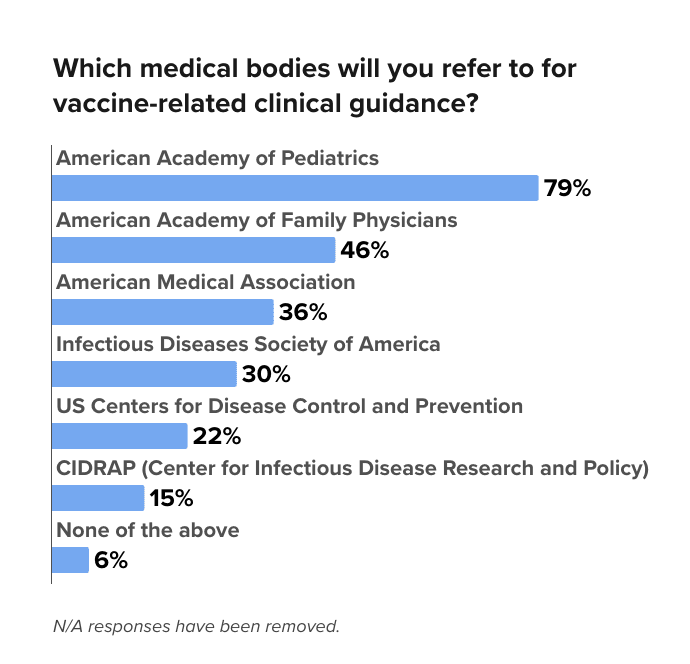
- 71% said they intend to follow guidance from medical specialty societies, such as the AAP or the American Academy of Family Physicians (AAFP), 25% said they would discuss the differing recommendations with parents and allow families to make their own decision, and 4% said they plan to follow the new federal guidance.
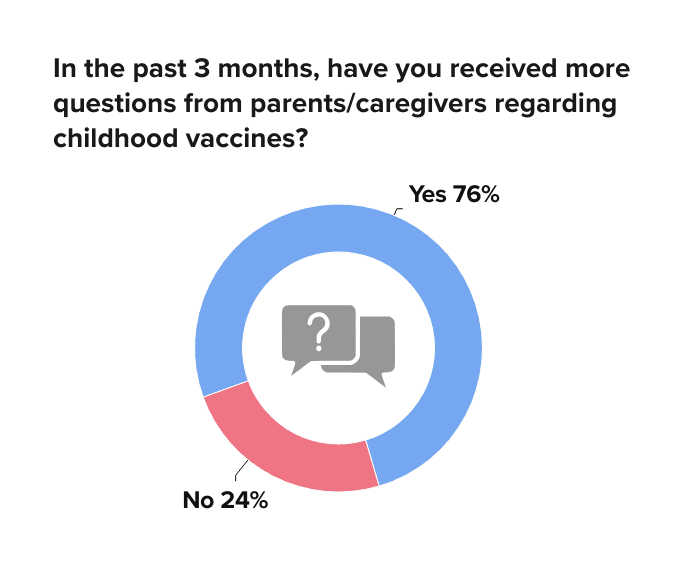
- 76% of those who said they treated patients reported receiving more questions from parents/caregivers regarding childhood vaccines in the past 3 months.
- 60% report being “very concerned” about a potential outbreak of a disease whose vaccine is no longer on the immunization schedule.
- 21% are considering steps, such as creating separate waiting-room spaces, to protect vaccinated patients and families from unvaccinated individuals (12% said they already have adopted protective measures).
The findings did not surprise Sean O’Leary, MD, chair of the AAP’s Committee on Infectious Diseases.
“I have not talked to a single person who supports the changes,” O’Leary said. The recommendations set federal guidelines back decades, he said, and were made “with a very clear anti-vaccine bent.”
Announcing the changes in early January, Robert F. Kennedy, Jr, Secretary of the Department of Health and Human Services, said the new schedule is more in line with those of other countries, such as Denmark, that require children receive fewer shots.
The AAP schedule is endorsed by 12 major medical societies; the group has been issuing vaccine recommendations since 1935. Some clinics are updating patient materials, directing families to guidance from the AAP and AAFP.
“Pediatricians and family doctors see what’s happening at the federal level, and they’re going to continue to do what’s best for their patients: make vaccine recommendations based on the best scientific evidence,” O’Leary said.
Respondents also reported many specific concerns about the change to the vaccine schedule: 37% said the changes could pose risks to children’s health and safety, and 60% said they were “very concerned” about a potential outbreak of a disease whose vaccine is no longer on the immunization schedule. Alex McDonald, MD, a family physician in Claremont, California, said the change in federal guidance would undoubtedly “make patients and communities less healthy.”
“There’s no new evidence that would necessitate a change in vaccine policy in the United States,” he said.
Although many parents continue to vaccinate their children, overall vaccination rates have declined, a change that is likely “leading to measles outbreaks, historically high levels of pertussis, and it’s probably contributing to the severity of the flu seasons, with big drops in flu [vaccine] uptake,” said O’Leary.
Recent US data show a resurgence of vaccine-preventable diseases, including measles and pertussis. The CDC reported 2267 confirmed measles cases in 2025 — the highest level in decades — and at least 588 cases have already been reported early this year.
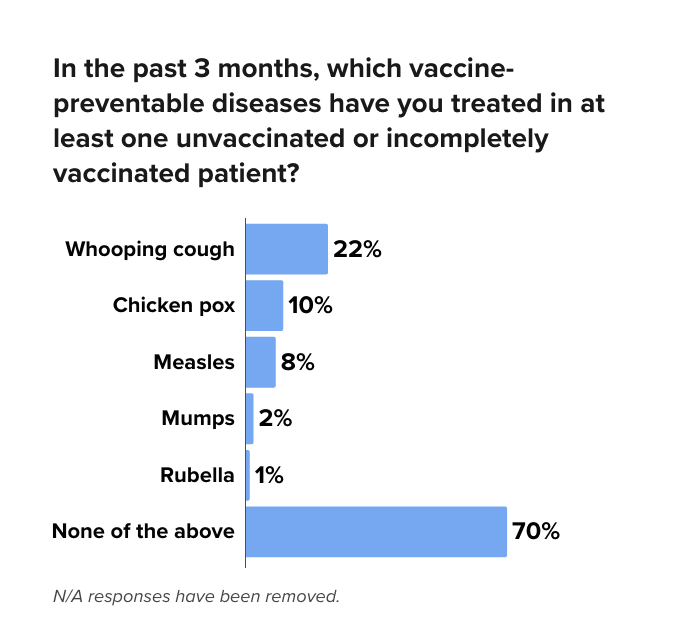
The increases have raised concern about the United States’ measles elimination status, a designation achieved in 2000, and public health officials worry the country may lose this status if outbreaks continue, with a formal assessment expected in April of this year.
Preliminary CDC data also indicate a rebound in pertussis, with more than six times as many cases in 2024 as in 2023. Levels remained high through 2025, with more than 28,000 cases reported.
O’Leary said when a vaccine-preventable disease is circulating in a community, the AAP generally recommends that symptomatic unvaccinated children enter healthcare clinics through separate entrances.
While child health and safety were primary concerns among providers polled, 24% cited confusion as their biggest worry.
“There’s a very small percentage of people who are rabidly anti-vaccine; there’s a larger group that simply has questions,” he said. “I think for some of those families, this confusion is creating real problems.”
Some families, for example, are delaying vaccination due to confusion about which shots are due when.
“This breaks my heart because we know that vaccines are the most effective preventative tool we have and, I would say, the biggest medical advancement in the last 100 years,” McDonald said.
Patient confusion is also affecting clinical workflow. While providers welcome patients’ questions and want to help them make informed decisions, McDonald said increased conversations around vaccines could divert time from other critical health issues.
“The average patient sees their doctor for 20 minutes twice a year, and there are a lot of things that we need to cover in that short amount of time,” he said.
Katie Lockwood, MD, a pediatrician at Children’s Hospital of Philadelphia, said many patients worry they will lose access to vaccines or that insurance will not pay because of removal from the federal schedule, neither of which has occurred, she said.
Regarding vaccine counseling, McDonald states that families ultimately make the decision.
“I always tell people that I’m here to help you make the best healthcare decisions for you and your family, and I want you to make those decisions based on good information and good data, and that there’s a lot of really bad information out there,” said McDonald, who encourages patients to contact him directly with questions.
Education and communication are both key, and O’Leary said that professional medical organizations, such as the AAP, will do much more of both going forward.
“We can no longer trust the federal government around vaccines,” he said. “They’re going away from science and evidence and going into ideology.”
O’Leary said the AAP has ramped up its outreach to its membership since the government changed the vaccine guidance.
“I’ve done four educational events this week to try to reach as many clinicians as we can, help them understand what’s going on, advocate for continuing to recommend based on science and evidence, meaning the recently released AAP schedule, and also how to handle questions and the confusion that’s coming from families right now,” he said. “We are having to sort of step up in terms of our communications.”