Admin_Adham
Five years after the initial discovery of VEXAS syndrome, the American College of Rheumatology has now published the first guidance on the identification and management of the condition whose acronym represents its key features: “vacuoles, E1 enzyme, X-linked, autoinflammatory, somatic.”
A multidisciplinary group of experts in rheumatology, hematology, immunology, and genetics made up the International VEXAS Working Group that authored the guidelines, which aim to clarify the diagnostic criteria for the syndrome, provide management strategies dependent on symptoms and presentation, and emphasize the importance of care coordination from a multidisciplinary team.
The disease, first described in 2020, is associated with pathogenic, somatic mutations in the UBA1 gene and involves a heterogenous range of inflammatory and hematologic signs and symptoms. Somewhere around 450 cases have been documented, but global prevalence is estimated to be about 1 million people, with UBA1 pathogenic variants estimated in about 1 in 13,591 people so far. The guidance, which has been endorsed by the International Society of Systemic Auto-Inflammatory Diseases, provides consensus statements in four main areas: clinical and laboratory features, UBA1 mutation screening, diagnosis of myelodysplastic syndrome, and management, including prognostic factors and outcomes.
A Broad Spectrum of Manifestations
The biggest challenge to identifying VEXAS outside of its rarity is the broad spectrum of different manifestations it can have, particularly rheumatologic, dermatologic, and hematologic features. The condition generally involves persistently elevated inflammatory markers along with skin, ocular, lung, and/or cartilage signs, with or without cytopenia. Typical inflammatory features include fever, ear or nasal chondritis, skin rash, periorbital swelling, abnormal lung nodules, and thrombosis. Hematologic features can include vacuoles in blood marrow, macrocytosis or macrocytic anemia, myelodysplasia, thrombocytopenia, monocytopenia, and lymphopenia. However, a range of less common disease features can be present as well.
VEXAS is not heritable and occurs most often in men older than 50 years. Most patients have mutations at exon 3 of the UBA1 gene, and although various sequencing methods can be used to identify these mutations, next-generation sequencing (NGS) has increased sensitivity.
“If clinical suspicion is high and genetic testing for mutations in UBA1 at exon 3 is negative on the peripheral blood, clinicians should ensure that testing covers the complete gene and consider testing a bone marrow sample,” the guidance stated. The authors also recommended bone marrow examination in patients who have associated cytopenia to exclude an associated hematologic neoplasm.
“Interpretation of bone marrow is challenging in VEXAS due to the frequent presence of signs of dysplasia, without meeting existing criteria for myelodysplastic syndrome,” the guidance further stated.
Although the specialists most likely to encounter VEXAS are probably hematologists, rheumatologists, and dermatologists, first author Arsene M. Mekinian of the internal medicine service at the Greater Paris University Hospitals, Sorbonne University - Saint Antoine Hospital, Paris, France, told Medscape Medical News that many other specialties may have patients present with signs of the condition. VEXAS may be seen by vascular disease specialists because of thrombosis, pulmonologists because of interstitial lung disease involvement, rheumatologists or internal medicine physicians because of the fever and systemic disease, dermatologists because of skin disease, hematologists because of cytopenia or myelodysplastic syndrome, and even, in rare instances, neurologists or nephrologists because of neurologic or kidney involvement.
“The most important point for all different doctors is really the diagnosis,” Mekinian said. Even in large institutions with many resources, misdiagnosis can occur, given the many ways it can present.
For example, Mekinian said that more and more patients are presenting with no inflammation and only cytopenia. “As always, when you describe a new disease, the pattern of the disease will be very different, but the most frequent [patients] initially described were people with auto-inflammatory disease,” including fever, skin, joint involvement, thrombosis, and macrocytosis. But the asymptomatic patients he’s now starting to see more of suggests there are probably different profiles of patients with VEXAS.
“The second important point is that the management, for the moment, is really for experts,” he said. Treatment goals include controlling inflammation, preventing and/or treating bone marrow failure, preventing and treating additional medical complications from management, and improving quality of life. The main therapy for inflammation is glucocorticoids, the guidance stated, and inflammation-targeted medications, such as JAK inhibitors or interleukin 6 inhibitors, tend to be more effective than conventional disease-modifying antirheumatic drugs or B-cell therapies such as rituximab.
“Another very important point is that you have to manage the risk of thrombosis and the risk of infection because people are dying mainly from infection,” Mekinian said.
Hematologist and Dermatologist Perspectives
Although the diagnosis of VEXAS can be challenging, increased awareness of the condition has been improving it.
Gena Foster, MD, assistant professor of medicine in hematology at Yale School of Medicine, New Haven, Connecticut, had first heard about VEXAS at an American Society of Hematology meeting. Not long after returning from that meeting, a patient presented during a consult with many of the features she had learned about at the meeting. As she discussed it with colleagues, a medical student asked a pointed question that ultimately led to the diagnosis: Had the patient had any problems with their ear? The patient had, in fact, been diagnosed with swimmer’s ear despite not swimming, and chondritis is a prominent feature of VEXAS. That answer led Foster to call the pathologist to ask about vacuoles in the bone marrow and, after learning vacuoles were present, to add the UBA1 mutation to the NGS testing.
“One of the problems with diagnosing our first patient was we hadn’t added the UBA1 mutation to our sequencing panel,” Foster said. “So if people aren’t familiar with the disease and haven’t updated their panels, it would be very challenging to diagnose.” She said she’s grateful to see this new guidance because, until now, there has only been a collection of different papers without a single document bringing all the information together. “I’m really glad this exists because it’s a multidisciplinary guidance document,” Foster said. “At least people have something to reference, so it’ll be a matter of making sure people are aware that this exists.”
Christine Ko, MD, a professor of dermatology and pathology at Yale School of Medicine, expects that this new guidance will help with increasing awareness about VEXAS as well.
“Just knowing this is out there will help raise awareness of the syndrome,” Ko told Medscape Medical News. She appreciated the treatment algorithm in the guidance as well as the recommendation for management with a multidisciplinary team. “I think the authors were really thoughtful about trying to cover the whole spectrum of how patients could present,” Ko said. “How you manage it does depend on the symptoms each person has, and by increasing awareness and getting people an appropriate diagnosis earlier,” it’s easier to ensure people get the best care possible as early as possible, she said.
Before VEXAS had been described, most patients with it were likely misdiagnosed or else properly diagnosed with one condition, such as myelodysplastic syndrome, but that “was just one part of the whole syndrome,” Ko said. There are multiple clues that should raise clinical suspicion of VEXAS, but even those are not specific to this condition.
Macrocytic anemia is one such clue, for example, because a lot of anemias are microcytic in older individuals, but macrocytic anemia can also occur from other causes, such as vitamin B12 deficiency or alcohol consumption. Other clues can include unilateral periorbital swelling or vacuoles in the blood marrow, but again, those can be symptoms of other issues as well.
“One of the issues in getting a correct diagnosis is that patients have to see so many doctors,” Ko said. “Internists of all specialties will see patients with VEXAS because it crosses a lot of specialties.” While it would be great for physicians in each specialty to be “all-knowing” when it comes to all the possible conditions associated with different symptoms, “that’s not humanly possible,” Ko said. Even with the help of AI, limitations exist because algorithms used to train AI are still human-based, and an AI model trained before 2020 would not have access to information about VEXAS, she noted.
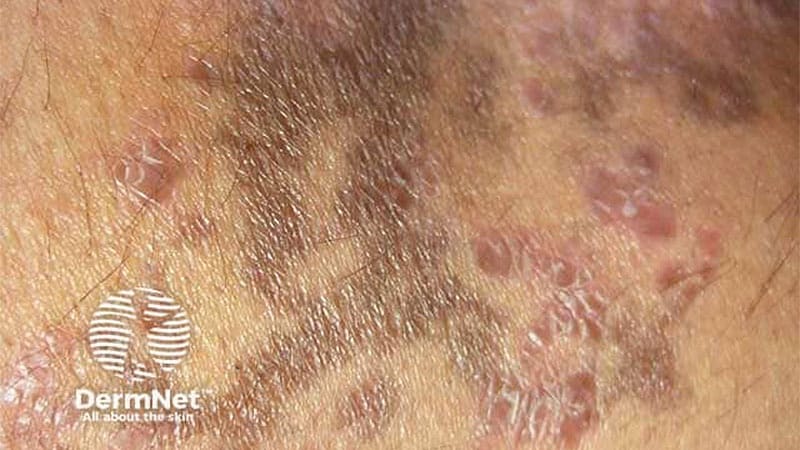
For a dermatologist in particular, Ko said a polymorphic rash can raise clinical suspicion. “If someone gets a rash multiple times over 1 or 2 years, and it looks different every time and they tend to have a fever with the rash, that’s a clue,” she said.
Support of the first VEXAS workshop came from FAI2R. No other external funding was noted. Mekinian reported being an investigator for Celgene, Roche, and Chugai and receiving fees for travel and expertise from LFB, Sanofi, Shire, Chugai, Takeda, Novartis, and Celgene. Foster reported consulting for Sanofi. Ko reported no disclosures.
Tara Haelle is a science and health journalist based in Dallas.