

 Admin_Adham
Rosaysela Santos, PhD, stands in the middle of the Anatomy Resource Center, a large room at the Kaiser Permanente Bernard J. Tyson School of Medicine (KPSOM) in Pasadena, California, surrounded by life-size figures on pedestals.
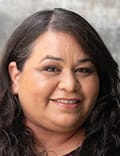
Santos, known as “Rosie” to many, an anatomist and associate professor of biomedical science, is also director of the center. She’s surrounded not by traditional cadavers, as she might be in other medical schools, but by human donors preserved by plastination. Water and lipids in the biological tissues of these donors have been replaced by curable polymers, which harden and result in natural looking, odorless, and durable specimens that can be studied and handled long-term.
Santos has taught in both types of anatomy centers and said she much prefers this one. “This is more geared to patients,” she told Medscape Medical News, as well as to students. Clinical cases are presented as students learn and examine the anatomy in the resource center, producing many “aha” moments, she said.
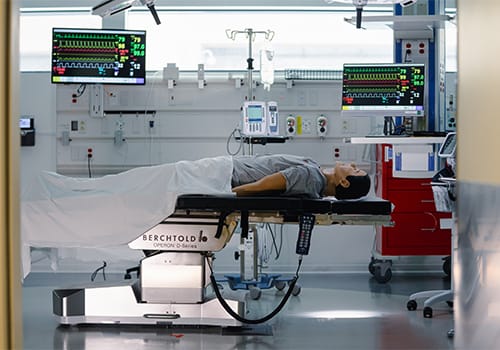
Nearby is the Simulation Center, where students can interview trained actors posing as patients, perform procedures, respond to emergencies and learn about electronic health records.
The Kaiser Permanente school is one of the several new medical schools that have opened in recent years. The need is real, as the US will face a projected physician shortage of up to 86,000 by 2036, according to the AAMC (formerly known as the Association of American Medical Colleges).
Medical Schools: Existing, New
Currently, 163 schools of medicine are open in the US, according to the AAMC, and 47 colleges of osteopathic medicine are in operation, according to the American Association of Colleges of Osteopathic Medicine (AACOM).
Since January 2020, 22 new teaching campuses for osteopathic schools have opened, including some that are additional campuses of existing schools, according to AACOM.
Since 2019, 11 programs granting MD degrees have gotten preliminary or full approval, according to a list from the Liaison Committee on Medical Education, which accredits programs leading to the MD degree.
Not Your Parents’ Medical School
Medscape Medical News reached out to the deans and other leaders of four new schools and found several common threads in their programs:
- Clinical training begins much earlier
- Advanced technology is a crucial part of the curriculum
- Meeting community needs and becoming engaged in the community is integral, and many of the communities the schools are in are currently underserved.
Here, four deans tell Medscape Medical News what sets their program apart.
Meritus: ‘Community Obsessed’
“We are community obsessed,” said Brian Kessler, DO, dean of the Meritus School of Osteopathic Medicine , Hagerstown, Maryland. Its vision is clear: “Our mission is to invest in the region’s long-term health.”
For more than 120 years, Meritus Health has been providing community-based care.
“Establishing a medical school within an integrated health system creates a powerful opportunity to educate future physicians in the communities that need them most,” Kessler said. It is the first new no-military medical school in the state in more than a century.
The inaugural class in fall 2025 had 90 students; the next one will have 145.
Research will be emphasized, Kessler said. “We’ve embedded research from the beginning,” he said. One day a week is devoted to research, with student groups assigned to faculty mentors.
“The expectation is that [students] become scholar physicians,” Kessler told Medscape Medical News. Social responsibility and community orientation are also expected.
Kaiser: Innovation…and Free Tuition
In May, KPSOM celebrated its third graduating class, with 36 students receiving their degrees.
The school opened in 2020, offering an attractive draw: free tuition. Nearly 11,000 applicants vied for the 50 available first-year slots, Dean John L. Dalrymple, MD, told Medscape Medical News. “KPSOM initially intended to provide free tuition and support for the school’s first five classes, but this was extended to the school’s first seven classes, including the class of 2026,” Dalrymple said in an email interview.
After that, he said, the goal is to shift from a “tuition-free” to a “debt-free” approach by providing access to financial assistance packages based on students’ ability to pay.
The curriculum is integrated, Dalrymple said.
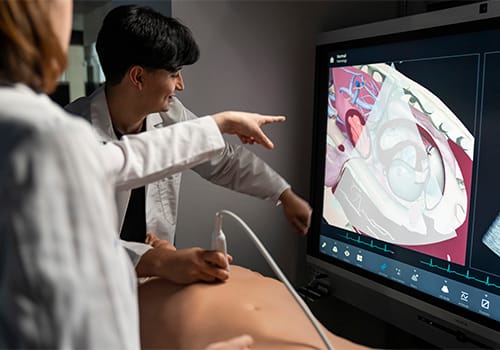
“As an example, students learn about the anatomy and functioning of the heart, learn how to conduct a cardiac exam in simulation or on a standardized patient and in the same week examine a real patient in clinic with an experienced faculty member.”
“Clinical cases are integrated into all anatomy labs to spark interest, enthusiasm and engagement for the anatomy content of the day,” said Santos, the Anatomy Resource Center director. It’s what’s behind those “aha” moments, she said.
From the first week, students participate in the longitudinal integrated clerkship program, spending a half day a week with a physician preceptor as part of a multidisciplinary care team at a Kaiser Permanente clinical site, Dalrymple said. All students are required to gain experience at a federally qualified healthcare center in the greater Los Angeles area.
That early clinical exposure was a major factor attracting Zach Rouseau, a first-year medical student and class president.
“From our first week of medical school, we interact with patients and learn within the very communities we hope to serve,” he said. “Being able to connect classroom learning directly to patient care has continually reinforced my ‘why’ and has served as a powerful source of motivation.”
University of Georgia: Early Clinical Experience, Active Learning
Founded in 2024, the University of Georgia School of Medicine, Athens, Georgia, received preliminary accreditation in 2026. The need is great, as Georgia ranks 39th in the US for the number of active patient care physicians per capita.
This fall, the medical school will welcome 60 to its inaugural class, said Dean Shelley Nuss, MD, MACP. Within 2 weeks of opening applications, they received more than 2000 applicants, Nuss said.
“There will be active learning through every aspect of the curriculum,” Nuss said. Focus will be on learning technology, becoming a resilient physician, choosing work-life balance, and having early interactions with patients — first hired actors, then real-life patients at the hospital.
Co-teaching classes are common, with a doctor and a foundational scientist participating, she said.
Johan Bester, MBCHB, PhD, the school’s associate dean for curriculum, said faculty members are both MD clinicians and basic scientists — viewed as an important combination. Students are expected to think like scientists while training to be clinicians, he said. In small groups of eight, students work with the clinician and the scientist on patient cases.
“Clinical skills education starts from week 1, such as how to take a history, do a basic assessment,” Bester said.
Roseman University: Household-Centered Care
Roseman University College of Medicine in Las Vegas welcomed its inaugural class in July 2025 with 64 students from 14 states.
“Our goal is not simply to educate physicians,” founding dean Pedro “Joe” Greer Jr, MD, told Medscape Medical News in an email interview. Rather, he said, it is to “develop physicians of exceptional competence and exceptional character who will improve the health of the community they serve.”
Students learn to care for patients within the context of their families and communities, what Greer terms a household-centered model of care that takes into account housing, food security, transportation, and employment.
While many medical schools call themselves “community-engaged,” partnering with local organizations, “Roseman’s model goes a step further,” Greer said. “We are community dependent. Our educational approach relies on sustained partnerships with community organizations, healthcare providers, and the households our students serve.”
The community, he said, “is an integral part of how our students learn to become physicians.”
“We actively recruit students with ties to Nevada and those interested in practicing in underserved communities,” Greer said. There is no requirement to remain in Nevada, although the program is designed to inspire students to serve Nevada’s evolving healthcare needs.
That attracted Jabin Sohng, a first-year student who was born and raised in Las Vegas. “Roseman’s mission to serve Southern Nevada, especially communities that have historically had difficulty accessing healthcare, strongly aligned with the kind of physician I hope to become,” Sohng said in an email.


