

 Admin_Adham
 Jump to Key Points
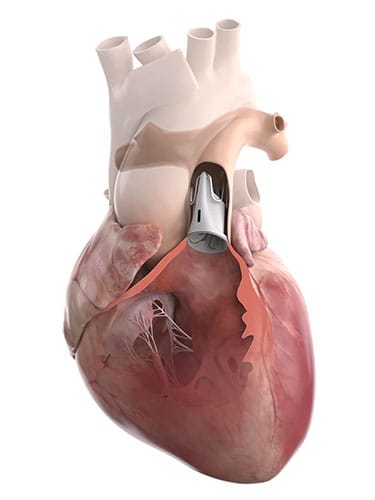
A new pulmonary heart valve designed to grow along with children who have congenital heart disease (CHD) may cut the number of follow-up surgeries.
Typically, a child would need repeated valve replacements, but this valve is designed to stay with toddlers into their teens. As a child grows, the valve can expand in a noninvasive procedure, said Emile Bacha, MD, surgeon-in-chief at NewYork-Presbyterian/Columbia University Irving Medical Center in New York City.

“It is balloon-dilated in a cardiac catheterization laboratory, removing the need for subsequent surgeries throughout a patient’s lifetime,” said Bacha, who is also a professor of surgery at Columbia University’s Vagelos College of Physicians and Surgeons.
Edwards Lifesciences received FDA approval for the AUTUS valve, developed by Autus Valve Technologies, Inc.
- AUTUS pulmonary valve FDA-approved; designed to grow with child.
- Balloon catheter expansion in cath lab may avoid repeat surgeries.
- Initial diameter ~13 mm; expandable to 22 mm adult size.
- Polymeric leaflets may resist stiffening vs animal-derived tissue.
- 62-patient study: no deaths, stroke, or clot-related complications.
Gradual Growth
When the valve is implanted, it measures about 13 mm in diameter, the standard size for a toddler or preschooler, according to the research team. As the child grows, a small inflatable ballon catheter expands the valve, eventually reaching up to 22 mm, equivalent to an adult-sized pulmonary valve.
The AUTUS valve is also the first to use polymeric material compared to animal-derived tissue for its inner flaps. “The flaps from animal tissue stiffen over time thus leading to prosthetic valve malfunction,” said Bacha, who was one of the investigators in the trial. “The hope is that the polymeric flaps will continue to remain flexible and supple over time.”
CHDs affect about 1% of all births in the US, or roughly 40,000 babies each year. About 25% of these infants have a critical CHD, meaning they will require surgery or other specialized procedures in the first year of life.
Many heart defects involve the abnormal development of a pulmonary valve, said Jim Jaggers, MD, co-medical director of the Heart Institute at Children’s Hospital Colorado in Aurora.

“Patients who may benefit most from this prosthetic valve include those with pulmonary stenosis, pulmonary atresia, tetralogy of Fallot, and truncus arteriosus, in addition to other more complicated heart defects,” he said.
Data from the clinical study consisting of 62 pediatric patients across 12 US states, showed all patients underwent a successful procedure with no deaths, blood clots, stroke, or other clot-related complications.
Two patients experienced reduced movement of one of valve leaflets and three had a fracture in the valve frame, but none showed symptoms such as breathing difficulties or heart murmur, the researchers said. When two patients began to outgrow the valve, it began to deteriorate, but surgeons were able to expand them without performing an invasive procedure.
Further Research Needed
More research is being conducted to collect additional data on the valve’s long-term function and to better understand potential risks, Bacha said. Jaggers agreed there is significant work to be done.
“Additional clinical studies in larger populations of patients will be necessary to demonstrate its full potential,” he said. “There has been some structural deterioration of the stent on which the valve material is mounted. Even though there were no adverse events associated with that, further device development and improvement may be necessary to make this the most durable valve possible.”
The development of AUTUS is good news in the field of pediatric heart surgery, said Hani Najm, MD, chair in pediatric and congenital heart surgery at Cleveland Clinic in Cleveland.
“Certainly, further research is needed and regular follow-up is important for patients who are current recipients of the valve, but it is a great alterative to what we have now, as traditional valves are fixed in size and don’t adapt to the growing child,” Najm said.
Bacha reported receiving reimbursement from Edwards Lifesciences for travel and lodging related to educational activities. Jaggers and Najm reported having no financial disclosures.
Martta Kelly is a medical journalist who resides in the New York metropolitan area.



