Admin_Adham
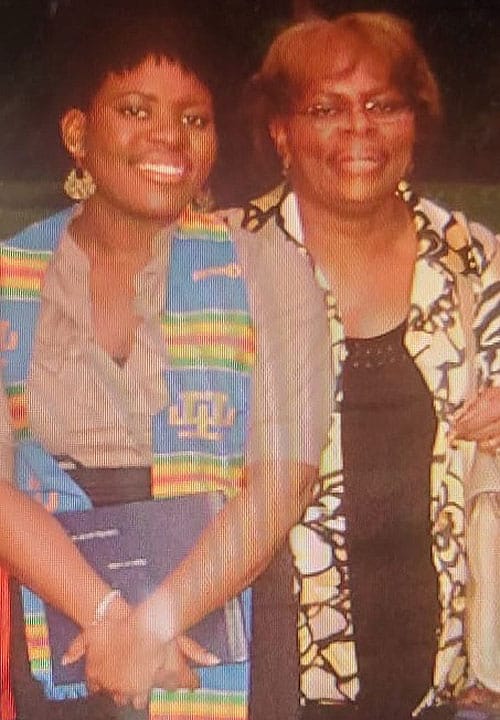
Petrina Craine, MD, emergency medicine physician based in Atlanta, felt the air leave her lungs when she learned her mother had been diagnosed with an incurable cancer.

“Even though I’m a physician who has delivered this kind of news countless times, nothing prepares you to hear this diagnosis from someone that you love so dearly,” Craine said. “My mother’s diagnosis was the first time I truly felt the collision of professional knowledge with personal love for a beloved one.”
When aging parents face health challenges, from diagnoses such as cancer and heart disease to declining cognition and mobility, a disproportionate amount of caregiving responsibility tends to fall to the doctor in the family. While healthcare professionals may be more equipped to navigate these challenges on a practical level, caring for loved ones can take a unique emotional toll on physicians.
Overall, 9 out of 10 medical faculty members reported experiencing emotional strain from their caregiving duties in a Johns Hopkins study. Meanwhile, physician mothers with family caregiving responsibilities had significantly greater rates of mood and anxiety disorders than physician mothers without these additional duties, according to a study published in November 2025 in Families, Systems, & Health.
It stands to reason: Physicians must untangle the overlapping — and often conflicting — roles of doctor, caregiver, and child.
“As a doctor, I immediately shifted into clinical mode, thinking about staging, treatment options, and next steps,” Craine said. “But as her daughter, I felt heartbreak, fear, and a level of vulnerability I wasn’t accustomed to experiencing.”
Understanding the Limitations of the Doctor Role
On Barbara Sparacino, MD’s most recent birthday, her mother fell and fractured her knee. “Mom, you’re taking this nostalgia of being in the hospital on the day of my birth a bit too seriously,” Sparacino, Miami-based psychiatrist, quipped at the time.

Jokes aside, the situation became serious. Soon, Sparacino had to offer her mother guidance through knee surgery and, a few days later, through a cardiac catheterization for what was initially a suspected pulmonary embolism and then a suspected heart attack. It ended up being broken heart syndrome or takotsubo cardiomyopathy.
The irony is that Sparacino, a triple board-certified psychiatrist, has been guiding clients through this kind of caregiving process since the COVID lockdown as “The Aging Parent Coach.”
“As an expert in this, it was still challenging for me, as The Aging Parent Coach, being my aging parents’ caregiver,” she said. “You don’t know how to do it when it’s your own parent.”
It’s only natural that doctors would take on the responsibility of finding answers, giving instructions, and helping to solve their parents’ health problems. But a key step of the caregiving process is letting go of the need to be correct, in control, or unflinchingly rational.
Sparacino’s mother would get upset when Sparacino went into “doctor mode.” Anxious about causing conflict, she got “cranky” when Sparacino gave advice that differed from her own doctors’. She got angry when Sparacino used “doctorspeak” with fellow physicians and requested that her health be discussed in language she could understand.
“I think our parents appreciate the information and the advocacy, but I think that it can feel a little disconnected if we’re too clinical,” Sparacino said. “To be a good liaison is one of the things that we can really be helpful with for our families. But it’s also about remembering that they want their loving child to be there, not another doctor who wants to tell them what to do.”
For Craine, too, grappling with the limitations of the doctor role was one of the hardest parts of taking care of her mother. It was not always enough to lean on her clinical experience. She ran into frustrations like lost referrals, waitlists longer than her mother’s prognosis time, unclear communication, and redundant tests.
“As a physician, I thought I understood the healthcare system intimately. But navigating it as a caregiver is an entirely different universe,” she said. “I was honestly shocked by how fragmented everything felt. I felt a constant pressure to passionately, and sometimes aggressively, advocate to get basic needs met. This was on top of honoring my professional responsibilities as a practicing physician. Emotionally, it was beyond exhausting.”
Navigating the Emotional Conflicts
Sandeep Jauhar, MD, New York City-based cardiologist and author, grew up idolizing his father, prominent scientist in wheat genetics. Jauhar felt a sense of grief as his father struggled with reading and memory after being diagnosed with mild cognitive impairment, which declined into Alzheimer’s disease. Jauhar found himself pointing out his father’s mistakes and correcting him on which day of the week it was.
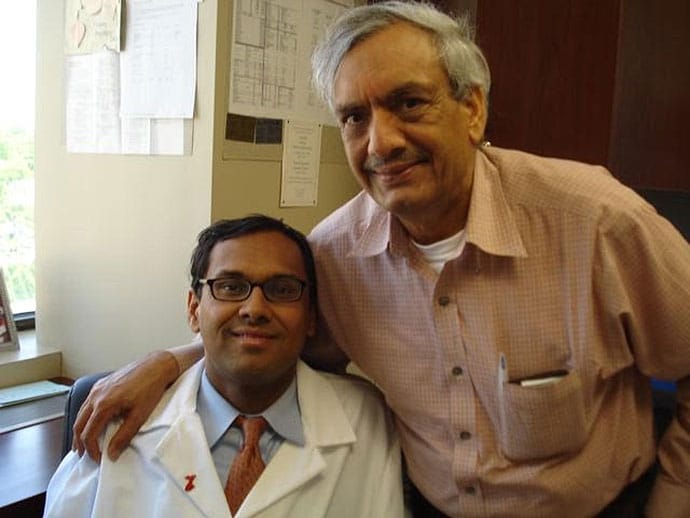
“We operate according to our brain function,” Jauhar said. “In some sense, my father and I were both prisoners of our own brains. I have a hyperrational brain; I want things to go a certain way, and I want people to act in a rational way. When he was incapable of doing that, that caused tremendous frustration in me, and that frustration led to impatience.”

Caring for an aging parent involves grieving the losses of who they used to be, the former parent-child relationship dynamic, and the illusion of infinite time together. This grief challenges the unshakable doctor persona with the threat of emotional breakdown. It can also lead to feelings of resentment, adding a murky layer of guilt.
Taking on a caregiver role requires a middle ground between taking charge and stepping back: offering support, guidance, and care, without denying or condemning the complex emotions involved.
Jauhar’s frustration with his father, along with his empathy, led to the lesson that medical understanding and emotional understanding go hand in hand. It inspired him to write his 2023 memoir, My Father’s Brain, which is both a personal chronicle of the impact on a family when an elder develops dementia and a detailed description of the physiology of a cognitively declining brain. “I think the more you know about the physiology and the medical aspects, then you can be more prepared,” he said. “And when you’re more prepared, you can be more patient.”
Still, preparation can only go so far. Craine found that caregiving requires a degree of surrender to unpredictability and uncertainty.
“The hardest part was accepting that I couldn’t fix the situation,” she said. “As doctors, we’re trained to solve problems. Caring for someone is not a problem you solve; it’s a journey you take full of winding turns. Accepting that was one of the most difficult emotional transitions of my life.”
Self-Care During Parent Care
Beyond the guilt that comes with frustration or resentment, caregivers can also feel uncomfortable with positive things in their own lives or simply caring for themselves while parents are struggling.
“Any moment of joy honestly felt like a betrayal,” Craine said, “as though I was stepping away from her suffering, which was something she could not do.”
Craine’s advice for easing the shame of stepping away? Don’t take on all the caregiving yourself. “Ask for help early,” she recommends. “Don’t wait until you’re overwhelmed.”
Siblings and partners are often the first line of support, but family dynamics come with their own challenges, especially regarding disagreements on care. Jauhar was not solely responsible for his father’s care because he was neither the only child nor the only doctor in the family. In fact, in their traditional Indian family, it was customary that most of the responsibility fell to the eldest son, Jauhar’s older brother, also a cardiologist. While the two brothers did not always see eye to eye while discussing caregiving decisions, they ultimately learned to compromise.
“Try to see the goal as a common one: to give your loved one the best possible life with a debilitating disease,” Jauhar said. “I think hiring live-in help is beyond a lot of people’s means, but a lot of doctors probably have the means to get help. Either way, don’t try to do it all on your own.”
Sparacino hired professional help with childcare and housekeeping and had her husband pick up their son from school. She likens the management of her time, energy, and resources to juggling and “keeping the balls in the air.” “You have to be really cognizant of the fact that some balls are wooden, some balls are plastic, and some balls are glass,” she said. “Your parents aren’t always going to be the glass, but in the moments when they are, you have to figure out how you are going to allocate time when it’s necessary.”
For Craine, a shift occurred when she began treating self-care as maintenance, rather than indulgence. Maintaining her own joy became an act of service in that it allowed her to return to her mother’s side with renewed energy and attentiveness.
“I slowly accepted that if I didn’t create moments of joy for myself, I would burn out emotionally, spiritually, and professionally,” Craine said. “I found small daily rituals that reminded me I was still a whole person outside of caregiving. Even something as simple as adorning myself with perfume or taking a walk outside worked wonders. My mother had always wanted me to live a life full of passion and purpose, and holding onto that truth allowed me to breathe again.”
For Craine, Sparacino, and Jauhar, untangling the roles of doctor, child, and caregiver required some degree of loosening their grasp. Letting go of the need for control and certainty made room for the vulnerability inherent to caring for beloved parents.
“Even physicians — people who have dedicated their lives to healthcare — can feel lost, overwhelmed, and heartbroken in a caregiver role,” Craine said. “Remember: Before we received any degrees with special insignia conferred to our names, we were and are all human first.”