Admin_Adham
Combined and cumulative exposure to physical and social environmental factors such as pollution and inequality may be a stronger determinant of brain aging than clinical diagnoses such as Alzheimer’s disease (AD) or mild cognitive impairment (MCI), a new study showed.
The analysis of more than 18,000 individuals in 34 countries revealed that physical environmental exposures — particularly air pollution, reduced green space, and extreme climate conditions — were most strongly associated with accelerated structural brain aging, especially in limbic and subcortical regions.
Social exposures — including lower socioeconomic status, reduced democratic participation, and inequality — were more strongly linked to accelerated functional brain aging in frontotemporal and limbic networks.
The study showed that combined exposures explained up to a 15-fold greater variance in brain age than single exposures, suggesting that addressing environmental quality, social inequality, and governance may be as important as managing individual clinical risk factors in preventing cognitive decline and dementia.
“These findings highlight the importance of considering how multiple contextual factors jointly shape brain vulnerability and resilience, with direct implications for neuroscience research, public health initiatives and dementia prevention strategies,” lead author Agustina Legaz, PhD, with the Latin American Brain Health Institute, Adolfo Ibañez University, Santiago, Chile, and colleagues wrote.
“Aligning neuroscience with environmental justice may help improve global brain health. Where and how people live may be as important for brain aging as the specific disease they develop,” they added.
These findings were published online recently in Nature Medicine.
Pressing Unanswered Question
One of the most pressing and unanswered questions in biomedicine is understanding how physical and social environmental factors — such as pollution, climate change, poverty, and political instability — interact to shape health, the authors explained.
The “exposome” refers to the totality of environmental and societal factors that influence health across the life course. Prior research has linked individual exposures to aging and dementia risk, but most studies have examined these factors in isolation or within single-country cohorts, limiting understanding of their combined, real-world impact, researchers noted.
The new study addresses this gap by integrating multidomain exposures across diverse global settings to better reflect how environmental factors interact to shape brain health.
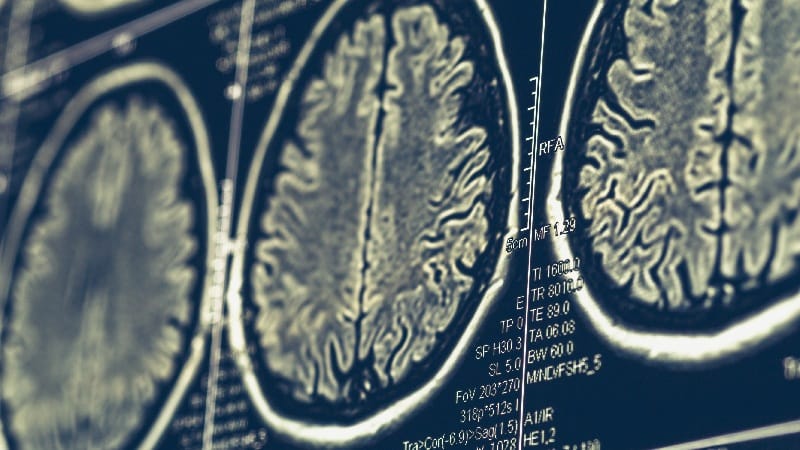
The investigators analyzed data from 18,701 individuals across 34 countries, including healthy individuals and those with AD, frontotemporal lobar degeneration or MCI. Brain age was calculated with MRI, functional MRI, magnetoencephalography, and electroencephalography data.
They also examined 73 country-level exposome variables, spanning physical factors, such as air pollution, temperature, and green space and social factors, including socioeconomic inequality, democracy, and migration.
Calculating the ‘Exposome Burden’
When investigators looked at aggregated exposome exposures, they found that when combined, environmental and social factors explained up to 15.5-fold more variance in brain aging than any individual exposure.
The “exposome burden” was associated with a markedly increased risk for accelerated brain aging, with odds ratios indicating a 3.3- to 9.1-fold increase depending on the exposure domain, exceeding the effect sizes observed for neurocognitive diagnoses.
“The exposome appears to influence brain aging through synergistic interactions rather than isolated effects. Previous models treating exposomal factors as independent and linear have overlooked this complexity,” the researchers wrote.
Analyzing the combined exposome allowed investigators to more closely observe how brain aging is influenced by the interaction between biological risk factors and co-occurring physical, social, and political challenges.
“For instance, socioeconomic inequality and air pollution may combine with limited healthcare access to increase dementia risk, and political instability and cardiovascular disease can interact to accelerate brain aging,” they noted.
These associations were consistent across clinical subgroups and persisted after adjustment for demographics, cognition, age correction bias and other variables.
Longitudinal data further showed that higher exposome burden predicted accelerated brain aging trajectories and cognitive decline over time.
‘Neurosyndemic’ Models of Brain Health
The authors cited several limitations of their study, including the cross-sectional design and small longitudinal subsample, which precludes causal inference. Also, exposome measures were derived at the country level, which may obscure individual- or neighborhood-level variation in exposures.
Additionally, incomplete individual-level socioeconomic data and variability in clinical and cognitive assessments across international cohorts may introduce residual confounding. Temporal resolution was also limited, restricting the ability to disentangle early-life vs later-life exposure effects.
Despite these limitations, the study supports the relevance of the exposome and call for “neurosyndemic” frameworks in brain health, the authors said.
“These findings highlight the importance of considering how multiple contextual factors jointly shape brain vulnerability and resilience, with direct implications for neuroscience research, public health initiatives and dementia prevention strategies,” they wrote.
This study had no commercial funding. The authors declared having no competing interests.